

Free Cover Letter Templates & Examples
More than 120 free cover letter templates, each with its letter printed in full so you can read it before you copy it. Organized three ways: by style — simple, professional, and modern; by situation — first job, entry-level, internship, career change, relocation, referral, email, and more; and by role — seventeen fields from teacher and nurse to software engineer, sales, and consulting, each paired with a resume category. Six short guides cover how to write one, the format, addressing, closing, and length. Every template is a one-page business letter with [bracketed] prompts, editable in Word or Google Docs. Free: no account, no paywall, no watermark.
Examples and the six-part guide.
Twenty complete letters to read, and the short guides that explain the four moves every good letter makes.
Pick the register: simple, professional, or modern.
Style is a signal — plain for conservative fields and strict ATS portals, letterhead polish for corporate roles, color for industries that read design as fluency. Sixteen templates across the three collections.
Letters written for where you are.
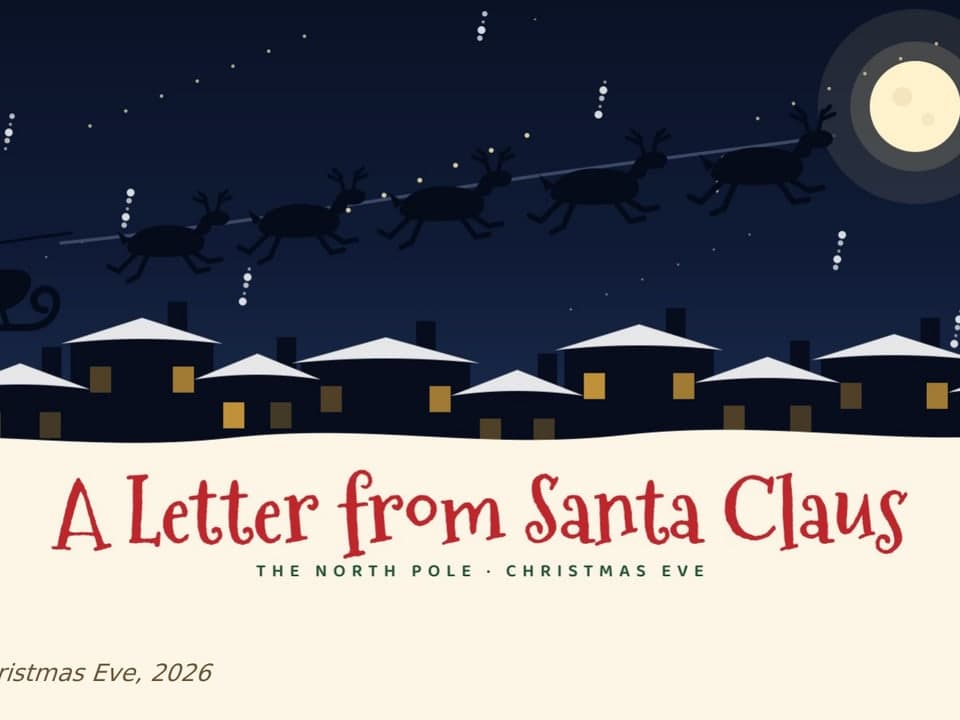
Beyond looks, these collections change what the letter says — each carries a body purpose-written for its moment, not a generic letter in a new wrapper.
Letters written for your field.
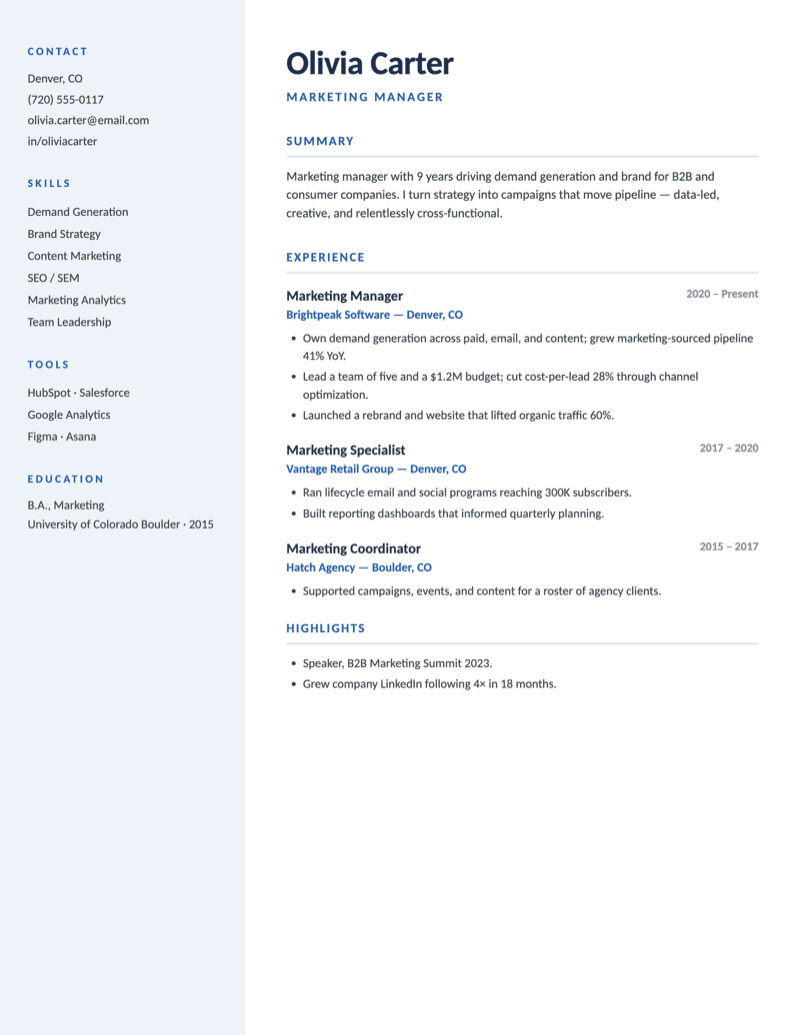
Seventeen fields, each with a letter written in that field's hiring language — the license line, the metrics, the vocabulary its managers screen for — and paired with the matching resume category.
What goes in a cover letter.
A cover letter is a one-page business letter with a simple job: connect your strongest results to this specific role, in the employer’s own language. The format is standard — what you say inside it is what varies. Top to bottom:
- Header and date. Your name, phone, email, and city (a full street address is no longer expected), then the date and the recipient’s name, title, and company. Every template styles this for you.
- Salutation with a name. Find the hiring manager on the posting, team page, or LinkedIn. “Dear Hiring Manager” is the fallback — “To Whom It May Concern” shouldn’t survive 2026.
- An opening that names the job. The exact title, where you saw it, and one specific reason you want it at this company. Specificity in the first two lines is what separates a written-for-this-job letter from a blast.
- One or two body paragraphs of evidence. Pick the two or three requirements the posting emphasizes and answer them with your results — numbers where you have them. Don’t re-narrate your resume; the letter highlights, the resume lists.
- A close that asks. One sentence inviting the interview, a thank-you, and “Sincerely” with your name. Total length: 250–400 words. Never a second page.
Want the reasoning behind each part? The how-to-write guide walks the four moves with an annotated example; the format guide covers layout, fonts, and file type.
Writing without much experience? The no-experience collection carries a letter built for exactly that — evidence from coursework, projects, volunteering, and adjacent jobs instead of titles.
Fill it in and send.
- Pick a collection above, then click Open in Google Docs to copy a template into your Drive, or Download Word for the
.docx. - Replace every [bracketed] prompt — recipient name, company, role, and the two or three results you’re featuring for this job.
- Mirror the posting’s language for the skills it emphasizes, and keep the letter to 250–400 words on one page.
- Export a PDF to attach with your application, and pick a matching resume template so the packet reads as one design.
Cover letter FAQ
How do I write a cover letter?
What is the correct cover letter format?
How long should a cover letter be?
Who should I address my cover letter to?
Do I still need a cover letter?
Can I use the same cover letter for every job?
What is a cover letter?
What's the difference between a cover letter and a resume?
Where can I see cover letter examples?
Should my cover letter match my resume?
Free cover letter templates, examples & guides · Updated September 2026