
Emoji bingo with every square showing an emoji plus its name, which makes the kit work even for non-readers. Three colorful designs cover the room. Glossy Gems uses light gradient cardstock with a gold-inset frame and faceted gem letters in red, orange, yellow, green, and blue. Jellybean Drop sits on a cream-to-pink sunset gradient with stacked jelly letters and scattered sparkles. Party Dots goes polkadot pink-and-yellow with a hot-pink dashed frame and a rainbow-banded BINGO title. Drop in a photo or logo to brand the FREE cell. Print 1 or 2 cards per page; calling cards and markers come standard.
The three emoji bingo card designs
Every cell pairs a picture with its word, so players who cannot read yet can still play along.
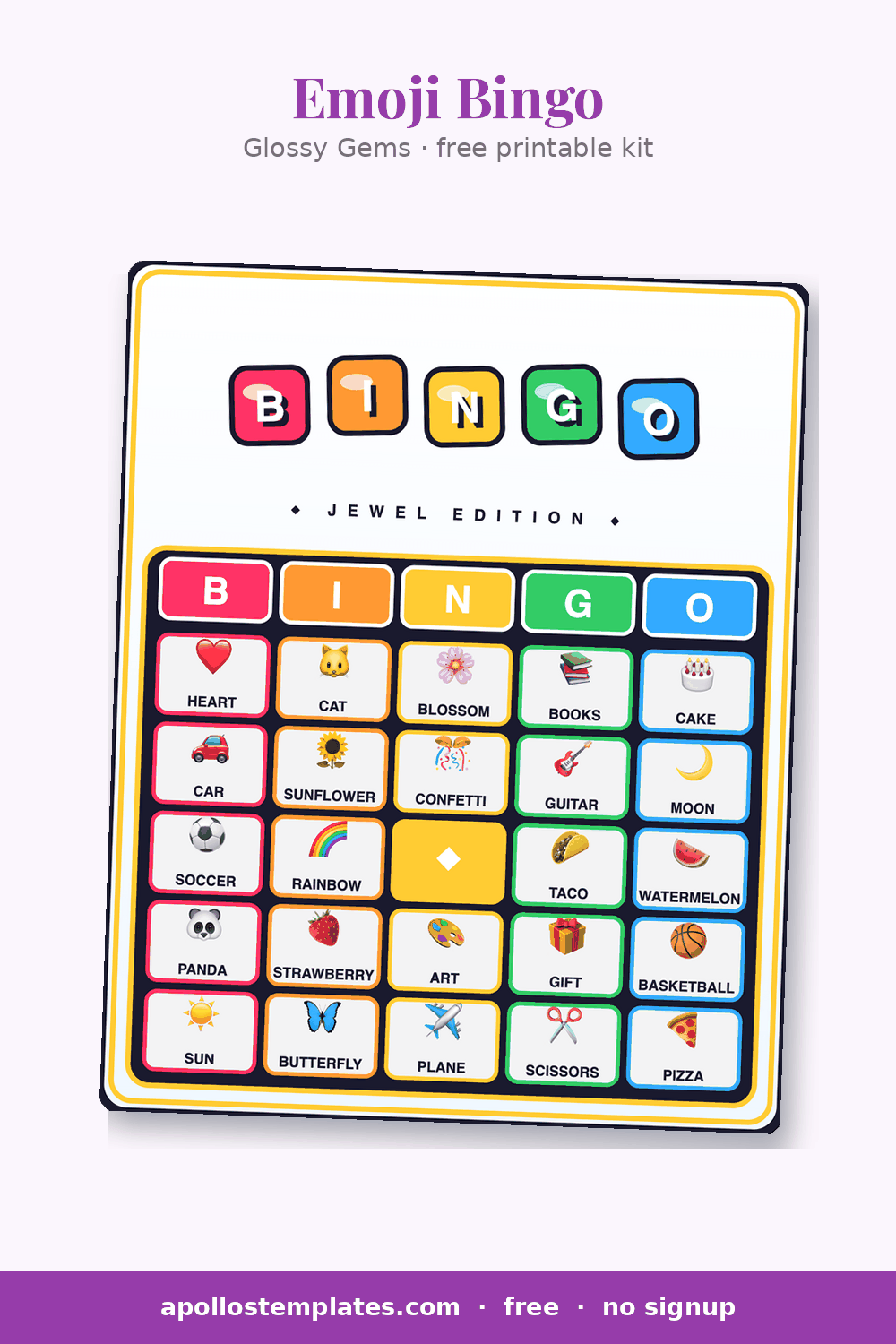
Glossy Gems
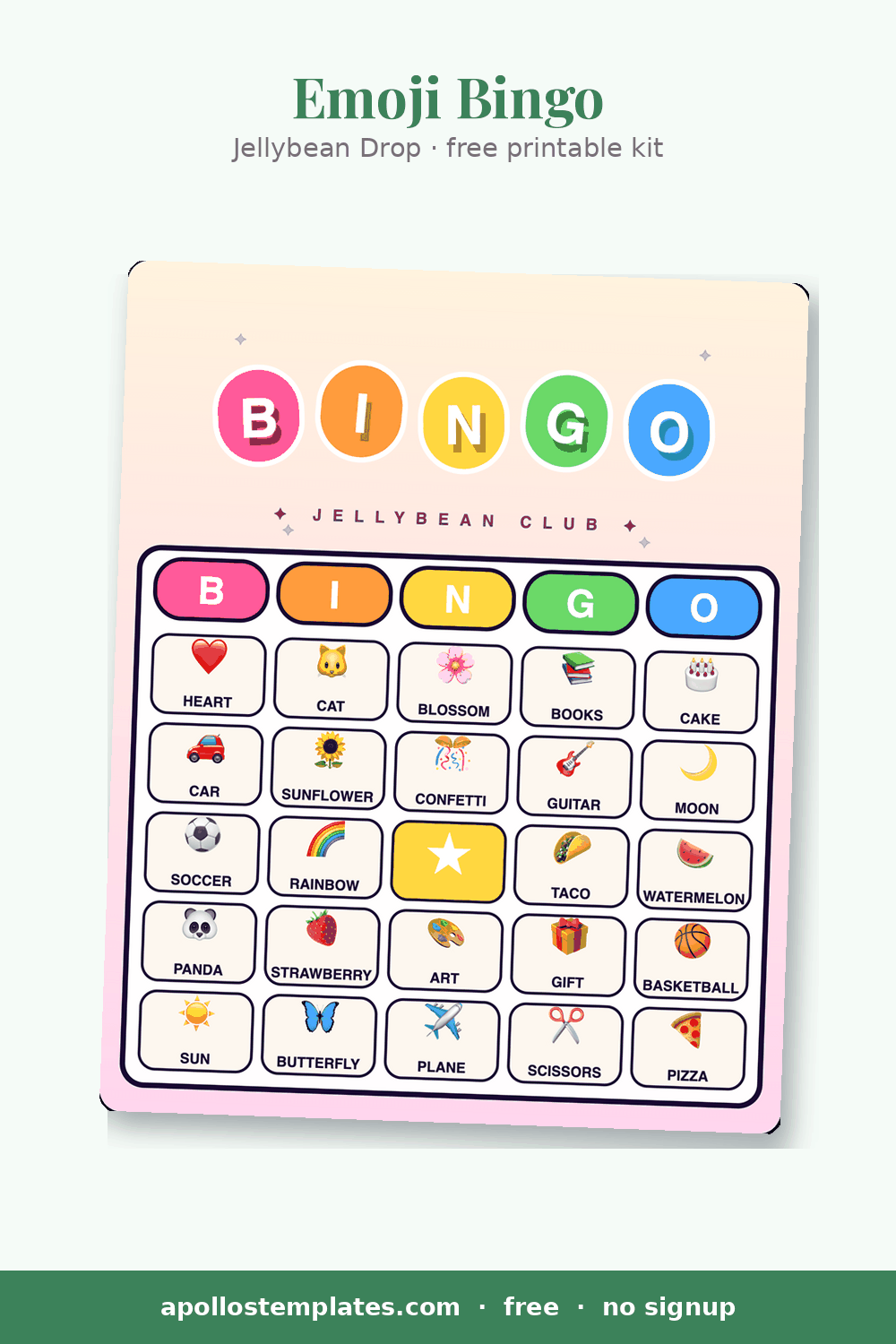
Jellybean Drop
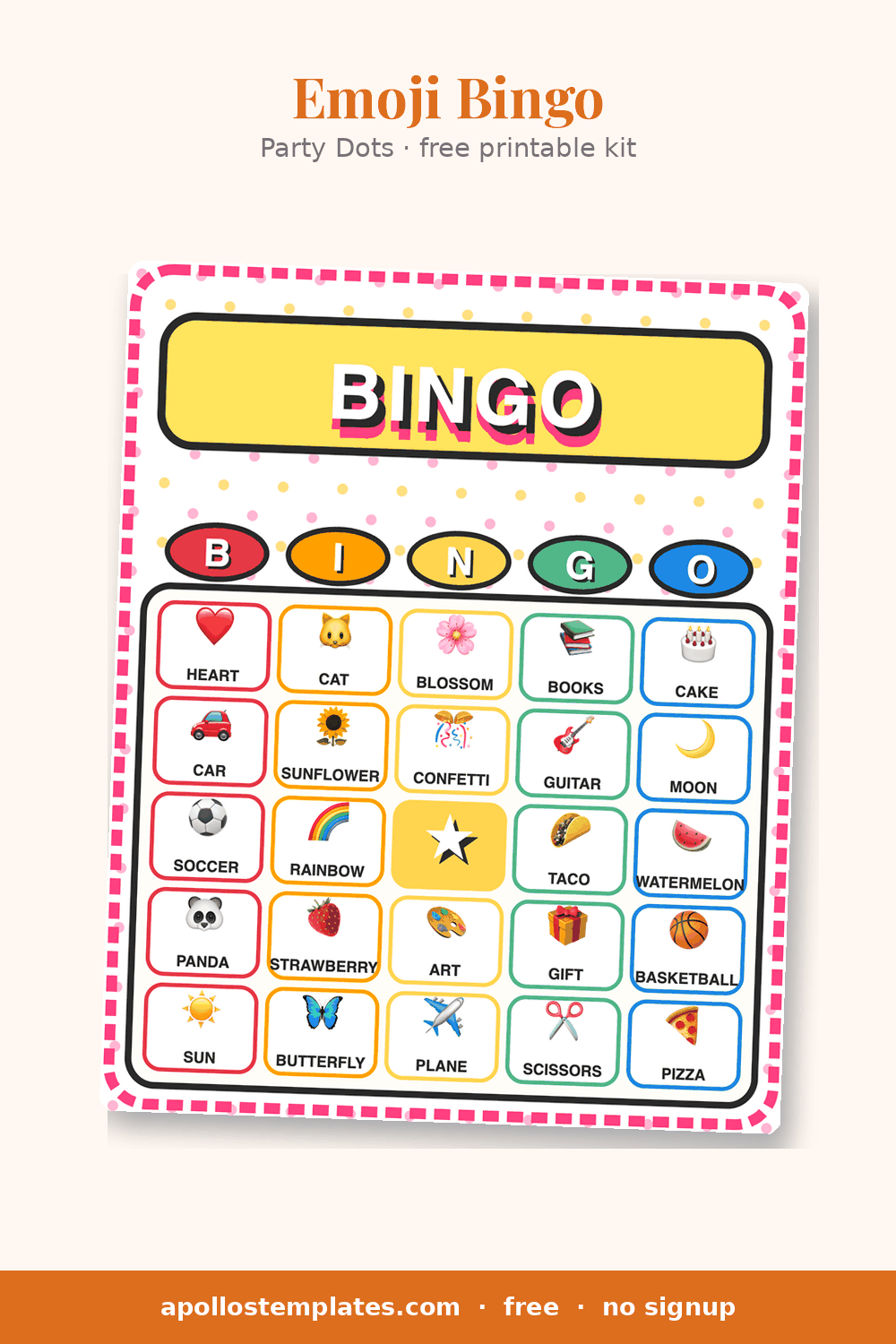
Party Dots
How emoji picture bingo works for pre-readers
For ages 3-5, pair each player with a parent or older sibling buddy. The buddy doesn’t play their own card; they coach. Hold up the calling card, say the name out loud twice, and let the kid scan their card for the match. The emoji-plus-name layout means even pre-readers can play independently within a few rounds.
For ESL classrooms, run the same play but rotate which words you put on the calling cards each week. The kit becomes a vocabulary-expansion tool dressed up as a game. M&M’s or a sticker sheet work as markers (a “star reader” sticker doubles as a literacy reward).
Emoji bingo, frequently asked.
Can pre-readers really play this?
Yes. Every cell shows the emoji and its name. A four-year-old can match by image while learning to associate the word.
Is this useful for an ESL classroom?
One of our most-printed kits for ESL teachers. Emoji + English word in every cell means students see vocabulary in visual context.
Will the emojis print on B&W?
Color is strongly recommended. Some pairs (red apple vs green apple) become hard to tell apart in grayscale.
Multi-language family group?
Emojis are language-independent. Call items in either language; players match by emoji.
How is this different from regular picture bingo?
The text label under every emoji. Most picture-bingo kits are image-only; adding the word makes this useful for vocabulary practice as well as play.
Who plays emoji bingo: kindergarten to trivia night
Preschool teachers run emoji bingo because the icons + names support kids still learning to read. Elementary classrooms use it as a fast game-day kit. Tweens like the phone-pop visual aesthetic. Grown-up trivia nights run it ironically. Randomized boards mean every player gets a unique card.
Looking for a different theme? The full bingo template hub covers every major holiday and event. You might also like our birthday bingo kit for a kid-party-specific theme, the back-to-school bingo for the first-week classroom, or the logo bingo generator if you want the kid’s photo in the FREE cell as a keepsake.