


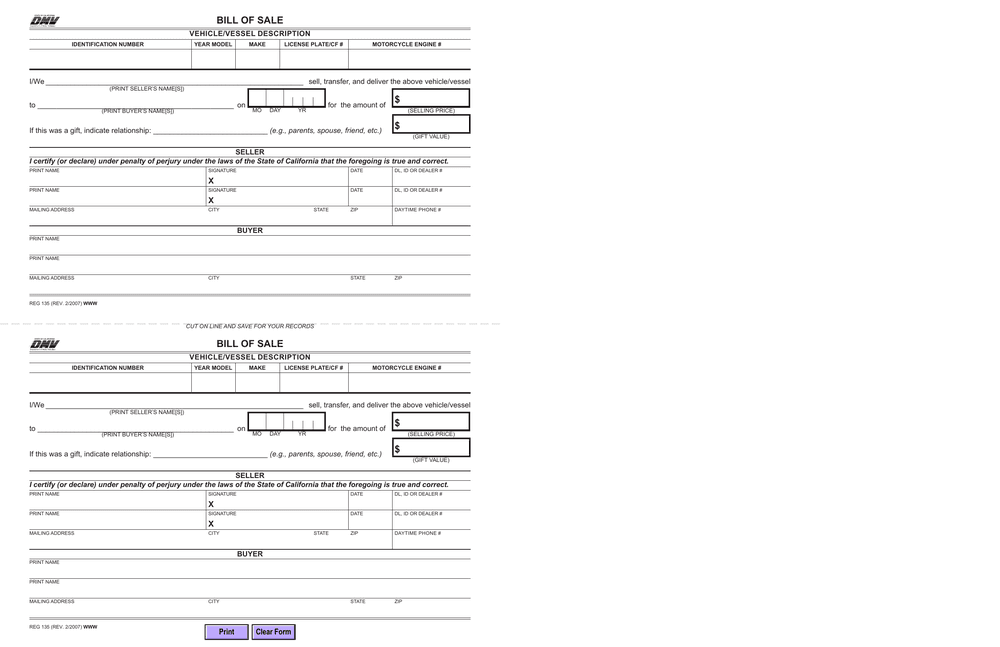
California Bill of Sale Form
California's private-sale paperwork runs on deadlines: the seller's 5-day Release of Liability, the buyer's 10-day title transfer, a 90-day smog certificate. Here's how REG 135 fits in — and why the fancier REG 262 can't be downloaded at all.
REG 135 for the record, REG 138 for your protection.
REG 262 and California's security paper.
Not legal advice. Verified against CA DMV, BAR, and CDTFA sources in July 2026 — official links in our 50-state requirements table.
California specifics, answered.
Is a bill of sale required to sell a car in California?
Not usually — the signed-over title transfers ownership, and REG 135 exists for when you need to document the deal or patch a gap in the ownership chain. What IS required of the seller: file the Notice of Transfer and Release of Liability (REG 138, online or by mail) within 5 calendar days of the sale.
Why can't I download the REG 262 form like the others?
Because it's printed on security paper. REG 262 (Vehicle/Vessel Transfer and Reassignment) combines a bill of sale, odometer disclosure, and power of attorney, and federal odometer rules require it to be a controlled document — so the DMV issues it at field offices or by phone, never as a download. For a simple private sale, the title's own assignment section plus REG 135 covers you.
Who handles the smog check in a private sale?
The seller, mostly. California requires the seller to provide a passing smog certificate (valid 90 days) for the ownership transfer, with exemptions for vehicles four model years old or newer (those pay a smog transfer fee instead — and note the exemption doesn't apply to diesels).
How is tax handled on a California private sale?
The DMV collects use tax from the buyer at registration, based on the actual purchase price — at your local combined rate (roughly 7.25% to over 10% depending on city). The buyer has 10 days to transfer title, and the DMV can question a stated price that looks far below market, so keep the bill of sale honest.
Build the right form for what you're selling.
The California rules above apply to whatever you are selling. Pick the item type to get a form with the right identifying fields on it.