





Florida Bill of Sale Form
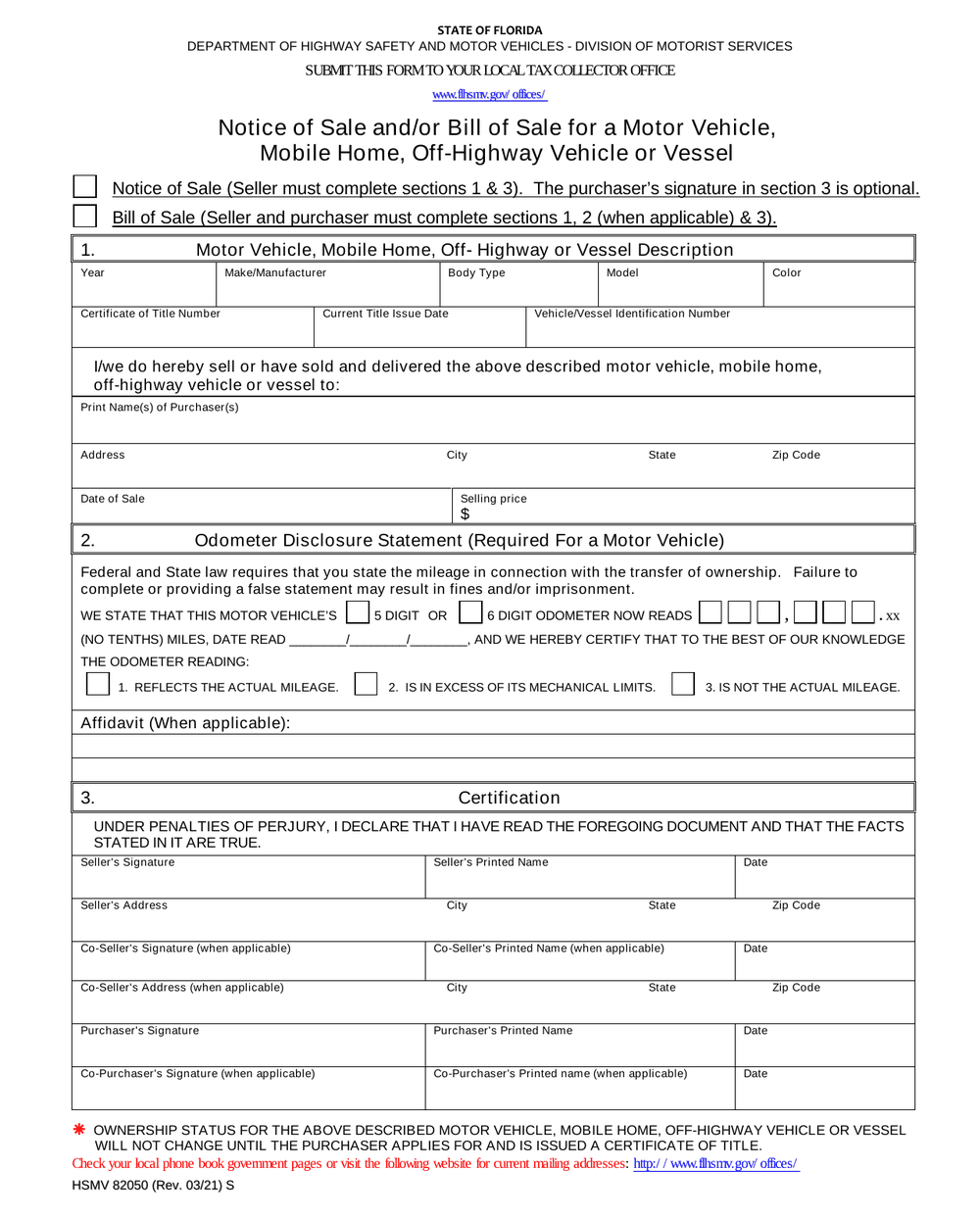
In Florida the bill of sale is the seller's shield: filing HSMV 82050 removes your registration from the car and cuts off liability for what the buyer does next. Get the official form here, plus the e-title and plate rules that trip people up.
One form, two jobs — and the second one protects you.
The two rules that surprise Florida sellers.
Not legal advice. Verified against FLHSMV sources in July 2026 — official links in our 50-state requirements table.
Florida specifics, answered.
What makes Florida's Form 82050 different from a normal bill of sale?
It's two documents in one: a bill of sale and a notice of sale. When the seller files it with the county tax collector, the vehicle's registration is removed from their name — which shields the seller from civil liability for whatever the buyer does with the car afterward. Most states have nothing this strong.
Do Florida bills of sale need to be notarized?
No. Notarization is not required on the title or the bill of sale in Florida — FLHSMV merely suggests notarizing the bill of sale for the seller's own records. Signatures from both parties are what matter.
What happens to my license plate when I sell?
It stays with you, never the vehicle. Remove it before the buyer drives off — you can transfer it to your replacement vehicle, and you must surrender it if you cancel the insurance or leave Florida. A plate left on a sold car is a liability problem.
The title is electronic — how do we transfer it?
Both of you go together. When a Florida title is held electronically, buyer and seller appear jointly with photo ID at a motor vehicle service center for a secure reassignment. The buyer then has 30 days to complete the transfer; tax is 6% of the price plus the county surtax on the first $5,000.
Not selling a car? Start here instead.
The Florida rules above apply to whatever you are selling. Pick the item type to get a form with the right identifying fields on it.