
Track spending by category, day by day.
One row per budget category, one column per day of the month. Log dollar amounts as they're spent. Fillable in any PDF viewer.
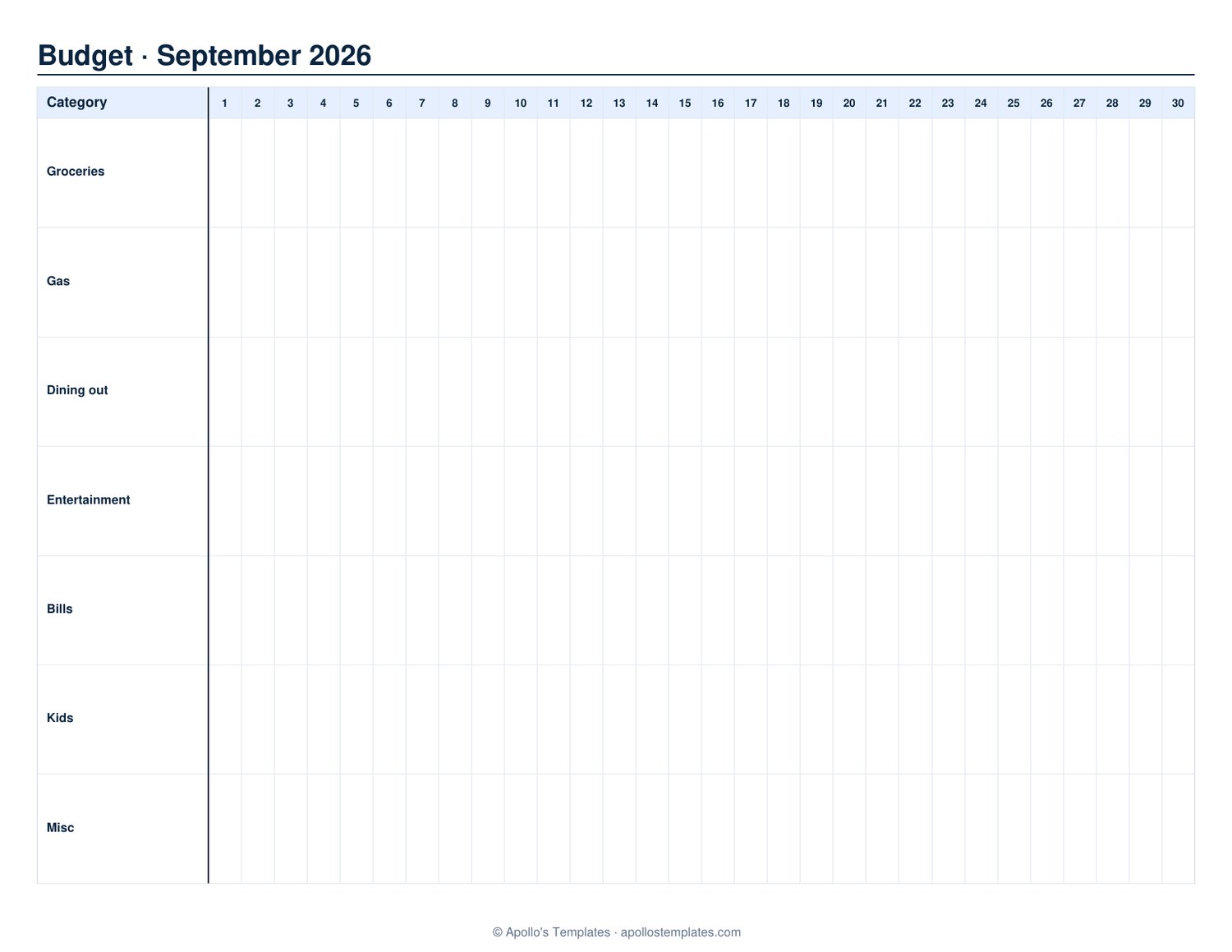
Budget calendar — bills, paydays and spending on a monthly grid
Pick the month and you get a grid with a row for each spending category — groceries, gas, dining out, entertainment, bills, kids, misc, or names of your own — and a column for every day. Write what you spent in the cell where it happened and note bill amounts on their due dates, and the month's spending pattern is visible at a glance.
Bill calendar vs. spreadsheet budget
A spreadsheet totals; a bill calendar shows timing — when money arrives and leaves. Many people keep both: this printable on the fridge, the spreadsheet for the math. Pair it with the weekly meal planner to plan grocery spend by week. Free fillable PDF, no signup.
Tips for the best result
Set monthly category targets in the row labels. "Groceries — $600" makes the running total meaningful. Without a target, the totals are just numbers.
End-of-day reconciliation. Log spends as they happen (write on the sheet from your wallet or quickly add at the front door). End-of-day, glance at category running totals to course-correct tomorrow.
Sunday review. Spend 10 minutes Sunday adding category totals for the week. The week's total shows you where you stood; the categories show you where to redirect.
Don't beat yourself up. Some weeks will go over. The point of a budget calendar isn't perfection; it's awareness. The awareness changes behavior over months, not days.