
Track your habits, one day at a time.
A monthly grid with one row per habit and one column per day. Tick the cell or jot a count — watch the streaks build. Works in any PDF viewer.
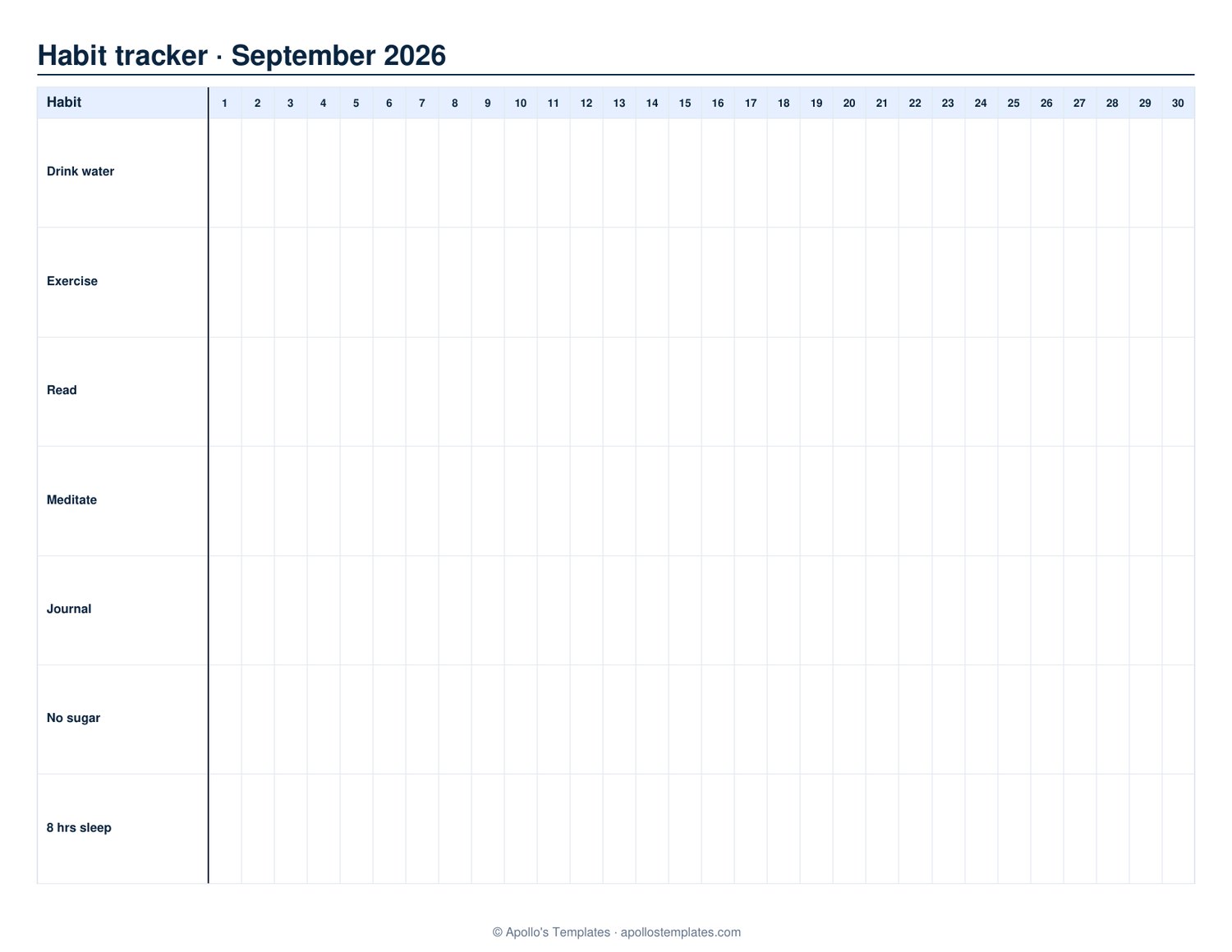
Printable habit tracker — daily, monthly, any habit
Name your habits and the tracker gives each one a row with a box for every day of the month you pick. Tick, color or write a number (minutes read, glasses of water, steps). Print it for the wall or the fridge, or fill it in the PDF and save the month.
Habit tracker for bullet journals, spreadsheet refugees and classrooms
It's the same grid a bullet-journal habit spread uses, already ruled; print at 100% for Letter or A4 or scale to fit an A5 journal. Teachers use it as a behavior or reading log — see the chore chart template for kids' routines and the workout tracker for exercise.
Tips for the best result
Put it where you'll see it. Fridge, bathroom mirror, desk — anywhere your day passes through. The whole point is the tracker reminding you, not you remembering the tracker.
Start with 3 habits. Resist the urge to fill all the rows on day one. Three reliable habits beats ten attempted ones.
Color one cell, then the next. The "don't break the chain" effect is real — once you have 5 days in a row colored in, missing day 6 feels like a real loss. Use that against your future self.
Plan for the broken streak. Everyone misses a day eventually. The rule that works: never miss two in a row. One miss is a blip, two in a row is the start of "well, I've already broken it."