
Track your workouts, one day at a time.
A monthly grid with one row per exercise (or workout day) and one column per date. Log sets, reps, times, or just a tick.
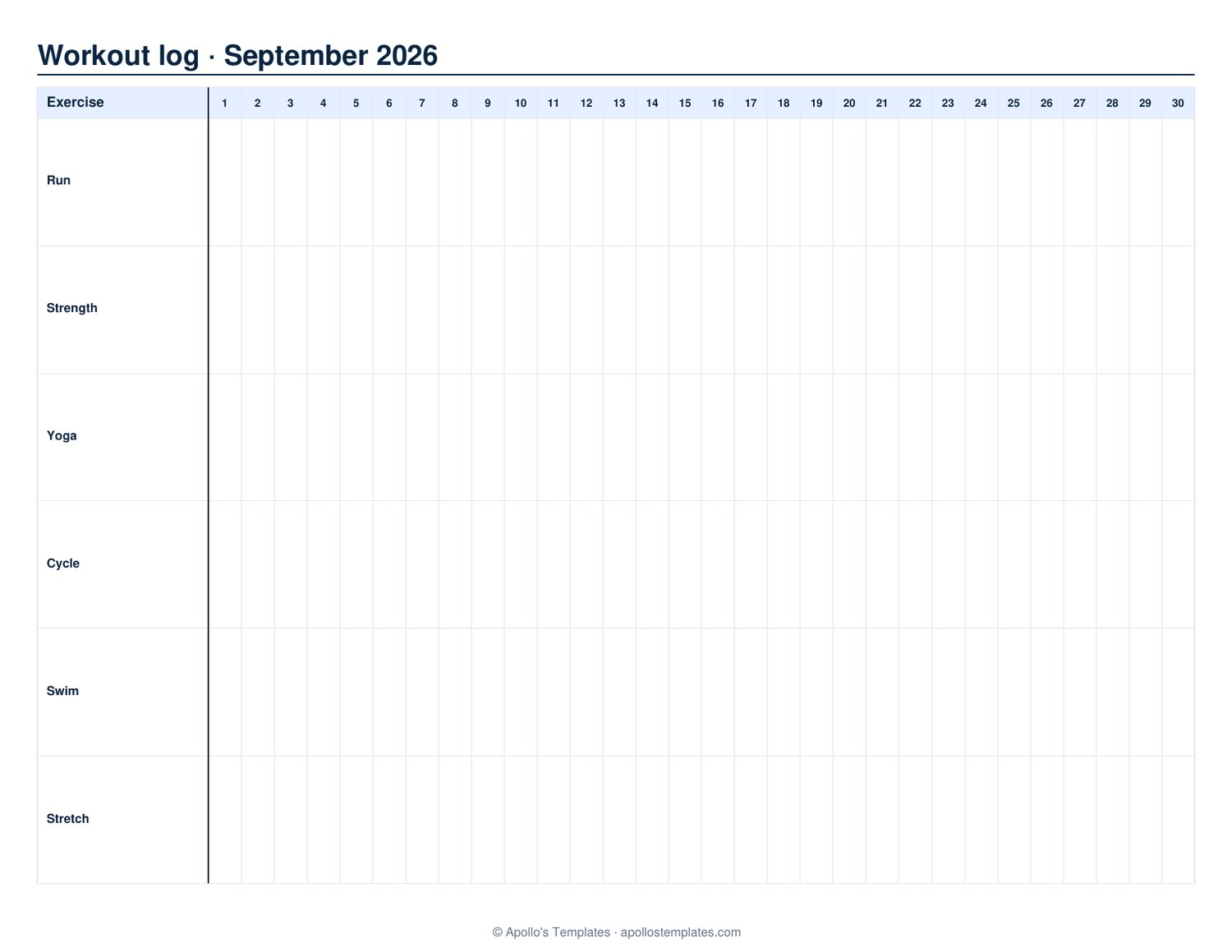
Printable workout log — track reps, weight or just check the box
List the exercises or workouts you do (or leave the rows blank), pick the month, and print a grid with a cell for every day. Write reps and weight, a run distance, or simply tick that you showed up. It's a workout calendar and a fitness log in one sheet.
Workout tracker for the gym bag, not the spreadsheet
Spreadsheet trackers are great for progression math; this is the paper version you actually fill in at the gym or on the fridge. For non-fitness habits use the habit tracker template. Free fillable PDF, no signup, no Excel or Google Sheets needed.
Tips for the best result
Pick exercises you'll actually do. Aspirational rows ("daily yoga") sit empty all month and the empty cells become evidence of failure. List what you realistically train.
Set the rep target, not just the exercise. "Squat 3×5" tells you what to do. "Squat" leaves you to decide every session, which is one more decision your tired post-work brain has to make.
Color cells by intensity. Green for "easy session," yellow for "hard," red for "PR or new max." After a month you can see your training stress at a glance.
Print at the start of each program block. A monthly sheet aligns nicely with a 4-week program block. Print, run the block, review, plan the next one.