
A weekly family calendar with a row per person.
Each family member gets a row and each day a column. Track schedules, pickups, practices, and appointments side by side.
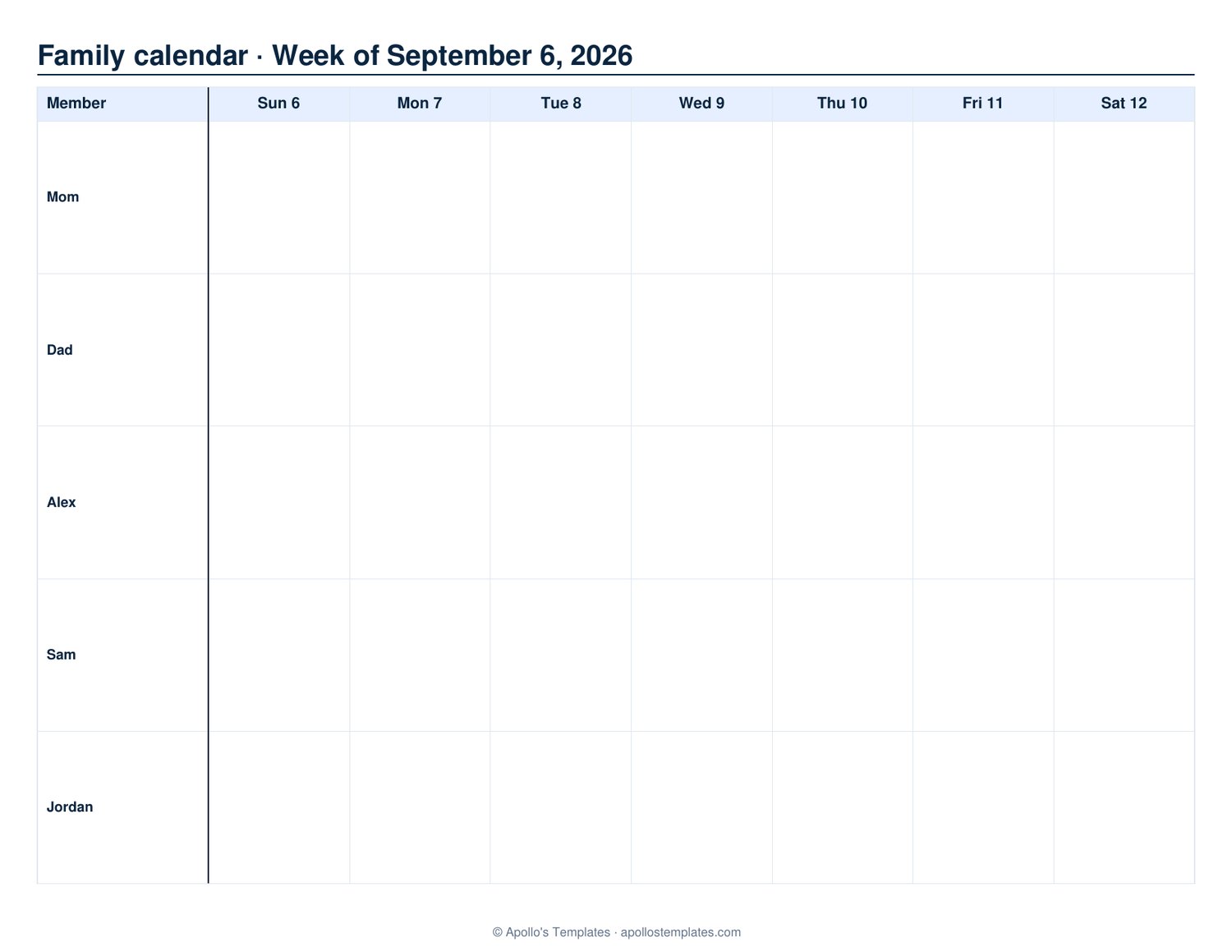
Printable family calendar — the fridge command center
Type each family member's name into a row and the week's schedule into the cells: practices, appointments, shifts, school events. Print it for the fridge or the family command center, or keep the filled PDF on a tablet. Generate a month of weeks at once.
Family schedule, chores, meals and birthdays
The family calendar is the schedule; the chore chart template tracks who does what, the weekly meal planner plans dinner, and the birthday calendar keeps the family's dates forever. All free fillable PDFs — no Excel family calendar template to maintain.
Tips for the best result
One pen color per family member. Reduces confusion when reading the sheet at a glance — "red writing means Sam."
Sunday family-meeting ritual. 10 minutes with the printed sheet on the table — everyone adds their week's commitments, parents call out conflicts. Catches scheduling collisions before they happen.
Color the conflicts. Highlight in yellow any time-slot where two family members have something at the same time. Forces the conversation: who needs to drive whom, who has to skip what.
Save a paper trail of busy seasons. A binder of weekly sheets is surprisingly useful evidence the next time someone says "we're not that busy" — flip through October.