





Arkansas Bill of Sale
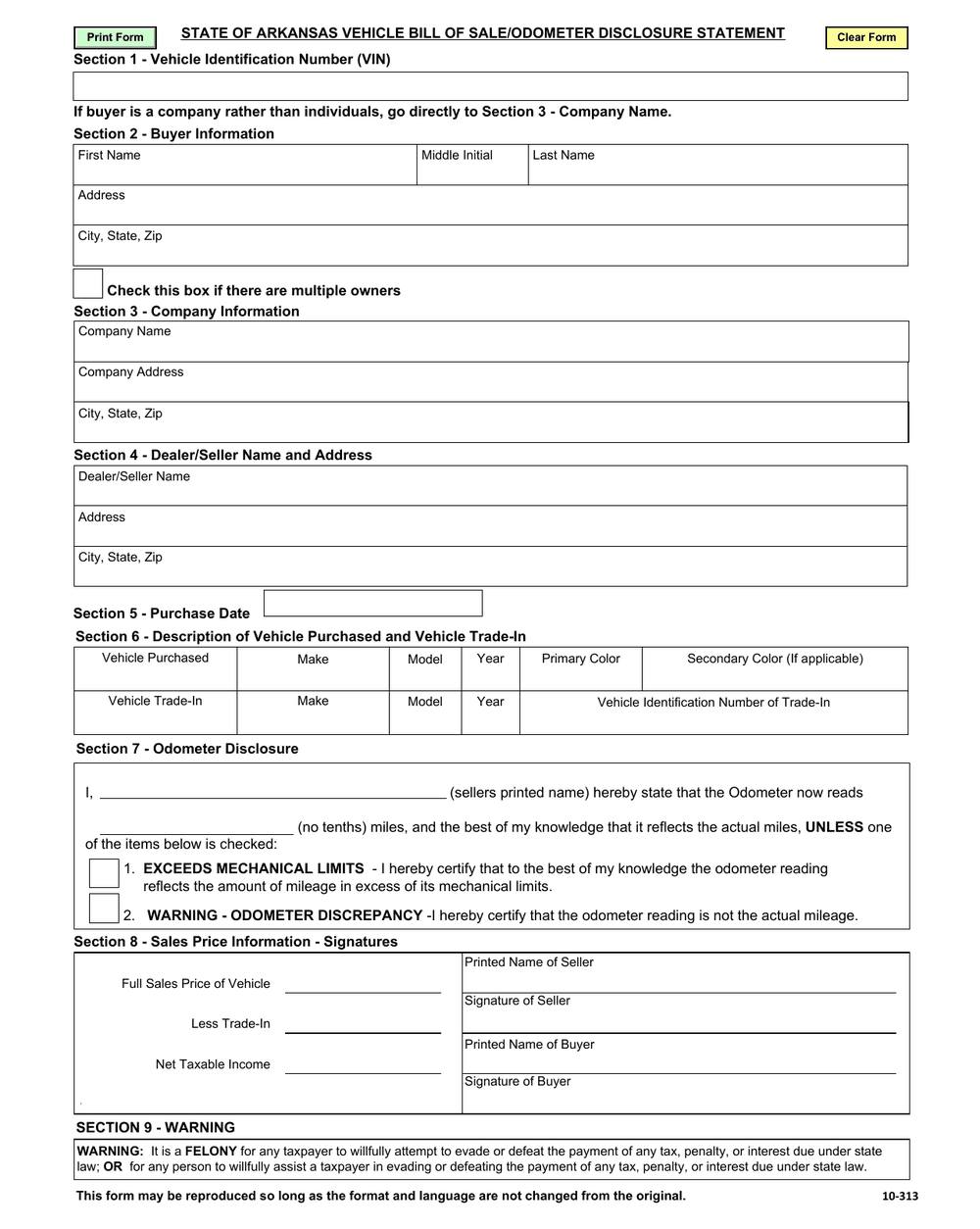
In Arkansas the sale price picks the tax bracket — zero under $4,000, reduced to $10,000, full rate above — which makes the bill of sale the most consequential piece of paper in the deal. Form 10-313 and the rules, here.
Form 10-313 sets the bracket.
Arkansas specifics, answered.
Why does the price on an Arkansas bill of sale matter so much?
Because Arkansas taxes used vehicles in brackets keyed to the price: under $4,000 owes no sales tax at all — state or local; $4,000–$9,999 pays a reduced 3.5% state rate; and $10,000 or more pays the full 6.5%. Local city and county taxes apply at their full rates in the two taxed brackets. A few hundred dollars across a bracket line changes the tax bill by hundreds — Form 10-313 is the document that fixes the number.
Is Form 10-313 required in Arkansas?
The Department of Finance and Administration expects a bill of sale or invoice showing the purchase price when you register — 10-313 is the official version and doubles as an odometer disclosure statement. Both parties sign; no notary is required.
What are the Arkansas deadlines?
The buyer has 60 days to title and register at a state revenue office (Arkansas runs registration through DFA revenue offices, not county clerks). Want to drive sooner? A temporary preprinted tag must be obtained within 10 days of purchase if the vehicle has no plate.
What does the seller keep and do?
The plate — Arkansas plates stay with the seller, who can transfer them to a new vehicle or turn them in for a partial refund of remaining registration. Keep a signed copy of the bill of sale; with brackets on the line, the price record protects both sides if DFA asks questions.
Not legal advice. Verified against Arkansas DFA sources in July 2026 — official links in our 50-state requirements table.
Build the right form for what you're selling.
The Arkansas rules above apply to whatever you are selling. Pick the item type to get a form with the right identifying fields on it.