





Connecticut Bill of Sale
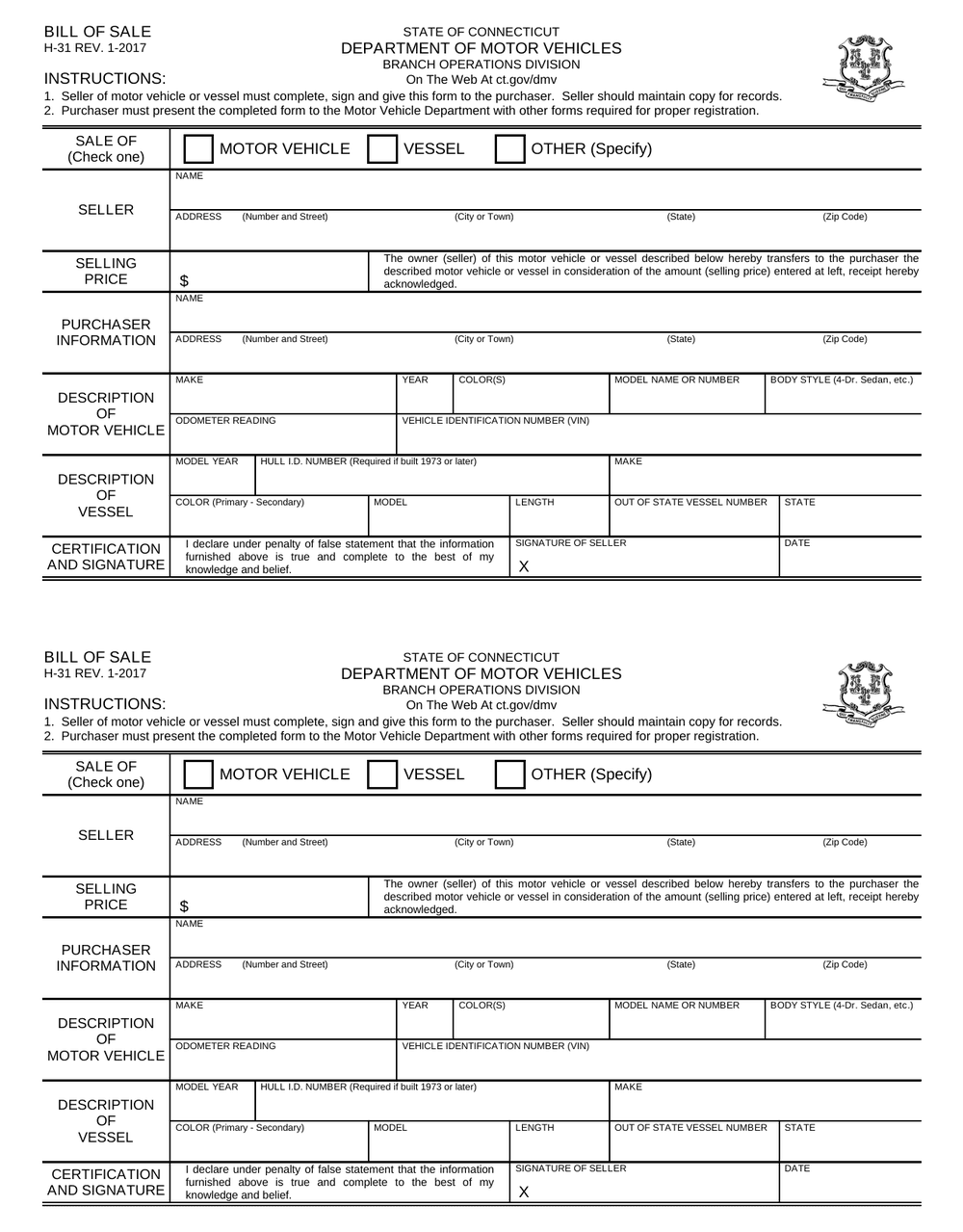
Connecticut puts the bill-of-sale duty on the seller, taxes the higher of price or book, and sells its classics title-free once they pass 20 model years. Form H-31 and every rule that surrounds it, explained below.
H-31 is the seller's job — here it is.
Connecticut specifics, answered.
Who is responsible for the bill of sale in Connecticut?
The seller — Connecticut flips the usual script and obligates the seller to provide the buyer a bill of sale, with Form H-31 as the DMV's official version. The buyer then needs it, along with the signed title, to register. Keep a copy on both sides; the seller's copy is the defense if the buyer never registers.
How does Connecticut compute tax on a private sale?
On the HIGHER of the purchase price or the NADA book value — writing $500 on the form for a $5,000 car accomplishes nothing except raising questions. The standard rate is 6.35%, jumping to 7.75% for vehicles over $50,000. Genuine below-book deals survive scrutiny better with condition documented.
What's the Q-1 route for older Connecticut cars?
Connecticut doesn't require a title for vehicles more than 20 model years old. Those sell on a bill of sale plus the current or expired registration, with the buyer completing Form Q-1 (Supplemental Assignment of Ownership). It's the standard classic-car lane, not a workaround.
What must the Connecticut seller do after handing over the keys?
Two things people forget: cancel the plates with DMV (plates never transfer to the buyer) and only then cancel insurance — Connecticut fines owners whose insurance lapses while plates remain active. Do it in that order and the sale closes clean.
Not legal advice. Verified against Connecticut DMV sources in July 2026 — official links in our 50-state requirements table.
Twenty-four item types, one Connecticut record.
The Connecticut rules above apply to whatever you are selling. Pick the item type to get a form with the right identifying fields on it.