




Georgia Bill of Sale
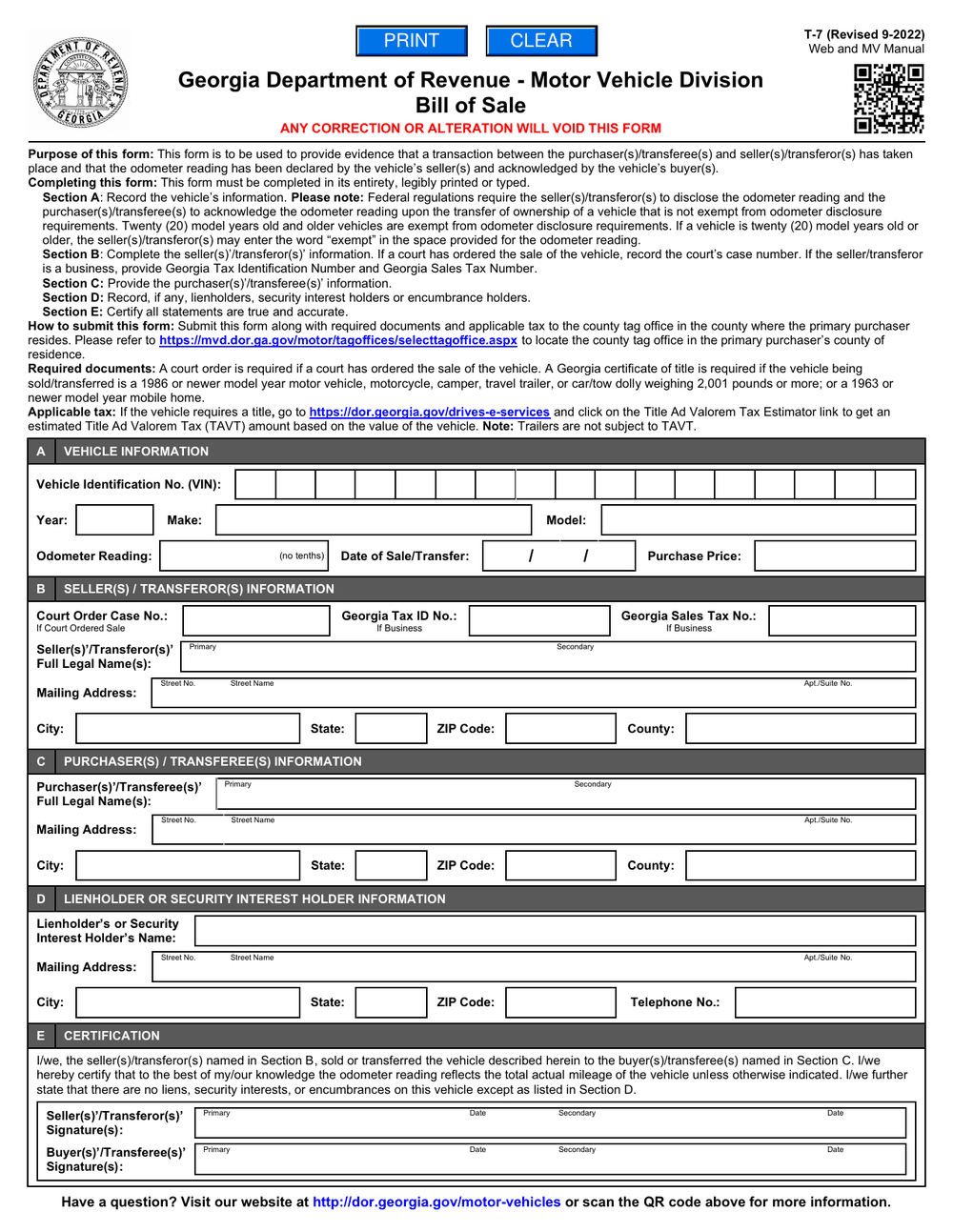
Georgia taxes the book, once — 7% TAVT on assessed value at the county tag office, then never again. Form T-7 is the official bill of sale that carries the odometer disclosure and the title-exempt cases. Both are here.
One tax, one office, one form worth keeping.
The tax that ignores your negotiation.
Not legal advice. Verified against Georgia DOR sources in July 2026 — official links in our 50-state requirements table.
Georgia specifics, answered.
Does Georgia require a bill of sale for a private sale?
Mostly for the older and odometer cases: Form T-7, published by the Department of Revenue, doubles as the federal odometer disclosure and is chiefly used when the title can't carry the transaction — including title-exempt vehicles. For a routine titled sale, the assigned title does the legal work and the T-7 is the receipt worth keeping.
Why doesn't my negotiated price change the Georgia tax?
Because TAVT — the one-time 7% Title Ad Valorem Tax — is charged on the state's assessment-manual value (an average of book wholesale and retail), not on what you paid, and private sales get no trade-in reduction. The upside of the deal: TAVT replaced both sales tax and the old annual ad valorem birthday tax, so you pay once at titling and never again.
What's the family discount on TAVT?
Immediate-family transfers pay a reduced 0.5% TAVT instead of 7% — provided the vehicle is already in the TAVT system — using notarized affidavit MV-16 to document the relationship. On any meaningful vehicle value, that's a serious saving worth the affidavit.
How do really old vehicles change hands in Georgia?
Vehicles of model year 1985 and older are title-exempt: they transfer on a bill of sale plus a Form T-22B inspection certification instead of a title. Everything runs through the county tag office in the buyer's home county — Georgia has no state DMV branches for this — within 30 days of purchase, after which a 10% penalty plus interest starts.
Not selling a car? Start here instead.
The Georgia rules above apply to whatever you are selling. Pick the item type to get a form with the right identifying fields on it.