




Kansas Bill of Sale
In Kansas the bill of sale is conditional for modern cars — and the whole ownership document for anything 35 years or older. TR-312, the county treasurer route, and the antique rule, all explained here.
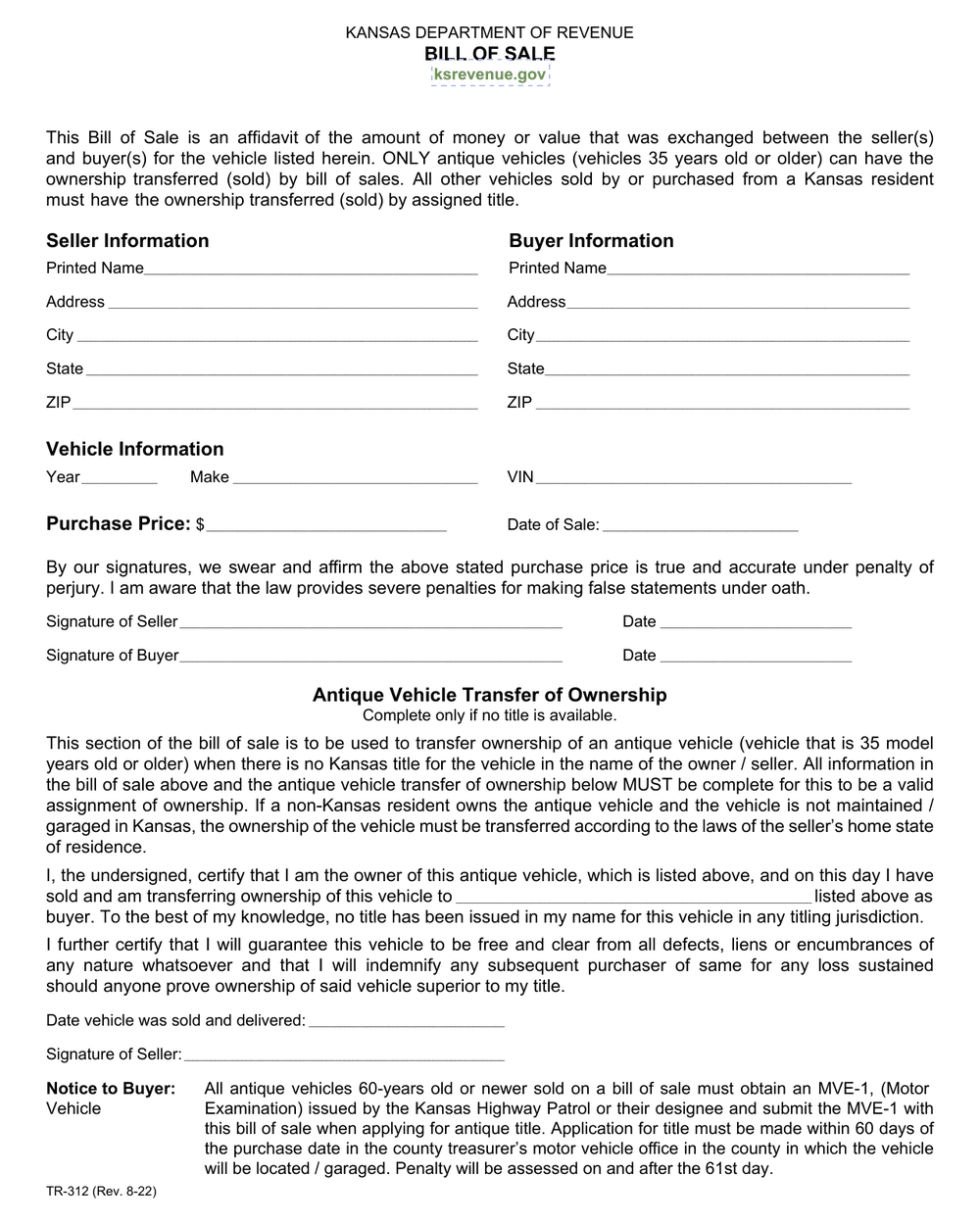
TR-312 when the title is silent; everything when the car is old.
Kansas specifics, answered.
When does Kansas actually require a bill of sale?
Only when the assigned title doesn't state the purchase price — TR-312 fills the gap so the county treasurer can compute sales tax. Older Kansas titles often lack a price line, which is when the form becomes mandatory rather than optional.
What's the Kansas antique exception?
For vehicles 35 model years and older, Kansas law allows a bill of sale to transfer ownership by itself — no title required. It's one of the few states where the bill of sale can be the entire ownership document, which makes doing it properly (full VIN, both parties, price, date) genuinely important for classics.
Where and when does the buyer register?
At the county treasurer's office within 60 days of purchase. Sales tax is charged at the higher of the rate where the sale happened or the rate at the buyer's home address. Vehicles coming from out of state add one step first: a $20 MVE-1 VIN inspection by the Kansas Highway Patrol before the treasurer will issue a title.
Can the buyer drive home legally before registering?
Yes — Kansas sells a 60-day temporary permit through the county treasurer or online, bridging the gap between handshake and title work. The seller keeps the plates; they never convey with the vehicle.
Not legal advice. Verified against Kansas Department of Revenue and Highway Patrol sources in July 2026 — official links in our 50-state requirements table.
Whatever's in the driveway or the barn.
The Kansas rules above apply to whatever you are selling. Pick the item type to get a form with the right identifying fields on it.