






Nebraska Bill of Sale
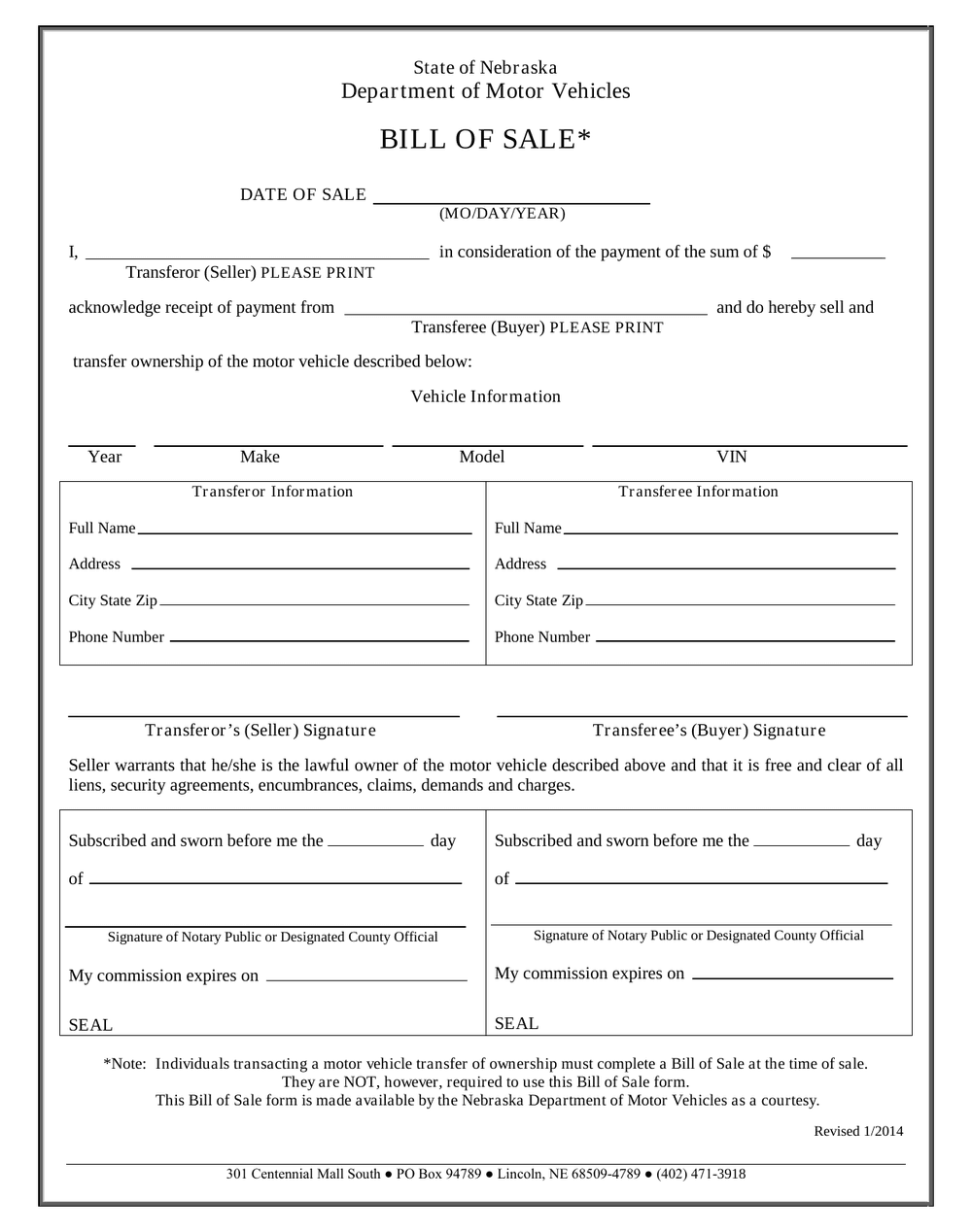
Nebraska is one of the few states where the bill of sale is effectively required — the county treasurer expects it beside the title and Form 6. Get the official form here, plus the MSRP-tax quirk and the 60-day plate refund most sellers miss.
Required — and the state hands you the form.
Nebraska taxes the car it was, not the car it is.
Not legal advice. Verified against Nebraska DMV and county sources in July 2026 — official links in our 50-state requirements table.
Nebraska specifics, answered.
Is a bill of sale really required in Nebraska?
Effectively, yes — unusual among states. Nebraska expects a bill of sale to complete a title transfer: any format works if it identifies the year, make, model, and VIN, and the DMV publishes an official PDF for exactly this. Pair it with Form 6, the sales/use tax statement that documents the price for the county treasurer.
Who handles the transfer, and how fast?
The county treasurer, not a DMV office. The buyer has 30 days from purchase to title ($10 fee) and pay the 5.5%-plus-local sales tax — and note Nebraska has no casual-sale exemption, so private deals are taxed like dealer ones.
Why does my annual registration bill ignore what I paid?
Because Nebraska's annual Motor Vehicle Tax is computed from the vehicle's original MSRP and its age — not its market value or your price. Two identical-year vehicles pay the same tax whether bought for $3,000 or $13,000. Omaha, Lincoln, and some counties add a wheel tax on top at registration.
What happens to my plates and unused registration when I sell?
Plates stay with you, and Nebraska actually refunds: surrender the plates and registration to the issuing county within 60 days of the title transfer and you can claim back the unused portion of your registration fees and motor vehicle tax. Few sellers know — it's real money on a recently renewed registration.
Whatever's in the driveway or the barn.
The Nebraska rules above apply to whatever you are selling. Pick the item type to get a form with the right identifying fields on it.