




Nevada Bill of Sale
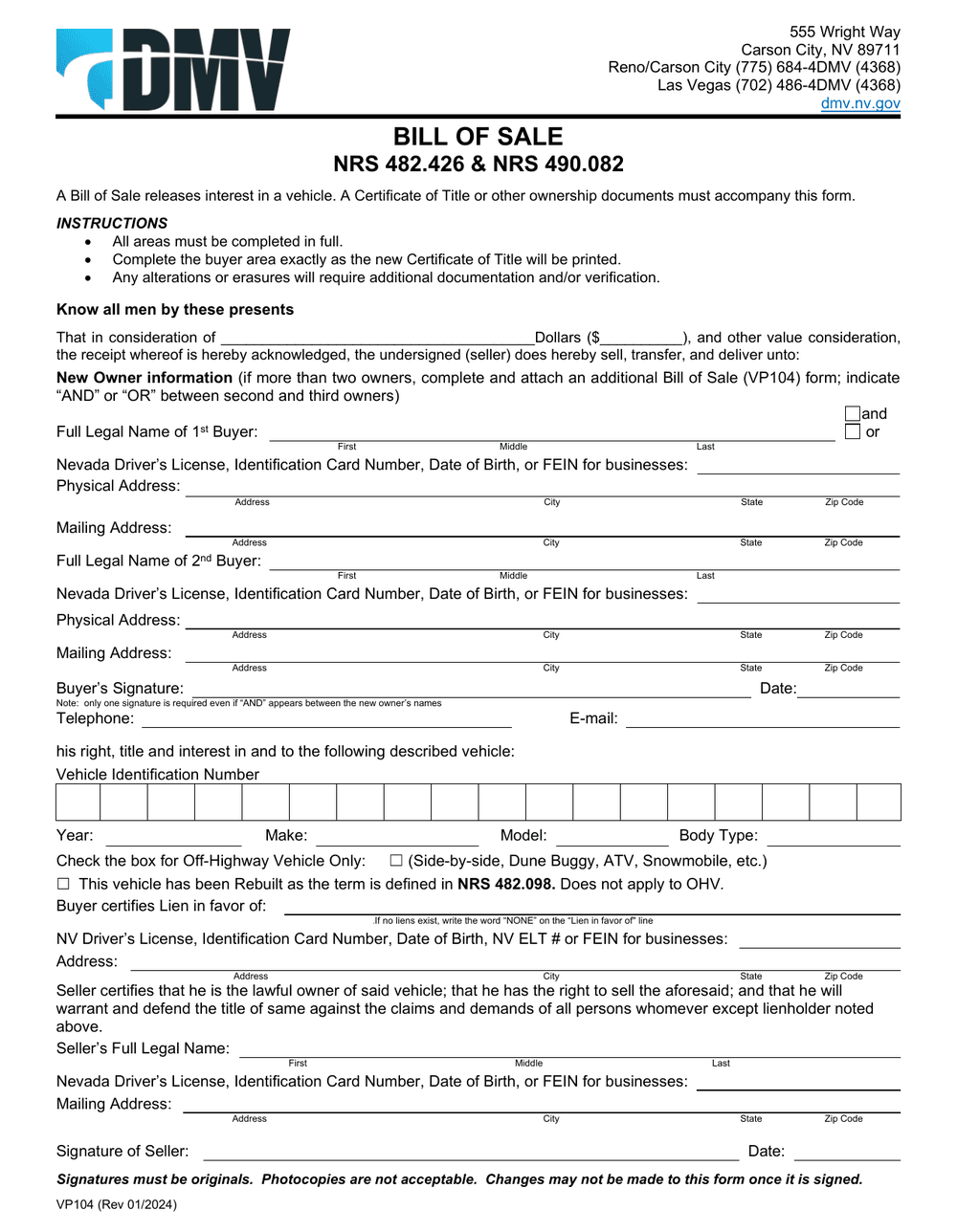
Nevada writes the bill of sale into statute, charges nothing in sales tax on private deals, and lets the buyer drive three days on the signed form alone. VP-104 and the full picture, below.
VP-104: required by statute, and briefly a driving permit.
Nevada specifics, answered.
Is the Nevada bill of sale actually required by law?
Yes — NRS 482.426 requires a bill of sale for private-party vehicle sales, and VP-104 is the DMV's official form. That statutory footing makes Nevada one of the clearest 'yes, required' states in the country.
Is it true Nevada charges no sales tax on private sales?
True — person-to-person vehicle sales owe zero sales tax in Nevada. Only governmental services and registration fees apply when the buyer titles. It's one of the best private-sale tax deals anywhere, and a big reason the paperwork trail (VP-104, title, odometer) is what the DMV scrutinizes instead.
How does the buyer legally drive the car before registering?
Nevada allows three days of driving on the signed bill of sale itself (kept in the vehicle), after which a DMV movement permit is needed until registration — which must happen within 30 days. Vehicles model year 2011 and newer also need the paper title present for the federal odometer disclosure.
What about plates and smog checks?
Plates belong to the seller — remove them, and surrender or transfer within 60 days. In the urban parts of Clark County (Las Vegas) and Washoe County (Reno), gasoline vehicles model year 1968 and newer need an emissions test no older than 90 days at registration (1996-and-newer vehicles get the quicker OBD check; new vehicles and the first five years of hybrids are exempt); rural Nevada skips it.
Not legal advice. Verified against Nevada DMV and NRS sources in July 2026 — official links in our 50-state requirements table.
Not selling a car? Start here instead.
The Nevada rules above apply to whatever you are selling. Pick the item type to get a form with the right identifying fields on it.