



South Carolina Bill of Sale
South Carolina's $500 fee cap makes expensive cars cheap to transfer — and its county-tax-first sequence makes every buyer walk a particular path: auditor, treasurer, then DMV. Form 4031 and the whole route, explained.
Form 4031, the $500 cap, and the county-first route.
South Carolina specifics, answered.
Is a bill of sale required in South Carolina?
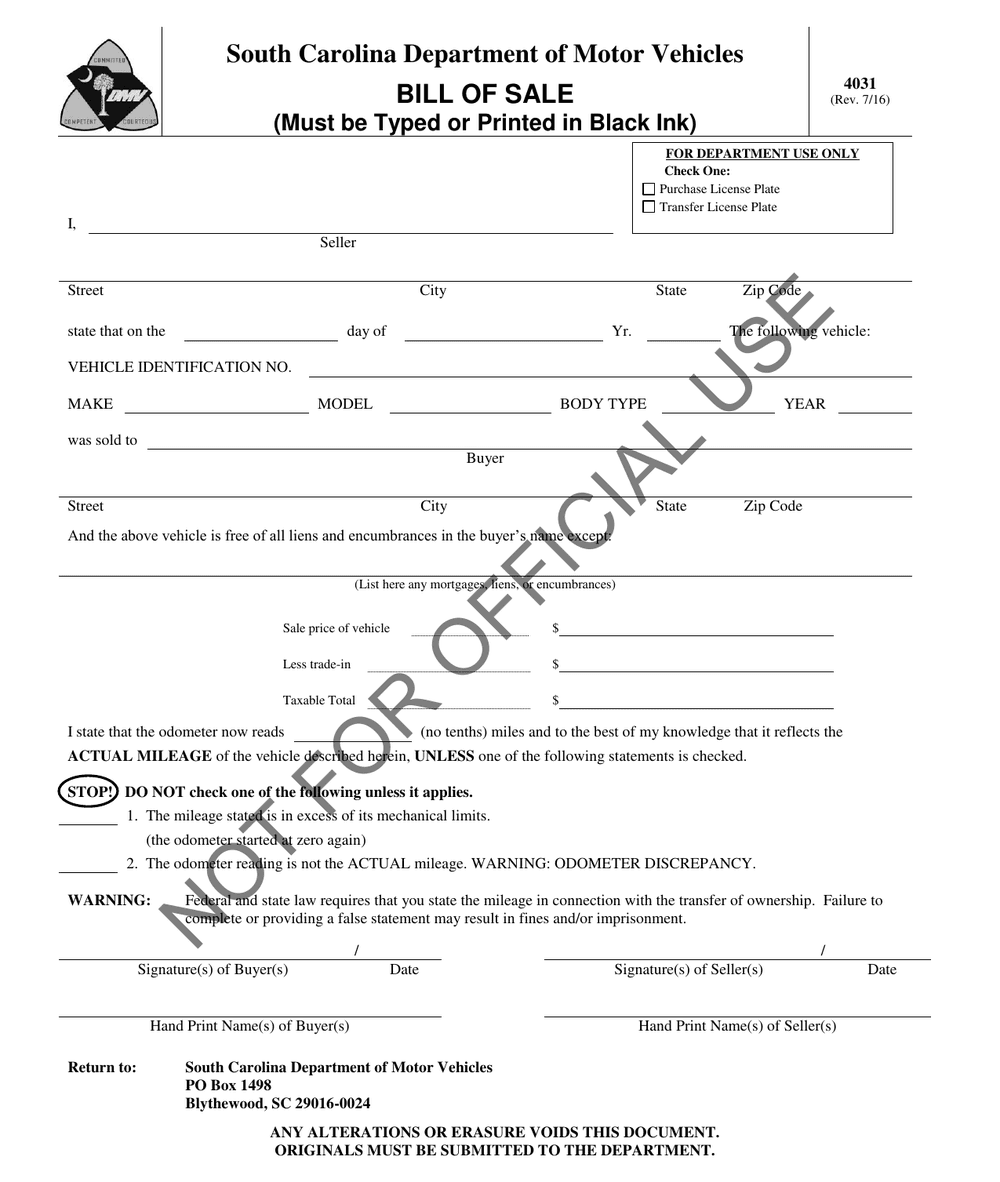
For title transactions, yes — SCDMV requires a signed bill of sale or buyer's order showing the total sale price, and Form 4031 is the official version. It becomes truly indispensable when the title lacks price and odometer fields, which is typical of older titles.
What is the Infrastructure Maintenance Fee, and why do people like it?
The IMF replaced sales tax on vehicles in 2017: 5% of the price (or fair market value on private sales), capped at $500. Anything above a $10,000 vehicle hits the cap — a $40,000 truck pays the same $500 a $10,000 sedan does. SCDMV won't issue title or plate until it's paid.
Why does the county want money before the DMV will register?
South Carolina's famously backwards-feeling sequence: get a vehicle property tax bill from your county auditor (bring the VIN), pay the county treasurer, and only then take the paid receipt to SCDMV for plate and registration. Budget the trip order accordingly — auditor, treasurer, DMV.
What else should the parties know?
The buyer has 45 days to title and register. On the title application, the conjunction between co-owners matters: 'or' lets either owner act alone, 'and' requires both signatures. No notarization is required on Form 4031 or the title assignment — and buyers without an SC license use Form TI-006 to register.
Not legal advice. Verified against SCDMV, SC DOR, and county sources in July 2026 — official links in our 50-state requirements table.
Twenty-four item types, one South Carolina record.
The South Carolina rules above apply to whatever you are selling. Pick the item type to get a form with the right identifying fields on it.