




Utah Bill of Sale
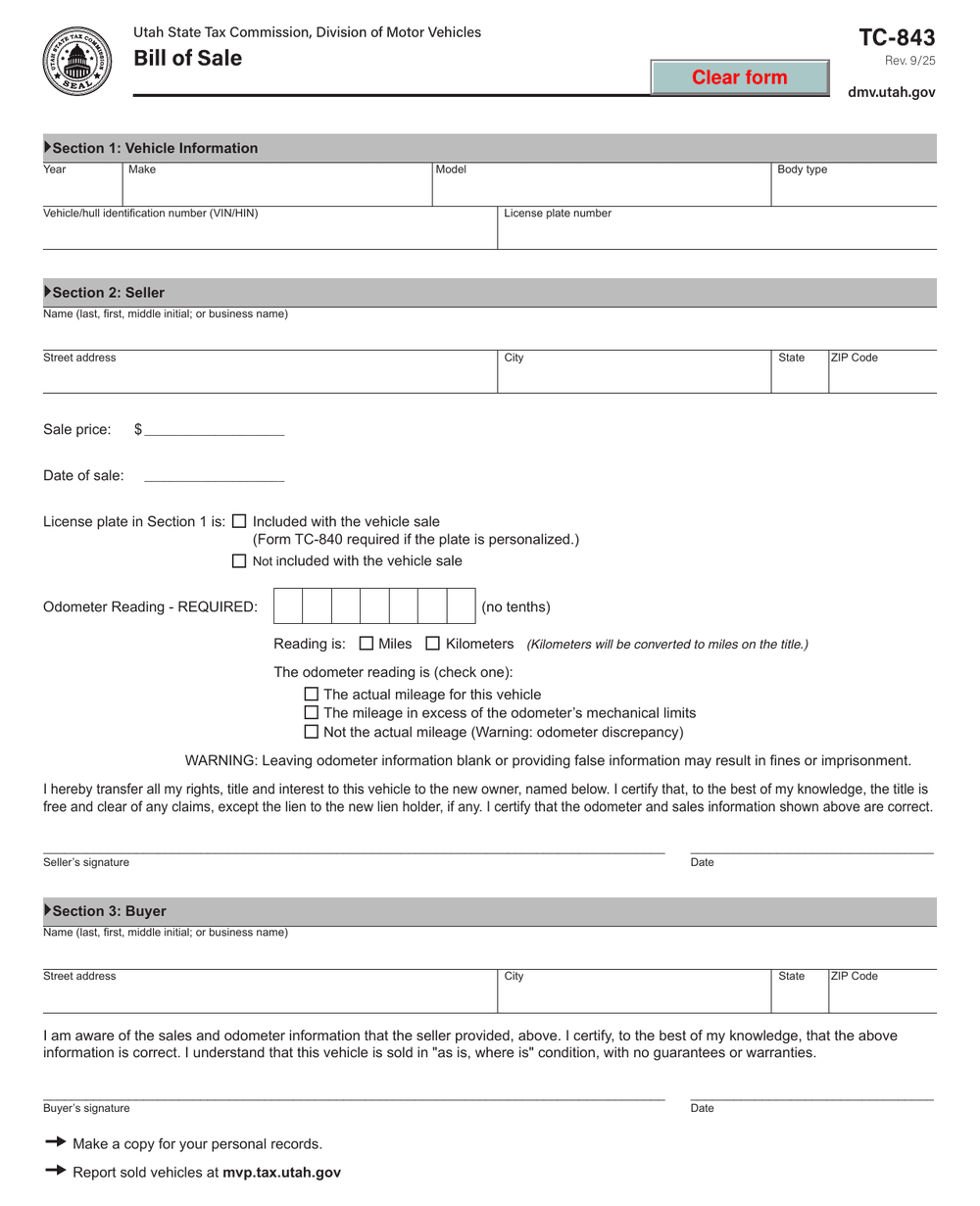
Utah puts the pressure on the seller — title delivered within 48 hours, sale reported to the DMV — and quietly taxes undocumented deals at fair market value. Form TC-843 and the full playbook, here.
TC-843 in hand, sale reported, 48-hour clock beaten.
Utah specifics, answered.
What's Utah's 48-hour rule?
The seller must deliver the signed title to the buyer within 48 hours of the transaction — the tightest seller deadline anywhere. Utah also expects the seller to report the sale to the DMV; the report takes minutes through the MVP online portal or by phone at 1-800-DMV-UTAH, and it's what shifts liability for tickets and impounds onto the buyer.
What happens if there's no bill of sale in Utah?
The tax bill grows: without a documented purchase price, the DMV assesses sales tax on the vehicle's fair market value instead. TC-843 is the official form, and Utah also accepts a self-written bill of sale in ink — but skipping the document entirely means paying tax on what the state thinks the car is worth, not what you paid.
What inspection rules still apply in Utah?
Safety inspections were abolished for ordinary passenger vehicles in 2018 — a change some checklists still miss. What remains is emissions testing in five counties along the Wasatch Front and vicinity (Cache, Davis, Salt Lake, Utah, and Weber), tied to the vehicle's age and the county of registration. The odometer disclosure (TC-891 or the title itself) applies to vehicles under 20 model years old.
How long does the Utah buyer have, and where do they go?
Sixty days to title and register at the DMV (the 'On the Spot' private partner network handles renewals, but first-time titling of your purchase goes through the DMV itself). Tax is charged on the documented price at the buyer's local rate — one more reason the bill of sale from this page is worth two signatures.
Not legal advice. Verified against Utah DMV and State Tax Commission sources in July 2026 — official links in our 50-state requirements table.
Twenty-four item types, one Utah record.
The Utah rules above apply to whatever you are selling. Pick the item type to get a form with the right identifying fields on it.