





Internal Promotion Cover Letters
Applying inside your own company is a different letter: the reader may already know you, your results are verifiable down the hall, and the etiquette — does your manager know? who hands off your work? — matters as much as the pitch. These six letters are written for exactly that: they argue from institutional knowledge, name the internal projects a hiring committee can check, and handle the transition question before it's asked. Fill in the brackets in Word or Google Docs.
Three designs, two colors each.
Classic for HR-routed processes, Monogram for the name-recognition play, Contemporary for companies where the hiring manager sits two desks away. Same internal-move argument in each: verifiable results, zero ramp-up, clean handoff.
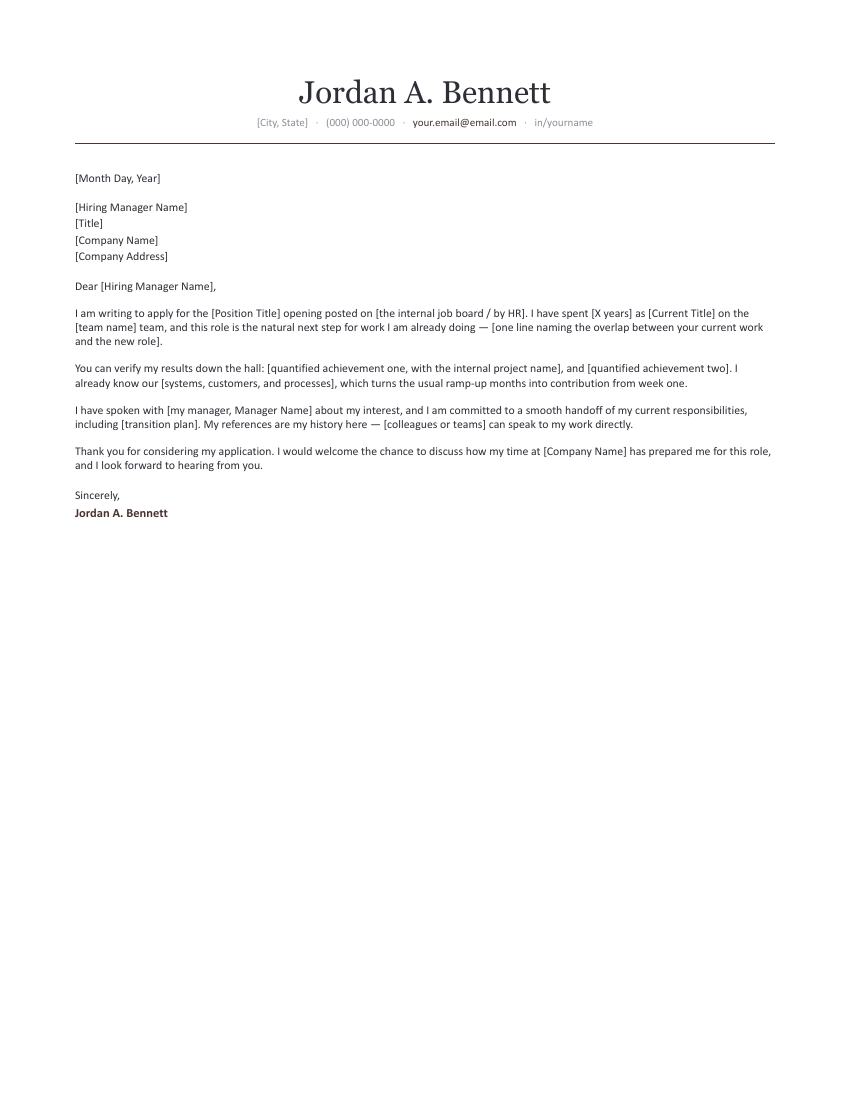
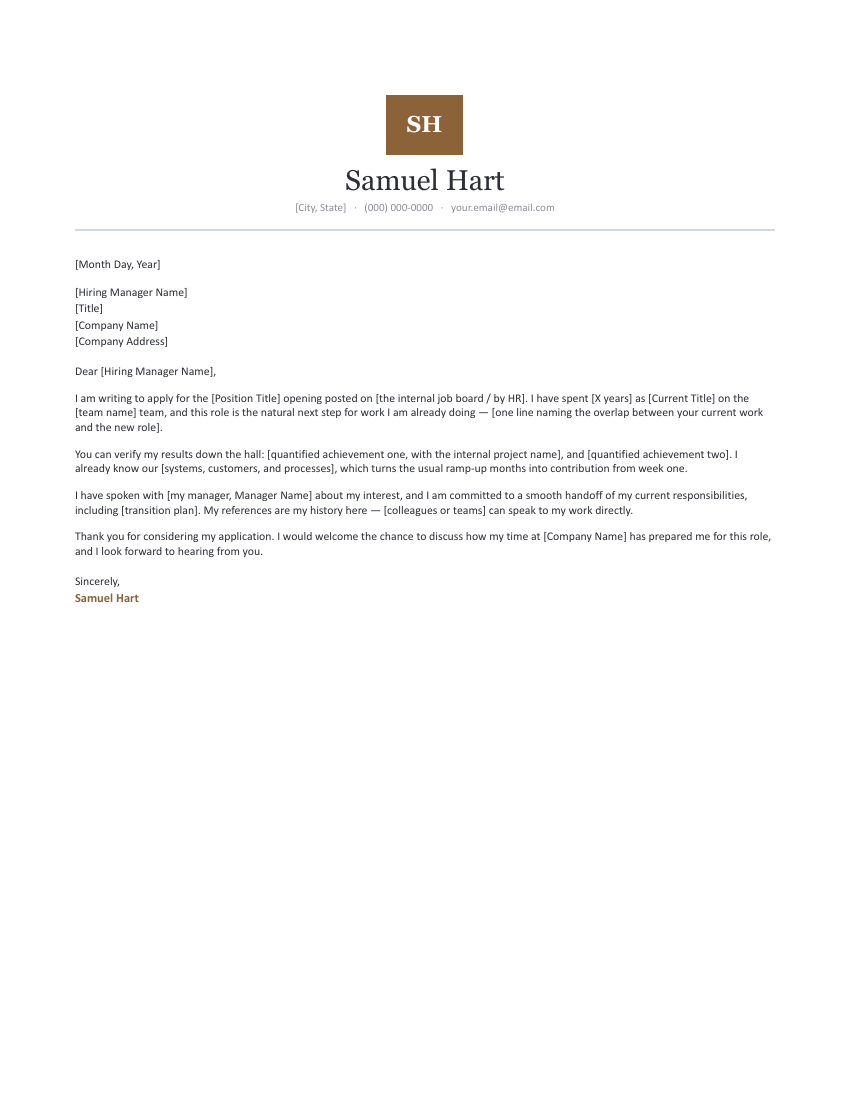
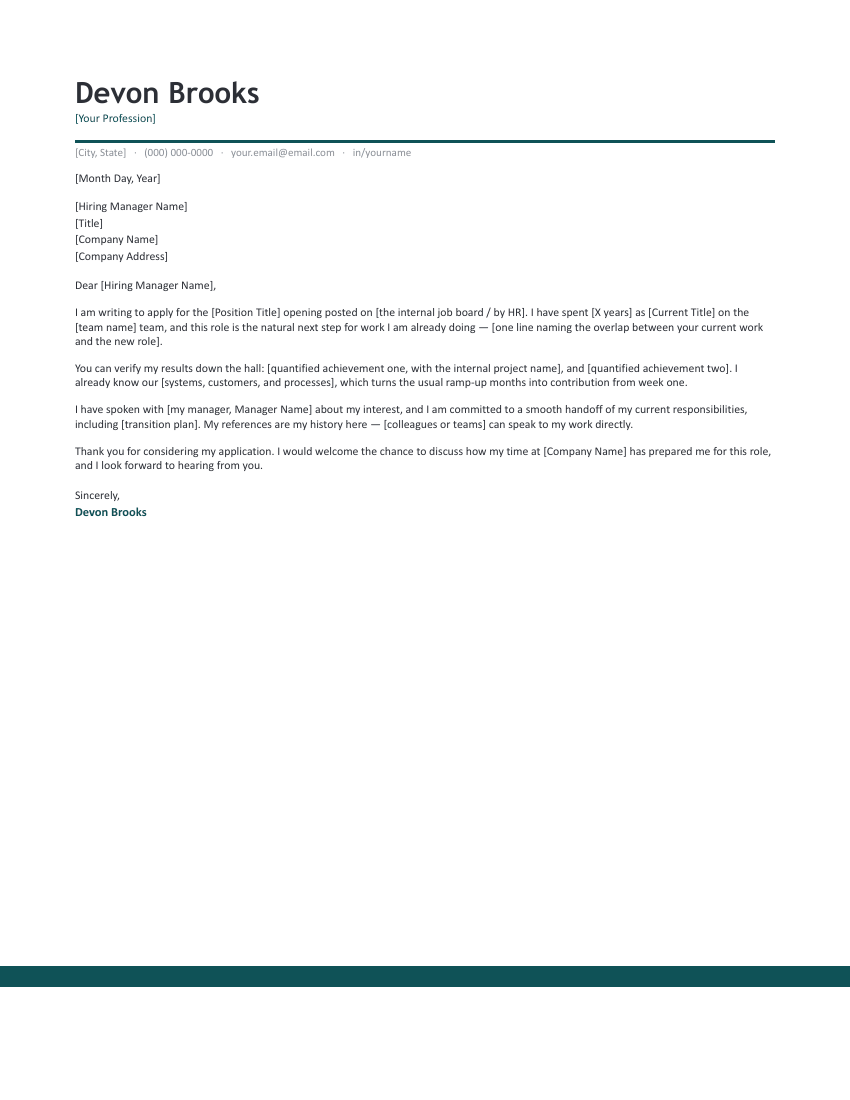
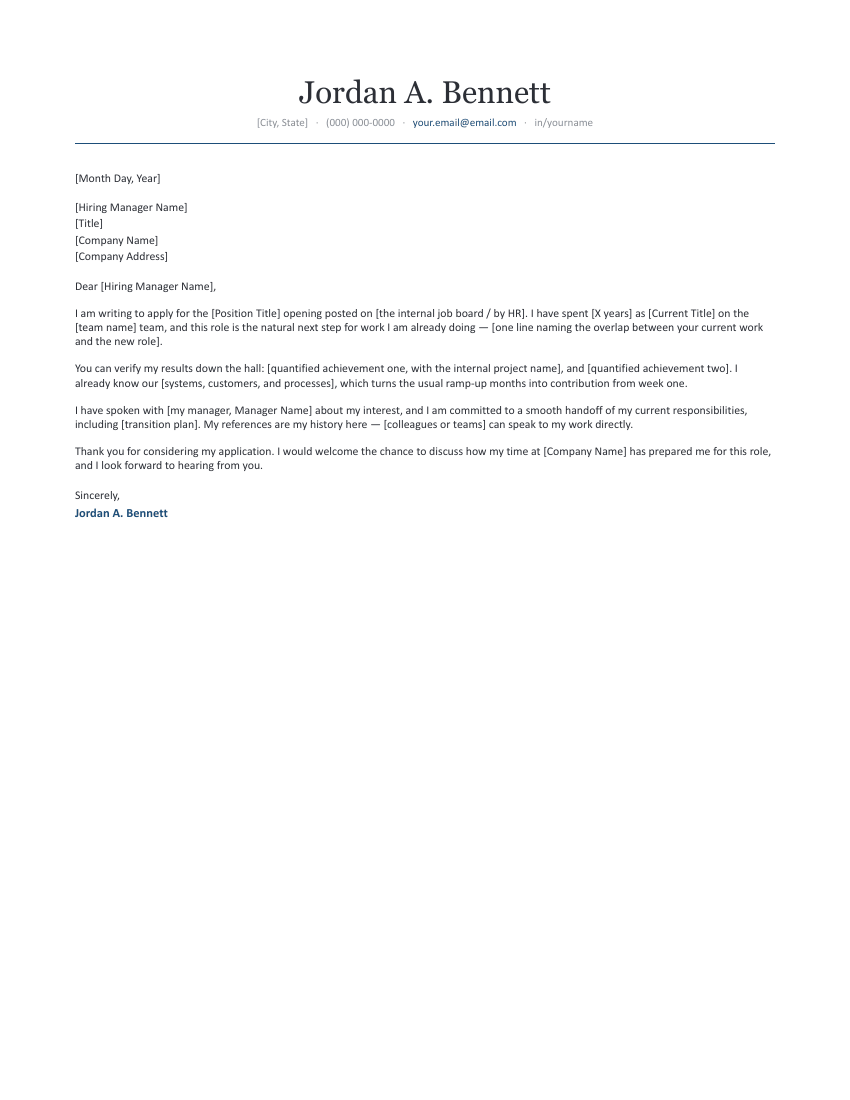
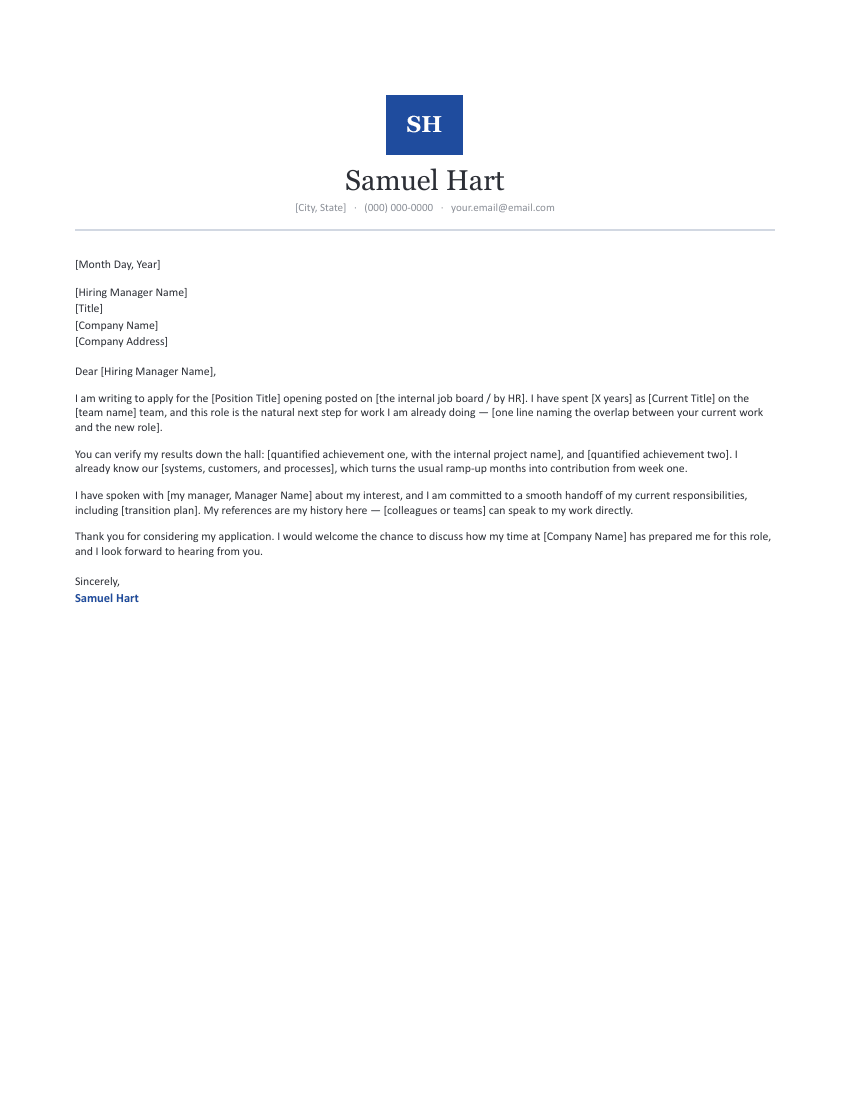
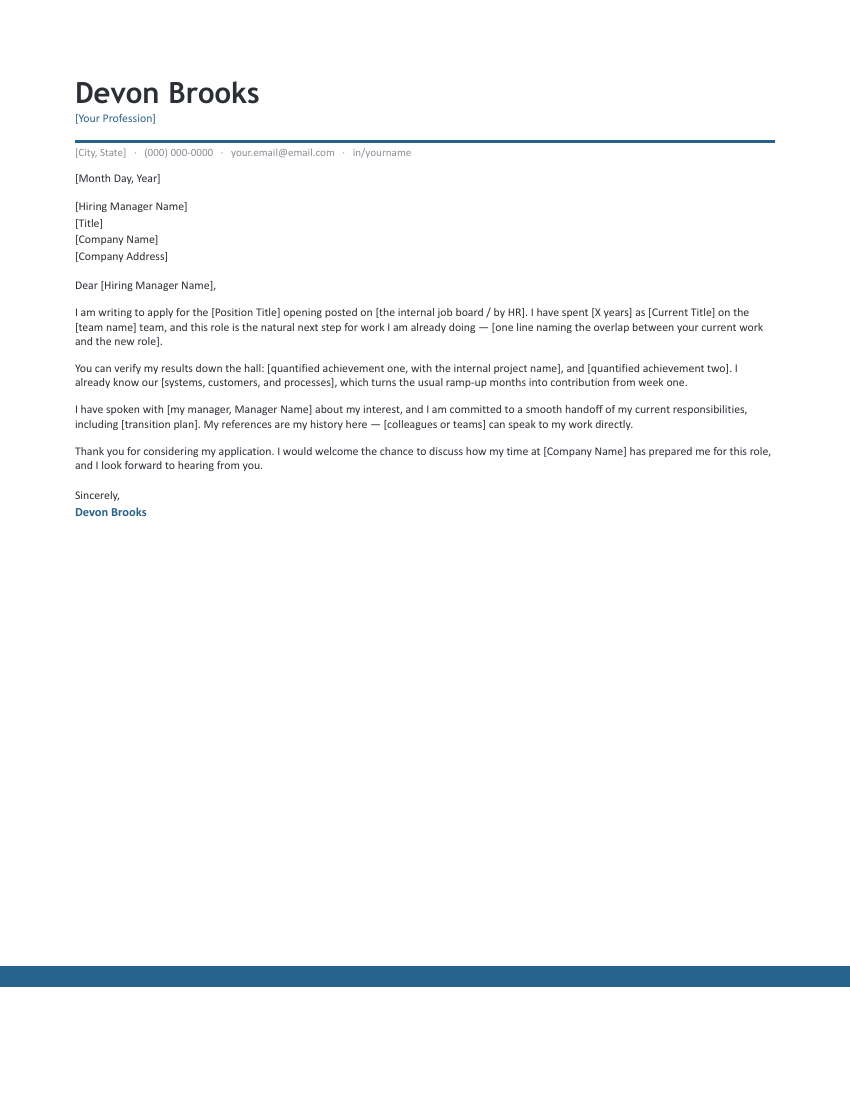
Internal promotion cover letter example \u2014 the letter inside the template.
[Month Day, Year]
[Hiring Manager Name]
[Title]
[Company Name]
[Company Address]
Dear [Hiring Manager Name],
I am writing to apply for the [Position Title] opening posted on [the internal job board / by HR]. I have spent [X years] as [Current Title] on the [team name] team, and this role is the natural next step for work I am already doing — [one line naming the overlap between your current work and the new role].
You can verify my results down the hall: [quantified achievement one, with the internal project name], and [quantified achievement two]. I already know our [systems, customers, and processes], which turns the usual ramp-up months into contribution from week one.
I have spoken with [my manager, Manager Name] about my interest, and I am committed to a smooth handoff of my current responsibilities, including [transition plan]. My references are my history here — [colleagues or teams] can speak to my work directly.
Thank you for considering my application. I would welcome the chance to discuss how my time at [Company Name] has prepared me for this role, and I look forward to hearing from you.
Sincerely,
Jordan A. Bennett
What makes an internal application different.
An internal cover letter has one structural advantage no external candidate can copy: your claims are checkable. Use it — name the projects, the systems, the numbers. And it has one structural risk: process casualness. The etiquette checklist:
- Manager first. Have the conversation before you apply, and say so in the letter.
- Follow the posted process exactly — internal candidates who route around HR to the hiring manager read as entitled, not connected.
- Answer the handoff question before it’s asked — one sentence on transitioning your current work.
- Don’t trash the current role. Frame the move as growth toward, never escape from.
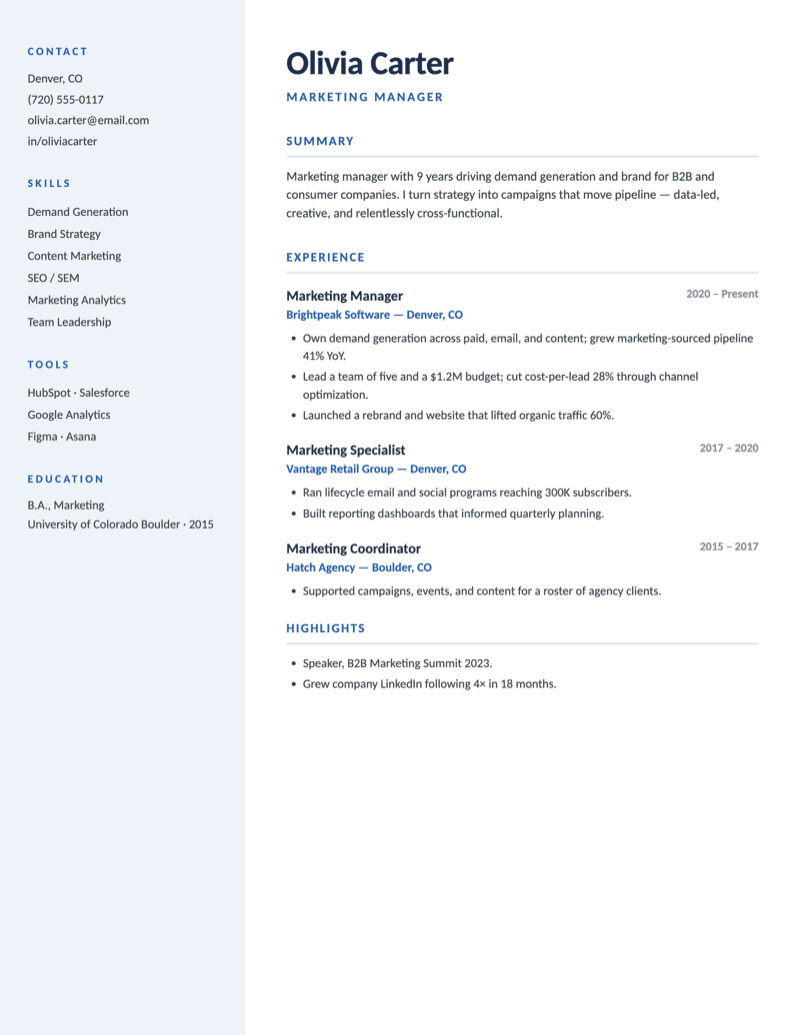
Pair the letter with a refreshed resume even though “they know you” — committees file paperwork, and yours should be current.
Fill it in and send.
- Click Open in Google Docs or Download Word, and fill the [brackets] — internal project names and numbers are your evidence.
- Confirm the manager conversation has happened, then keep that line in the letter.
- Mirror the internal posting’s language and follow its submission process to the letter.
- Export a PDF, attach your updated resume, and submit through the official channel.
Internal Promotion Cover Letters FAQ
Should I tell my manager before applying for an internal position?
How formal should a cover letter be when the hiring manager already knows me?
What should an internal cover letter say that an external one wouldn't?
Do I compete against external candidates differently?
Is it worth writing a cover letter for an internal job at all?
Internal position & promotion cover letter templates · Updated September 2026