
Apollo's Templates
HomeCareers & LifeCover LettersReferral
Referred by an employee · Word & Google Docs

Referral Cover Letters

A referral is the single strongest signal in hiring — referred candidates get interviewed at multiples of the cold-application rate — but only if the letter uses it correctly: the referrer's name in the first sentence, the relationship stated plainly, and evidence the referrer would actually vouch for. These six sample letters are built on that structure. (Sending by email instead? The shorter email-referral version puts the name in the subject line — both formats are in the library.)

Six letters

Sample referral letters, ready to personalize.

Each opens with the referrer's name, states the relationship in plain terms, and picks evidence the referrer can vouch for. Denim for corporate and tech, Berry when the referring relationship is the story, Harbor when you want both names to land.
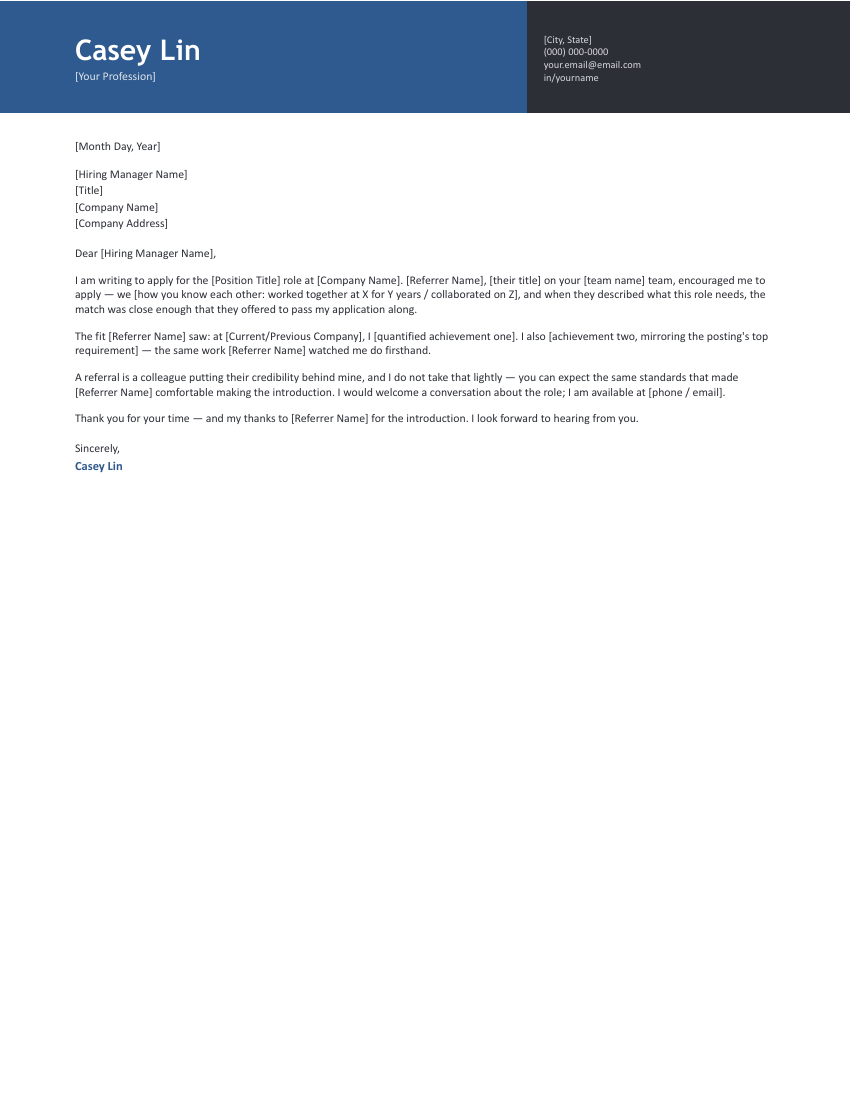
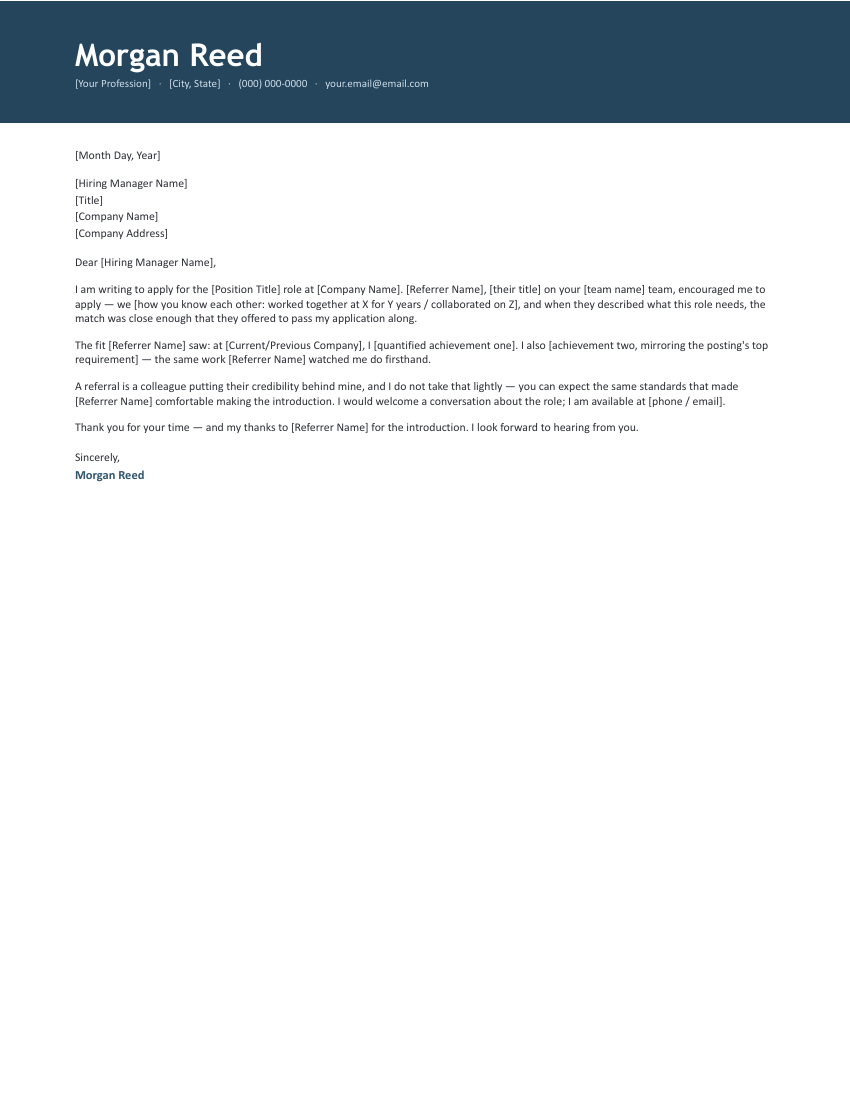
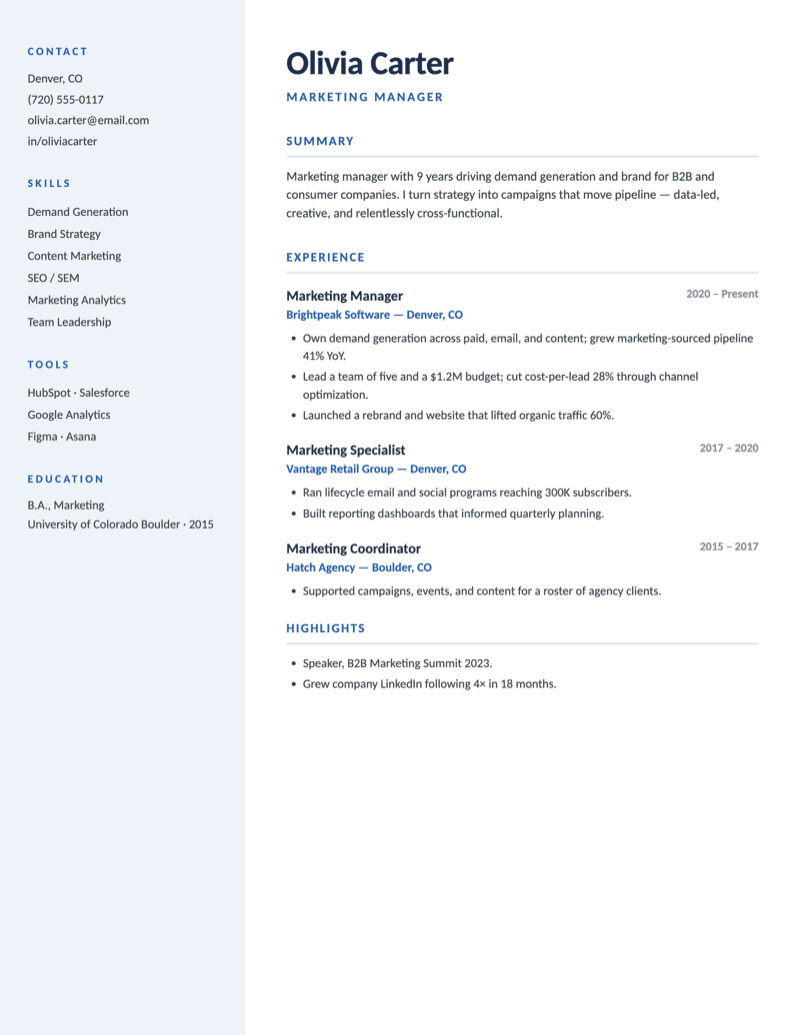
Two-Tone Split — Denim

The modern header for tech and corporate referrals — the letter your friend's hiring manager expects when 'I know someone great' turns into paperwork.

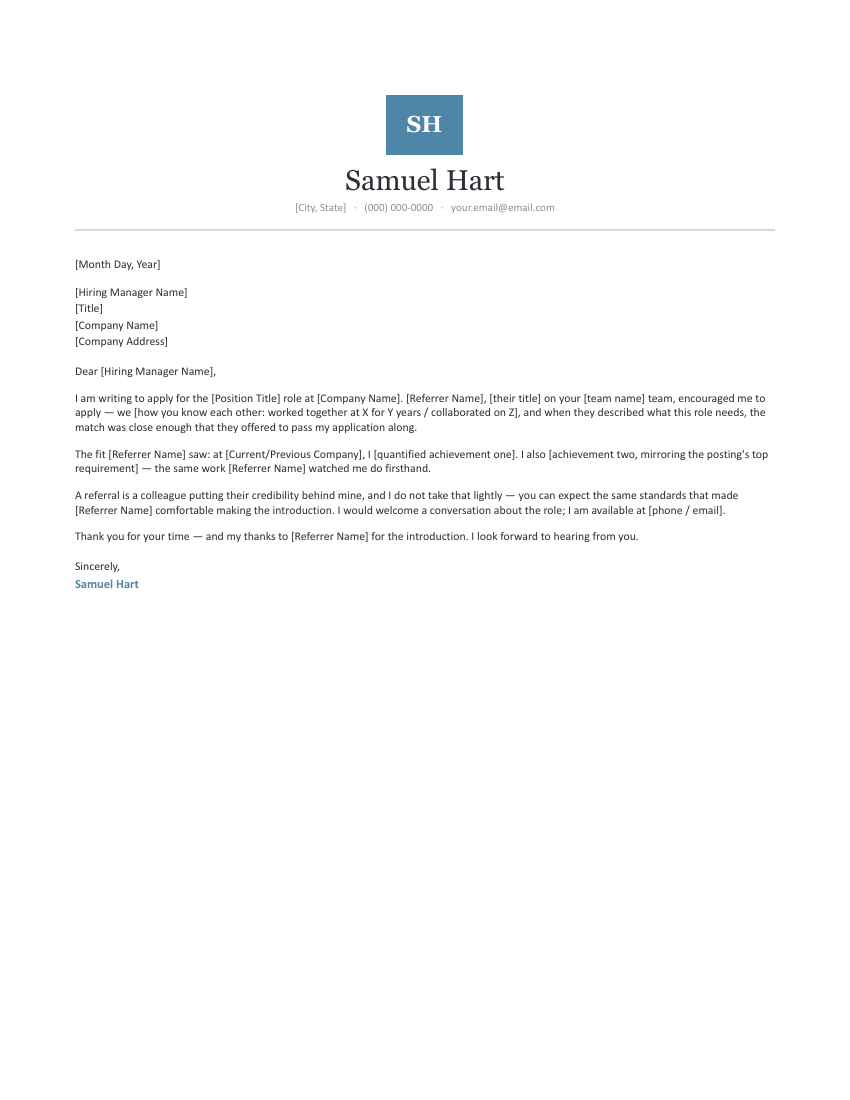
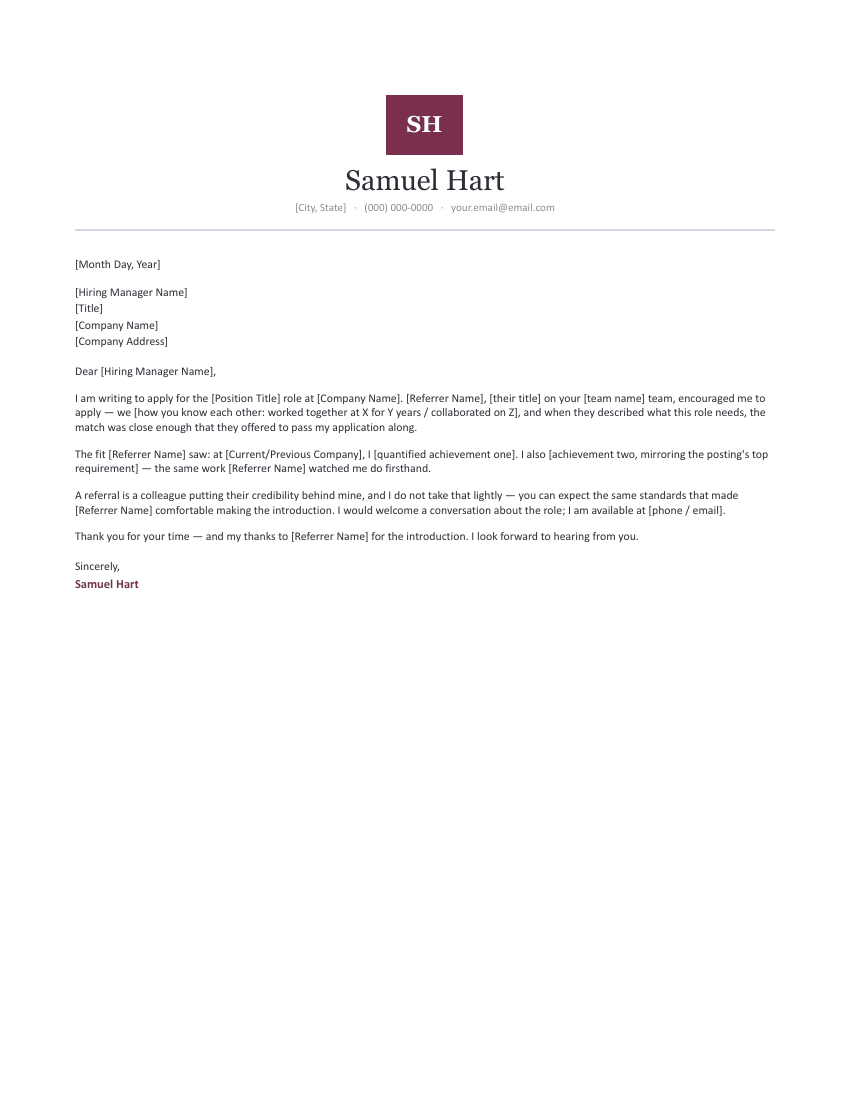
Monogram — Berry

A distinctive letterhead for the strong-relationship referral — when the referrer's word carries real weight and your letter should look worthy of it.

Bold Name Banner — Harbor

Your name in a full-width banner, the referrer's in the first line — for referrals where you want both names remembered.

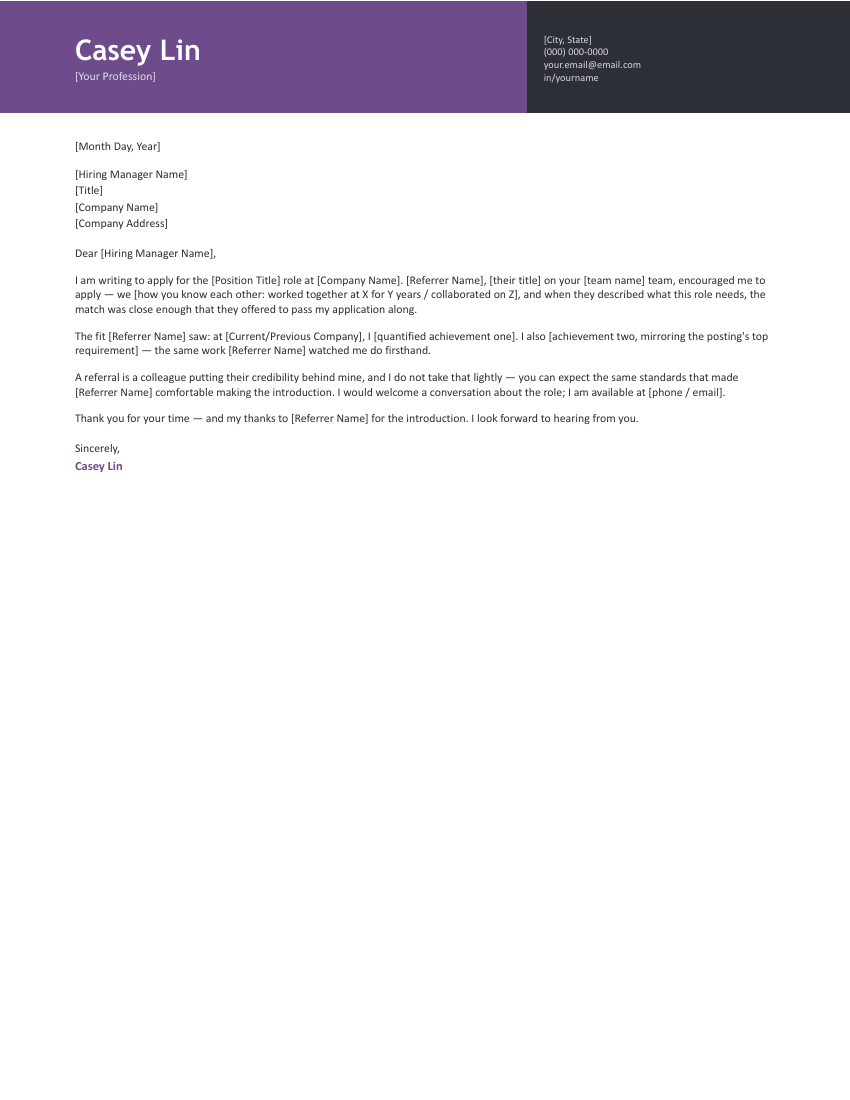
Two-Tone Split — Amethyst

The modern split header in amethyst and charcoal — a distinctive alternative when the denim reads too corporate.

Monogram — Glacier

The strong-relationship letterhead in cool glacier blue — polished and understated.

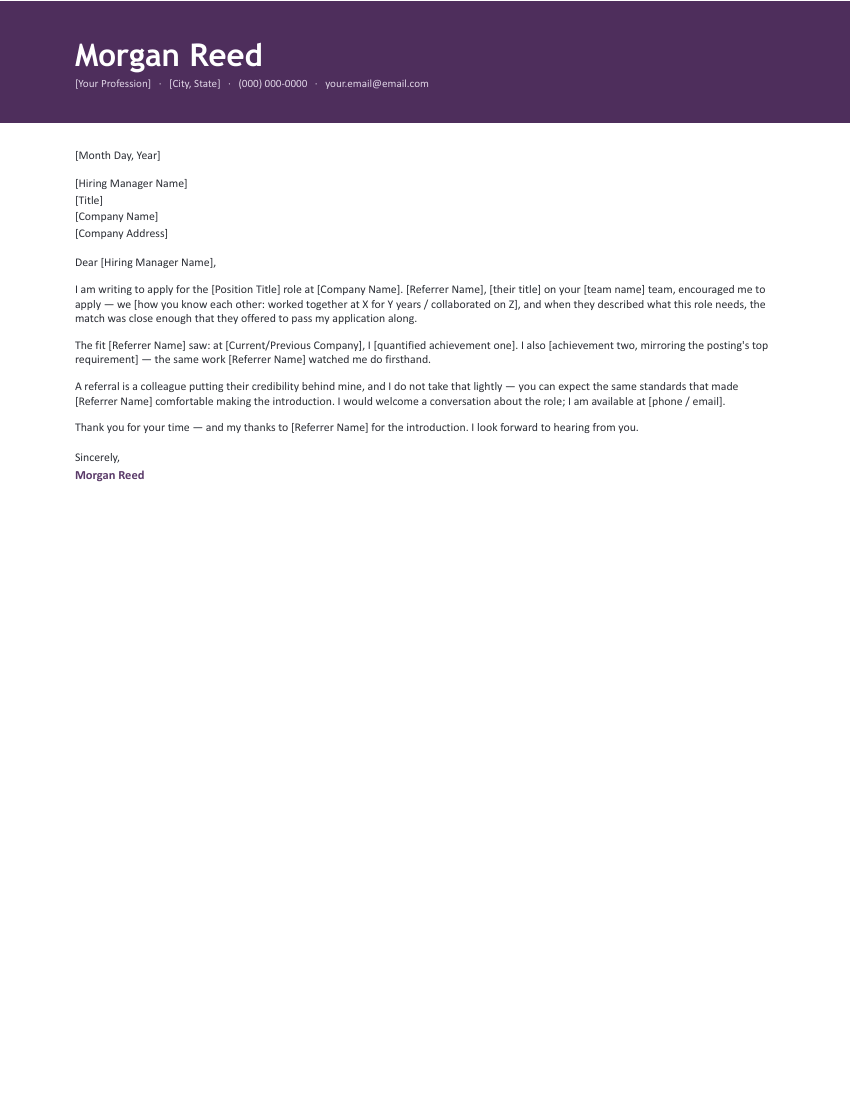
Bold Name Banner — Orchid

Both names remembered, now in a deep orchid band — the warm-toned sibling of the harbor banner.
Example \u00b7 Referred by an employee

Referral cover letter example \u2014 the letter inside the template.

Read it in full
Casey Lin
[Your Profession]

[City, State](000) 000-0000your.email@email.comin/yourname

[Month Day, Year]
[Hiring Manager Name]
[Title]
[Company Name]
[Company Address]

Dear [Hiring Manager Name],

I am writing to apply for the [Position Title] role at [Company Name]. [Referrer Name], [their title] on your [team name] team, encouraged me to apply — we [how you know each other: worked together at X for Y years / collaborated on Z], and when they described what this role needs, the match was close enough that they offered to pass my application along.

The fit [Referrer Name] saw: at [Current/Previous Company], I [quantified achievement one]. I also [achievement two, mirroring the posting's top requirement] — the same work [Referrer Name] watched me do firsthand.

A referral is a colleague putting their credibility behind mine, and I do not take that lightly — you can expect the same standards that made [Referrer Name] comfortable making the introduction. I would welcome a conversation about the role; I am available at [phone / email].

Thank you for your time — and my thanks to [Referrer Name] for the introduction. I look forward to hearing from you.

Sincerely,

Casey Lin

This is the actual text inside the Casey Lin template above — every [bracketed prompt] is a spot you replace with your own detail. Copy the template to keep the letterhead, or use the text as a sample for your own letter.
Using the introduction

How to spend a referral well.

A referral is a colleague lending you their credibility — the letter’s job is to justify the loan. The mechanics:

  • Name in sentence one. The referrer’s name and team, before anything about you.
  • Relationship in plain words. Worked together three years, met through the meetup, collaborated on a launch — exact and honest.
  • Evidence they witnessed. Choose the results your referrer can confirm — matched signals reinforce; mismatched ones raise questions.
  • Both channels. Their internal referral submission + your letter naming them. The systems cross-check each other in your favor.

Sending the application by email instead of a portal? Use the email referral letter — same argument, 60–150 words, with the referrer’s name in the subject line where it raises the open rate.

Make it yours

Fill it in and send.

  1. Confirm with your referrer: permission, wording, and whether they’ll submit you internally too.
  2. Fill the brackets — their name and team in the first sentence, the relationship stated exactly.
  3. Choose evidence the referrer actually witnessed — the letter and their vouching must tell one story.
  4. Export a PDF for portals, or use the email version when the application goes by email.
Referral questions

Referral Cover Letters FAQ

Where exactly do I mention the referral in a cover letter?
First sentence, by name and team: 'Maria Chen on your platform engineering team encouraged me to apply.' Not the second paragraph, not 'a current employee' — the name is the highest-value word in the letter and it does its work in the opening scan. Recruiters triage referred applications differently the moment they see a colleague's name; make them see it immediately.
Do I need the referrer's permission to use their name?
Absolutely — and confirm the wording. 'Can I say you encouraged me to apply?' is a different claim than 'can I mention we've worked together?', and your referrer may also want to submit you through the internal referral system first (many companies pay referral bonuses, and the formal submission strengthens your application anyway). Coordinate the two channels: their internal submission plus your letter naming them.
How is a referral cover letter different from a normal one?
Structurally, one paragraph changes everything: the opening names the referrer and relationship, and the evidence section is chosen to match what the referrer would actually say about you. That second part is subtle but important — if Maria vouches for your incident response and your letter leads with something she never saw, the two signals don't reinforce. Pick the results your referrer witnessed.
What if I barely know the person who referred me?
Be precisely honest about the relationship — 'we connected through the Denver PM meetup and spoke about your roadmap process' — and don't inflate it. A thin referral honestly stated still beats a cold application; a thin referral dressed up as friendship collapses in the interview when the hiring manager asks the referrer about you. Calibrate the letter's confidence to what the referrer would actually say.
Should I thank the referrer in the letter itself?
One clause in the closing — 'my thanks to Maria for the introduction' — and no more. It reads as graceful, signals the relationship is real, and reminds the reader a colleague's credibility is attached. The fuller thanks belongs to the referrer directly (and again after the interview, whatever the outcome — referrals are a currency you'll want again).

Referral & employee-referral cover letter templates · Updated September 2026

More cover letters

Related cover letter collections.

Situation
Internal Promotion Cover Letters
Applying inside your own company — verifiable results and manager etiquette.
Open
Format
Email Cover Letters
What to write in the email when you send your resume — subject lines included.
Open
Style
Short Cover Letters
100–150 words, complete — role, one hard result, one company-specific line, the ask.
Open
Situation
General Purpose Cover Letters
One master letter with three marked swap spots — retarget every application in ten minutes.
Open
Guide
How to Address a Cover Letter Cover Letter
Finding the name, the fallbacks when there isn't one, and what to use instead of To Whom It May Concern.
Open
All Cover Letter Templates & Examples
Every collection — by style, situation, role, and format — plus the writing guides.
Browse
The referral kit

Same moment, other formats.

Sending by email?
Email Cover Letters
The 60–150 word referral email with the name in the subject line — for when the application is the email.
Open
The attachment
Resume Templates by Role
50+ categories — send the resume your referrer would recognize as your best work.
Open
All letters
All Cover Letter Templates
The full library — styles, situations, and roles.
Open