





Indiana Bill of Sale
Indiana numbered its bill of sale — State Form 44237 — then ruled it can't transfer anything with a title. Here's what the form actually does, the title-exempt cases where it becomes the ownership document, and the plain 7% tax.
An official form with a carefully fenced job.
Indiana specifics, answered.
Indiana publishes a bill of sale — why can't it transfer my car?
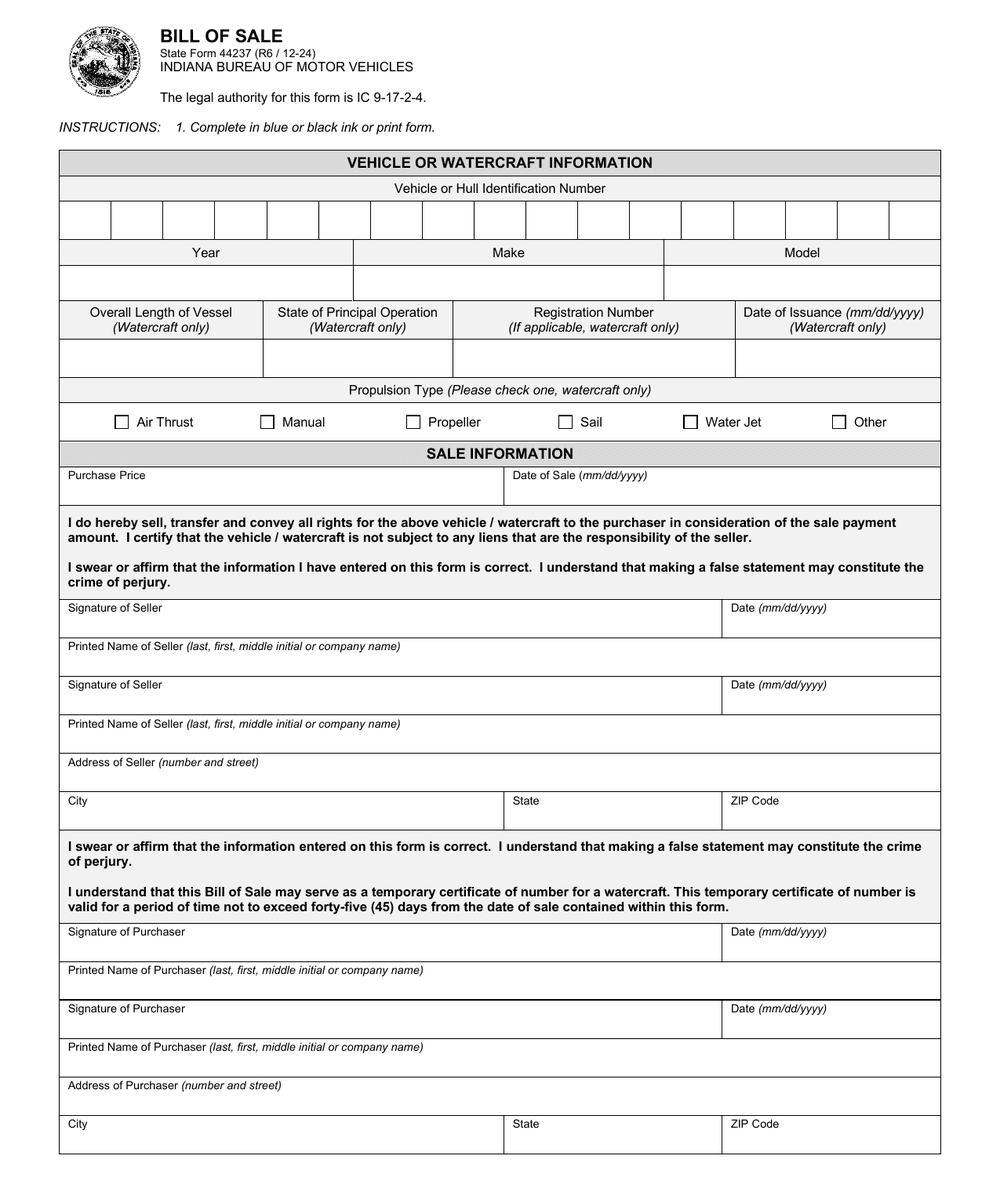
Because Indiana draws a hard line: any vehicle that legally requires a title can only transfer BY title. State Form 44237's ownership power is reserved for the title-exempt cases — pre-1990 utility trailers, older pop-up campers and ORVs, sheriff's sales, federal-government purchases, municipal auctions. For a normal car sale it's the receipt, and a supplement that can fill in a missing sale date or price (never override the title's own entries).
When the bill of sale IS the ownership proof, what else is needed?
A physical inspection: Form 39530 pairs with the bill of sale when it's the primary ownership document, so the BMV can verify the VIN before titling. Neither form needs notarization — the BMV says so explicitly.
What's the tax and the clock in Indiana?
Refreshingly plain: 7% of the actual purchase price — no book-value floor — paid at the BMV branch when the buyer titles within 45 days. Miss the window and a $30 administrative penalty lands. Credit is given for tax already paid to another state.
What happens with plates in an Indiana sale?
They stay with the seller, who removes them at the transaction and can transfer them to another vehicle — Indiana doesn't even require returning them to the BMV. The buyer plates the vehicle fresh at titling.
Not legal advice. Verified against Indiana BMV sources in July 2026 — official links in our 50-state requirements table.
Build the right form for what you're selling.
The Indiana rules above apply to whatever you are selling. Pick the item type to get a form with the right identifying fields on it.