
Apollo's Templates
HomeCareerCover LettersShort
100-150 words, complete · Word & Google Docs

Short Cover Letters

A short cover letter isn't a long one with pieces missing — it's a different discipline: four sentences, each with a job. Name the exact role and your headline number. Answer the posting's top requirement with one result. Ask for the conversation. Done, in the time a hiring manager actually gives a first read. These six templates carry complete 100-150 word letters in proper business format — for quick-apply portals, high-volume postings, and everyone who's been told to 'include a letter' and wants it to count without padding.

Six templates

Three designs, two colors each — all four sentences long.

Minimalist for the purist, Classic for conservative fields, Contemporary when you want design presence around few words. Every letter is complete at 100-150 words: role, result, reason, ask.

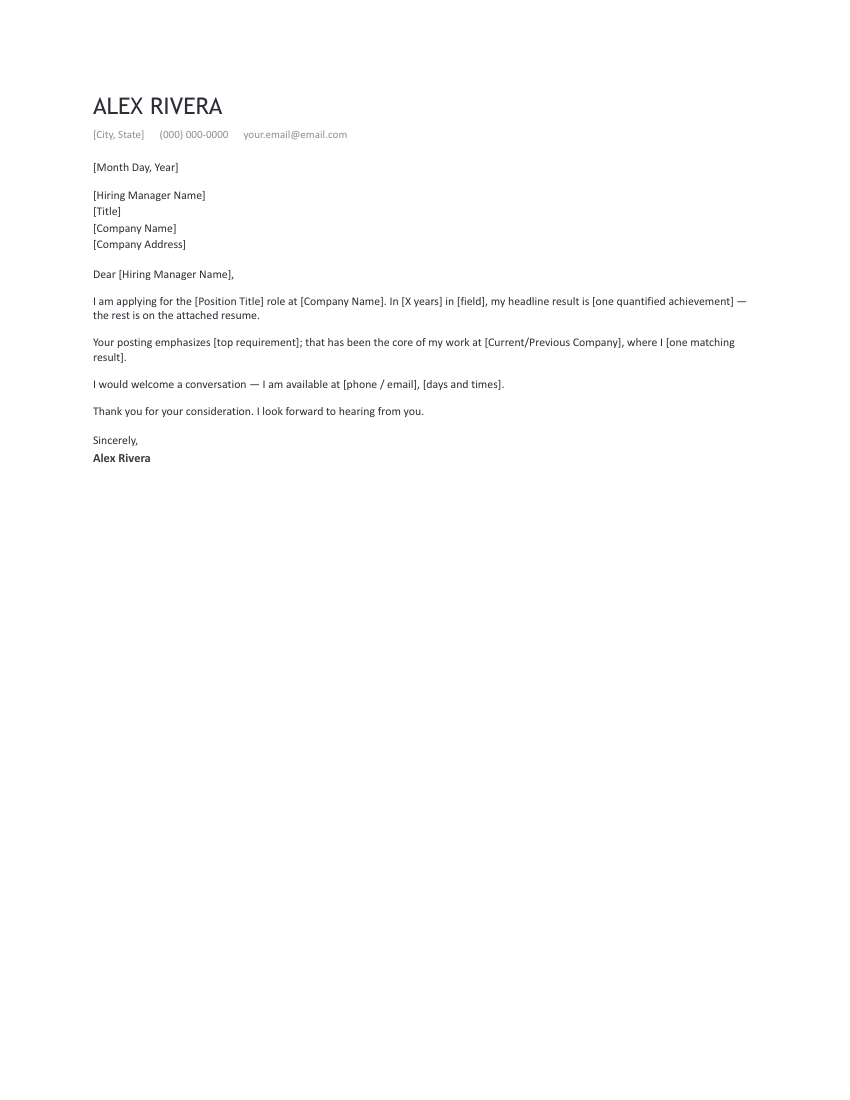
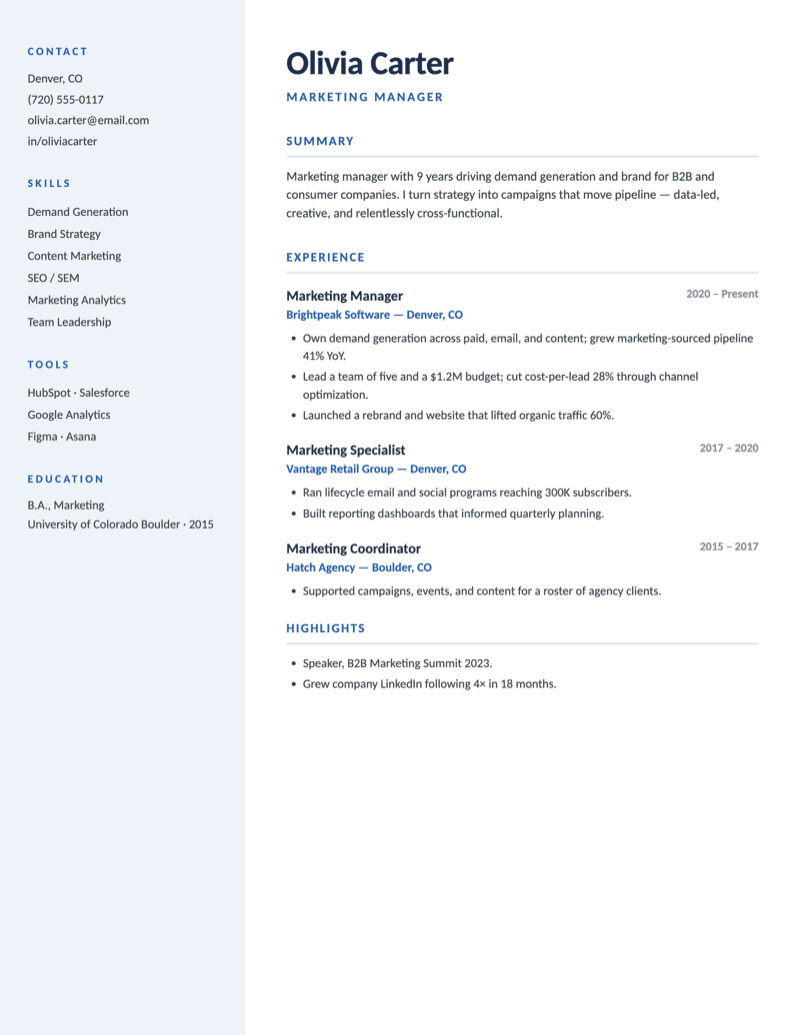
Minimalist — Graphite
The purest form — airy, letter-spaced, monochrome. When the letter is four sentences, the whitespace is the design.
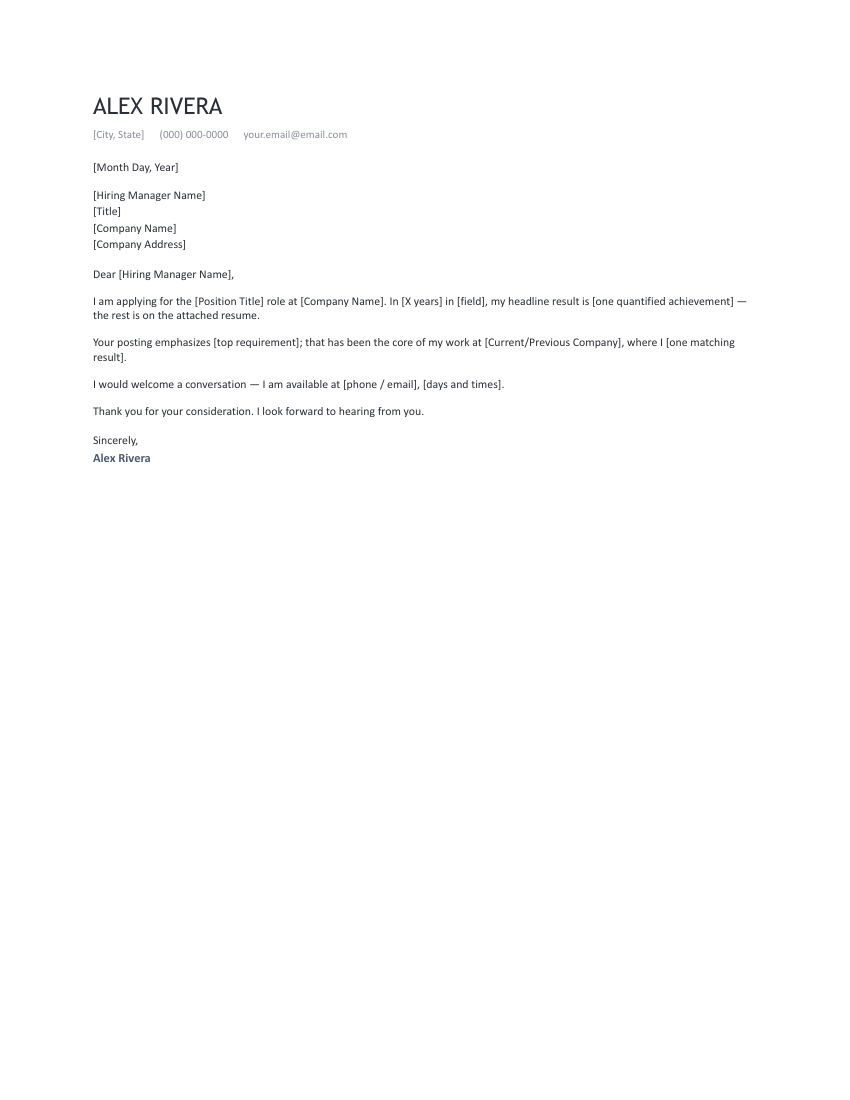
Minimalist — Slate
The minimalist with a cool slate cast — the same quiet confidence, one degree warmer.
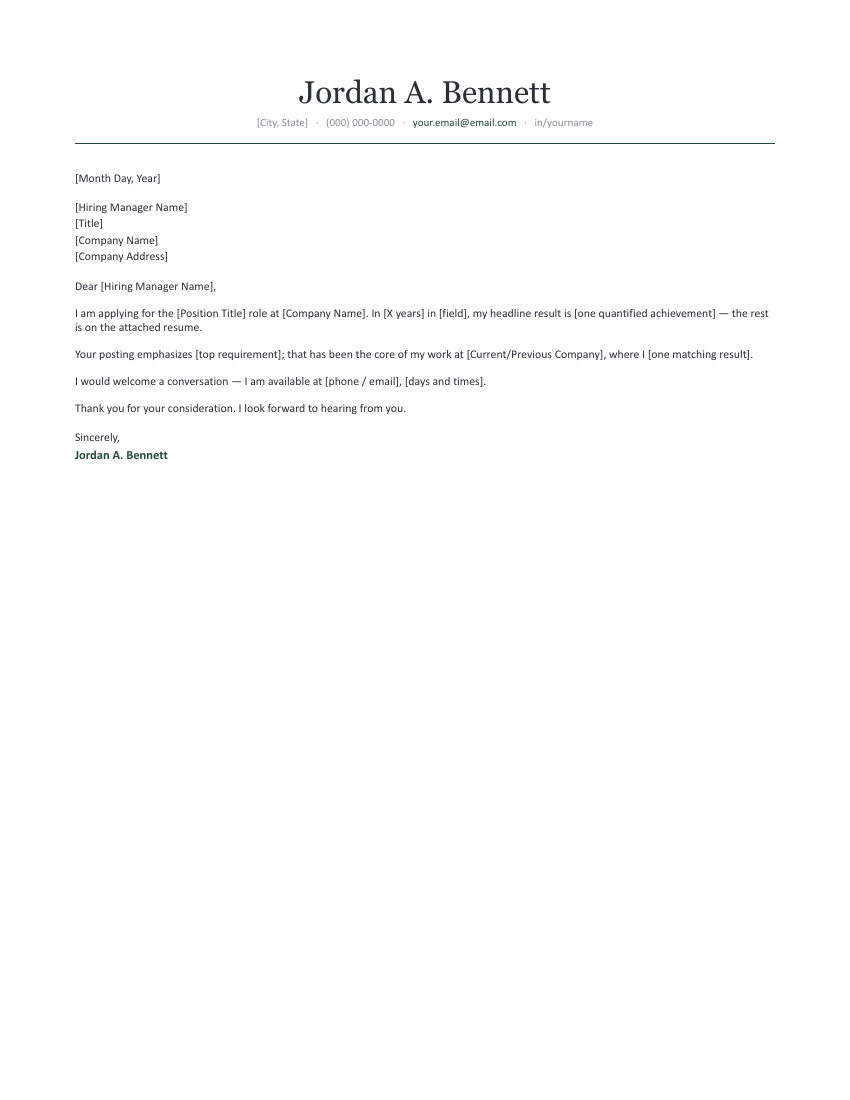
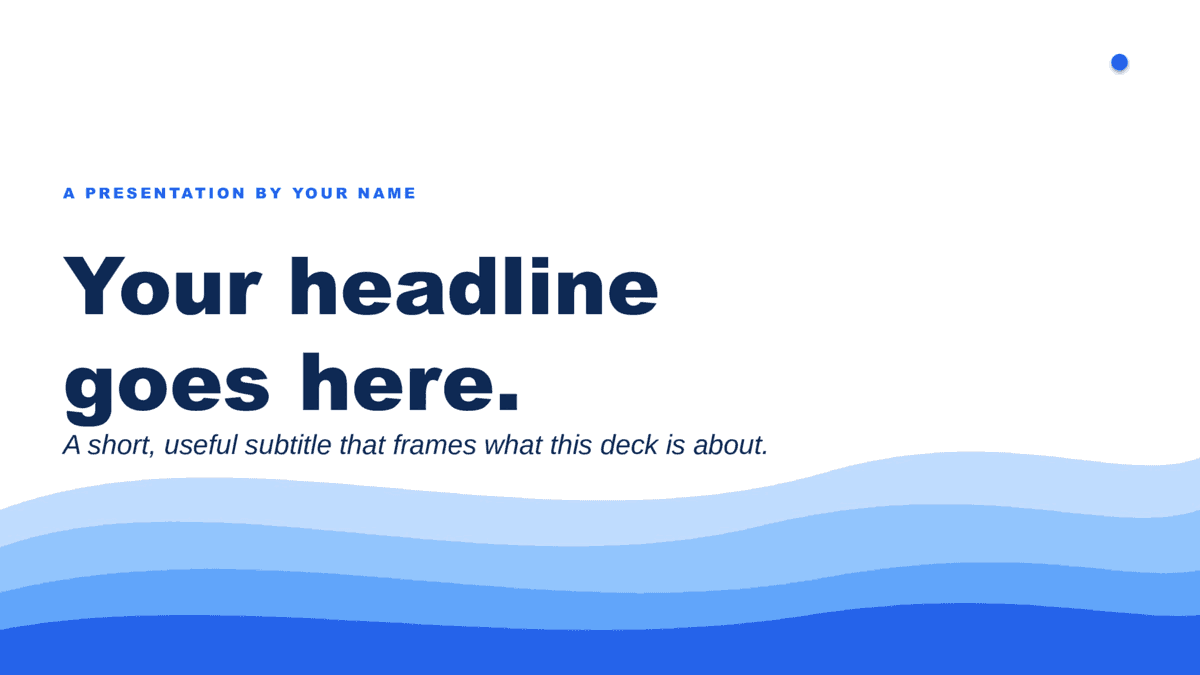
Classic Centered — Pine
The traditional serif letterhead in deep pine — brevity that still reads formal enough for conservative fields.
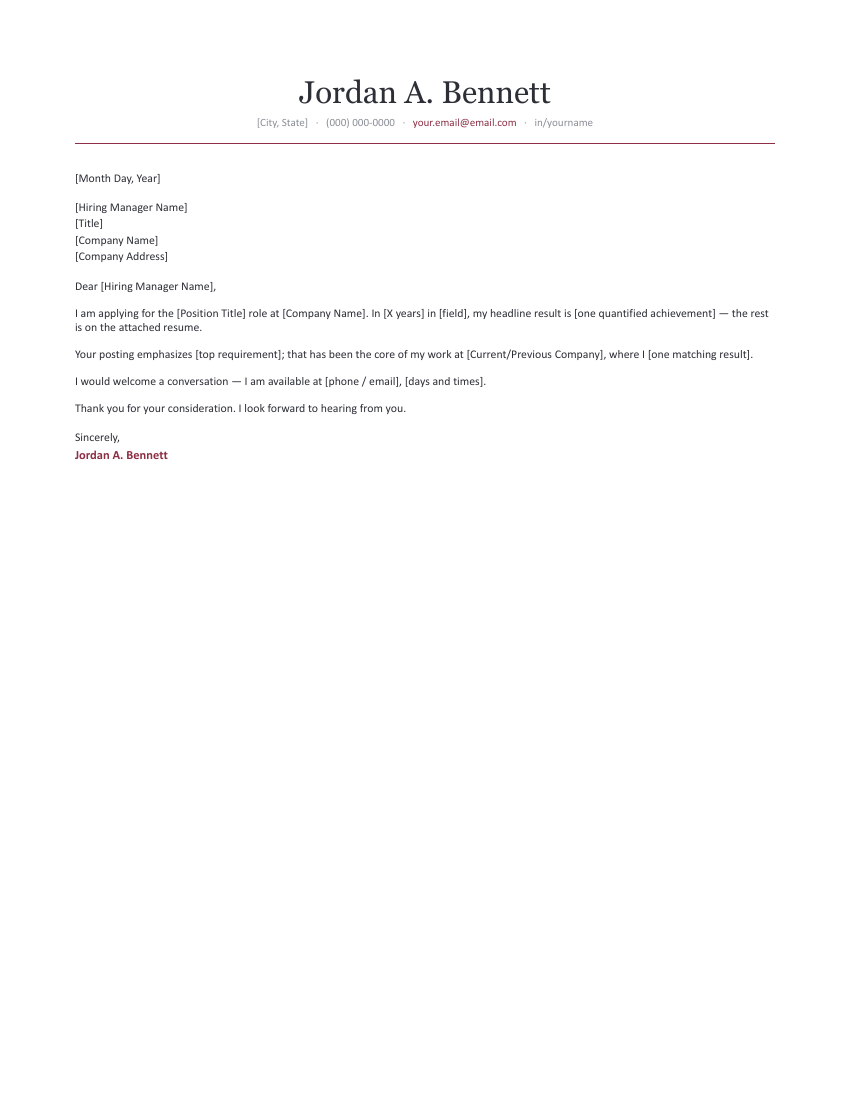
Classic Centered — Currant
The classic letterhead in rich currant — a warmer take on the formal short letter.
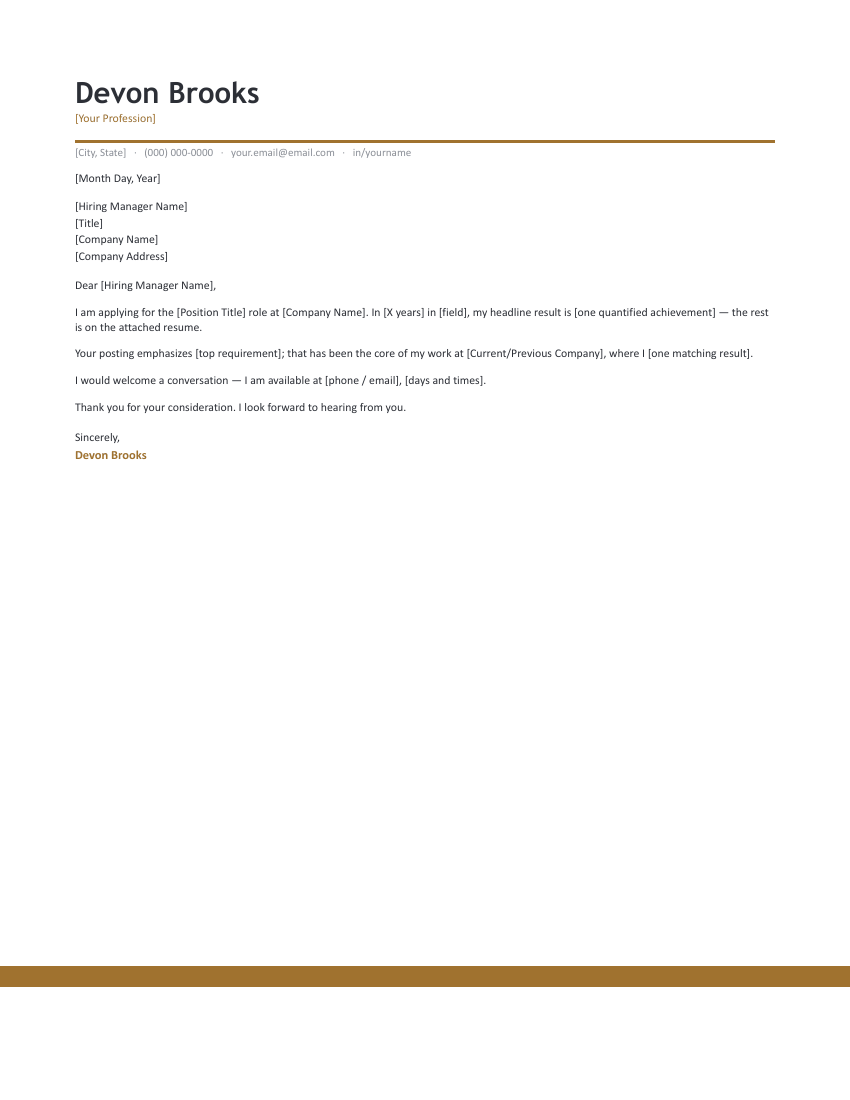
Contemporary — Dune
The modern layout in warm dune gold — a designed feel that keeps the four sentences from looking sparse.
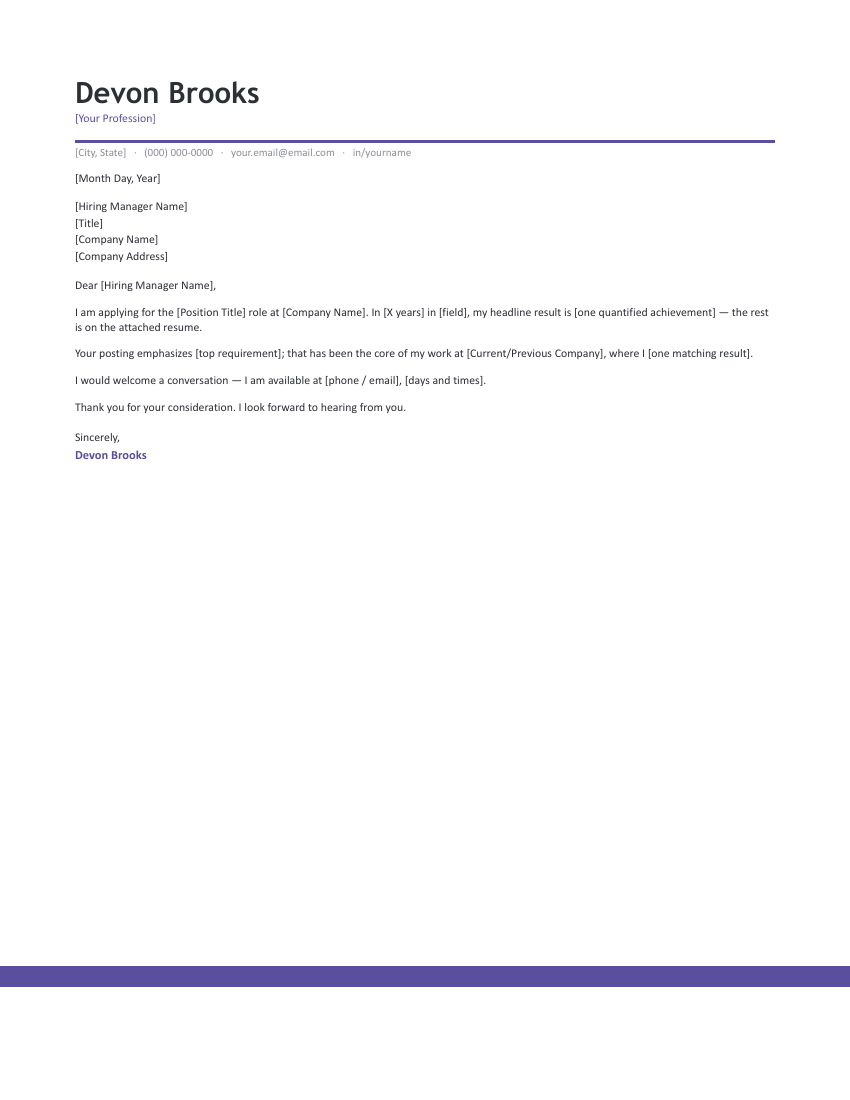
Contemporary — Iris
The contemporary design in iris violet — short, modern, and memorable.
The anatomy

Four sentences, each with a job.

The short letter works because it maps one-to-one onto what a screener actually extracts from any letter, of any length:

  • Sentence one — the filing. Exact role, your field, your headline number. The reader now knows which stack you belong in and why you might top it.
  • Sentence two — the match. Their posting’s most-emphasized requirement, answered with one result from your work. Not two. One, sharpened.
  • Sentence three — the tell. The line that couldn’t be pasted anywhere else. It’s what separates short-and-specific from short-and-lazy.
  • Sentence four — the ask. Conversation requested, availability stated. No throat-clearing on the way out.

If you find yourself needing a fifth sentence to explain a gap or a pivot — that’s the signal you need a different letter, not a longer version of this one.

Make it yours

Fill it in and send.

  1. Open a template and fill the four [brackets] — role, your best number, the company-specific line, availability.
  2. Read it once aloud — at this length, every clunky word is visible. Fix or cut.
  3. Export a PDF for portals, or paste the body into an email (drop the address block).
  4. Pair with a matching resume — a short letter leans harder on the resume behind it.
Brevity questions

Short Cover Letters FAQ

Is a 100-word cover letter too short?
Not if every sentence works. Hiring managers give a first read well under a minute, and a letter that delivers the role, a hard number, and a company-specific line inside that window beats a full page they skim. What makes a short letter fail isn't its length — it's genericness. Four specific sentences read as confidence; four vague ones read as minimum effort. These templates are built so the specific version is the default.
When is a short letter the right call — and when isn't it?
Right call: quick-apply portals, high-volume postings where screeners are triaging stacks, roles where your resume speaks plainly for itself, and any posting that marks the letter optional. Wrong call: when your story needs explaining — a career change, a long gap, a pivot the resume can't narrate. Those letters have to carry context, and context takes words; use the career-change or returning-to-work collections instead.
What survives the cut in a short cover letter?
Four things, in order: the exact role title, one quantified result (your single best, matched to the posting), one line that could only be about this company, and the ask with your availability. What dies: the autobiography opener, anything your resume already lists, all adjectives about yourself, and the paragraph explaining why you're passionate. If a sentence doesn't advance one of the four jobs, it goes.
Will a hiring manager think a short letter is lazy?
The evidence runs the other way: recruiters routinely rank over-long, generic letters as the bigger red flag, while a tight letter with a real number and a company-specific line signals someone who respects the reader's time. The one calibration: very formal fields (law, academia, some finance) still expect fuller letters — there, use a classic-length letter and save the brevity for the interview thank-you note.
Can I paste one of these into an email instead of attaching it?
At this length, yes — a 100-150 word letter works as an email body almost unchanged; drop the address block, keep the four sentences. But if email is your main channel, the dedicated email cover letters go further: they carry To and Subject lines in the template, and subject-line wording is half the game in an inbox.

Short & brief cover letter templates · Updated July 2026

Adjacent moves

When short is almost right.

Sending by email?
Email Cover Letters
The same brevity with To and Subject lines built in — for when the email is the application.
Open
Applying broadly?
General Purpose Cover Letters
The full-length master letter with three swap spots — for when you want more room to retarget.
Open
Want the craft?
How to Write a Cover Letter
The seven-step guide — including what to cut to get from a page to a paragraph.
Open