Apollo's Templates
HomeBusinessExpense Report TemplatesSmall Business
For owner-operators

Small Business Expense Report Templates

A small business doesn't need an expense system — it needs about three spreadsheets and the habit of using them. This page is the short list, in the order most businesses need them: track the month by category, reconcile the card, log the miles, and let the year-end page assemble itself from the other three. Every sheet is free Excel with the formulas working, or a Google Sheets copy in your own Drive.

The short list

Six sheets, in the order you'll need them.
Start here — Monthly report
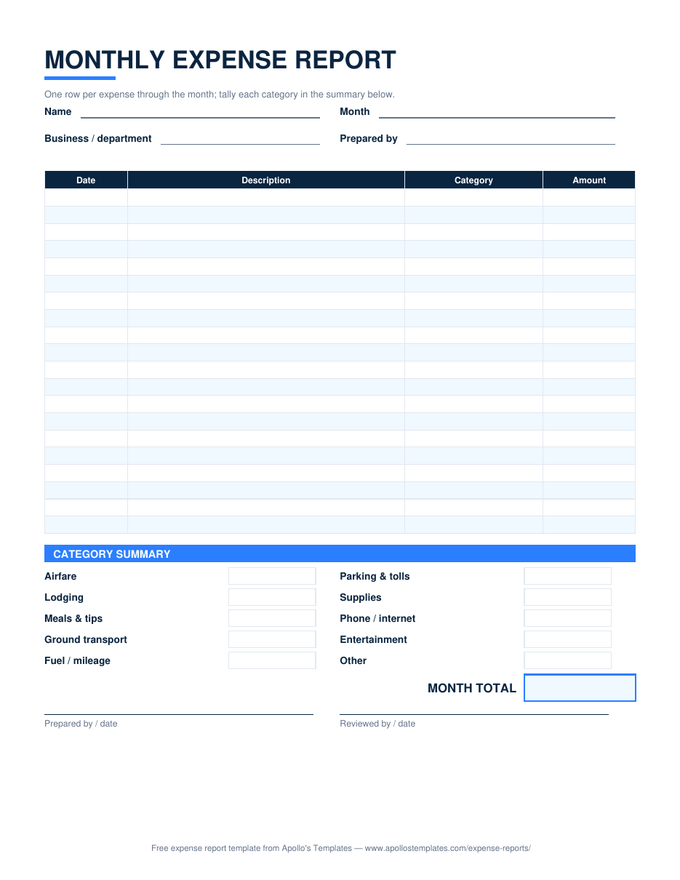
The workhorse: log expenses as they happen and the category summary answers “where did the money go?” on the last day of the month.
The business card, reconciled
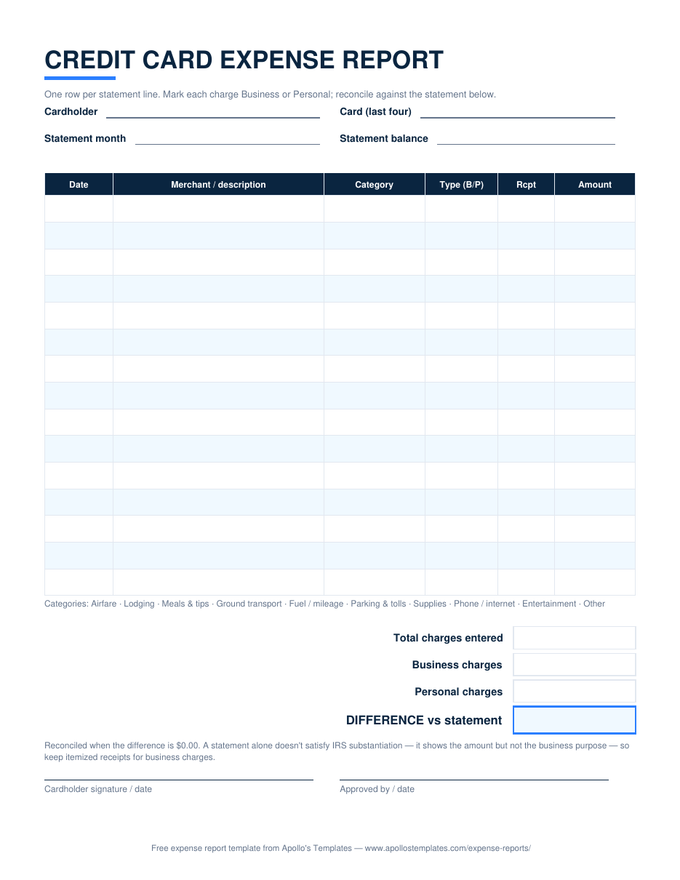
Match every statement line and split business from personal — the sheet most owner-operators need most.
Miles in your own car
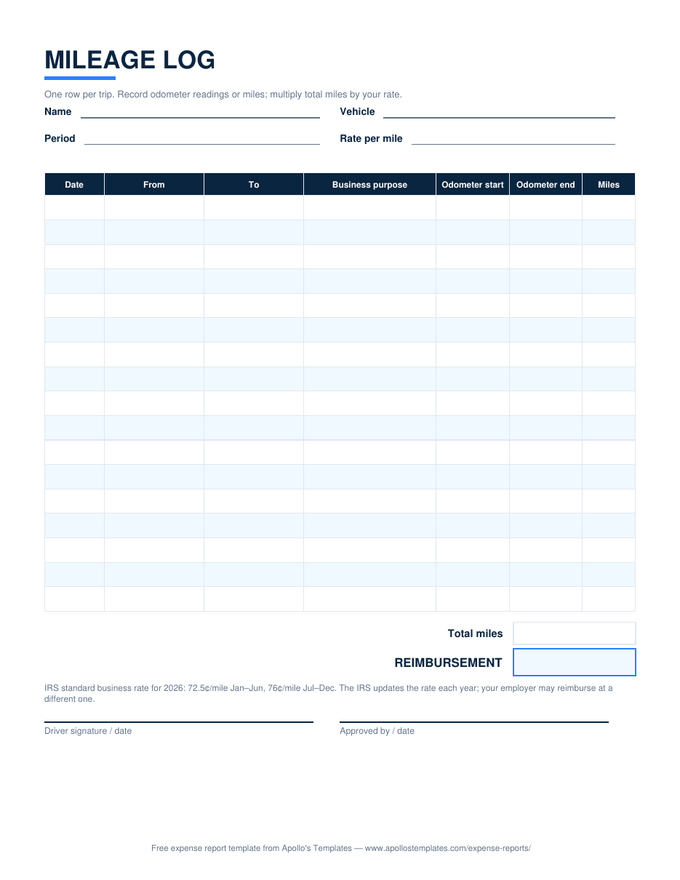
Odometer readings become miles and dollars at the IRS standard rate — usually the biggest deduction a small operator forgets.
When an employee spends
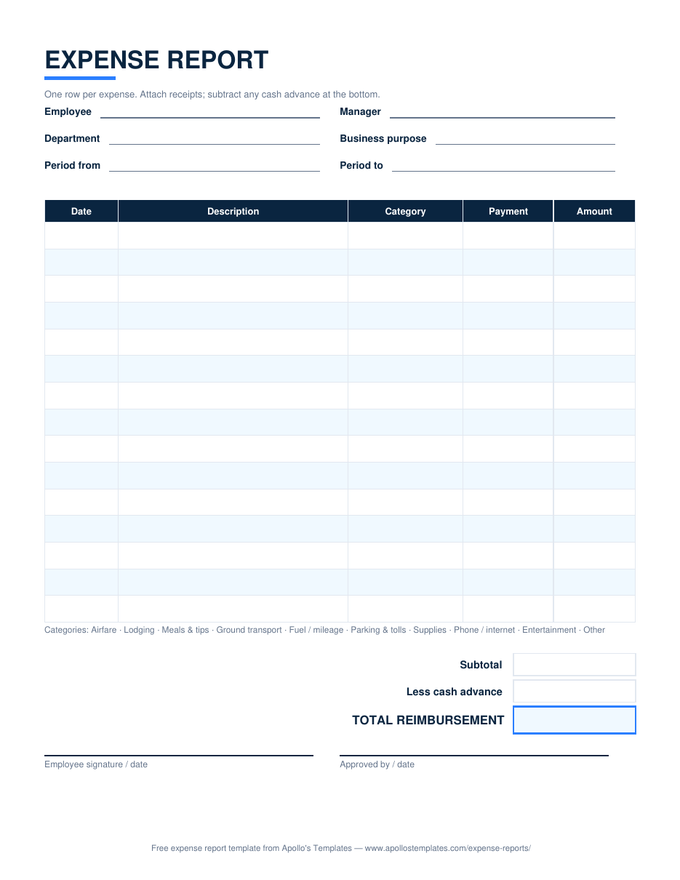
The standard reimbursement report with categories, payment method, cash advance, and both signatures.
The cash drawer
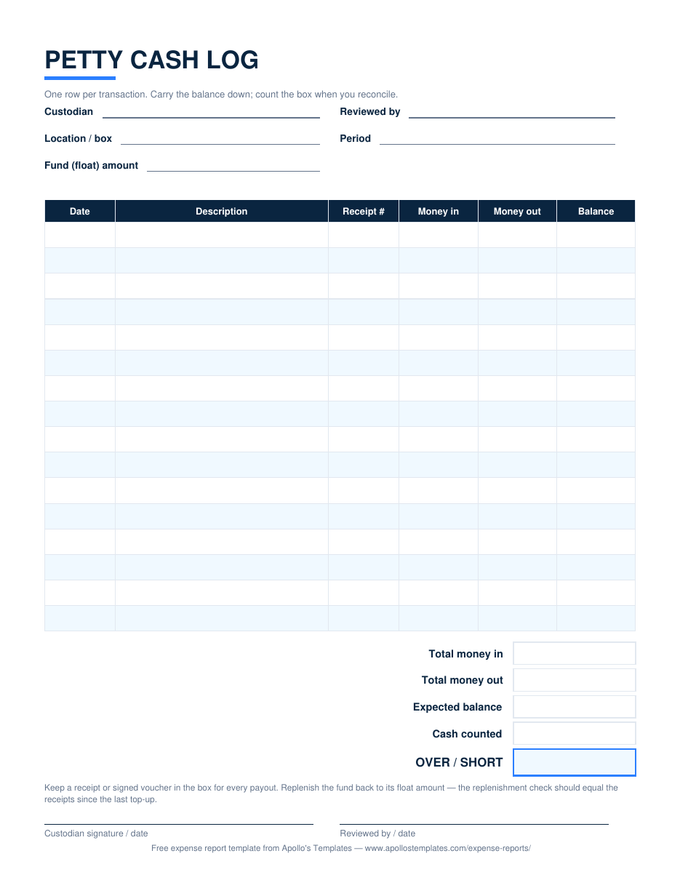
A fixed float, a running balance, and an over/short line — the whole petty-cash discipline on one sheet.
Year end, one page
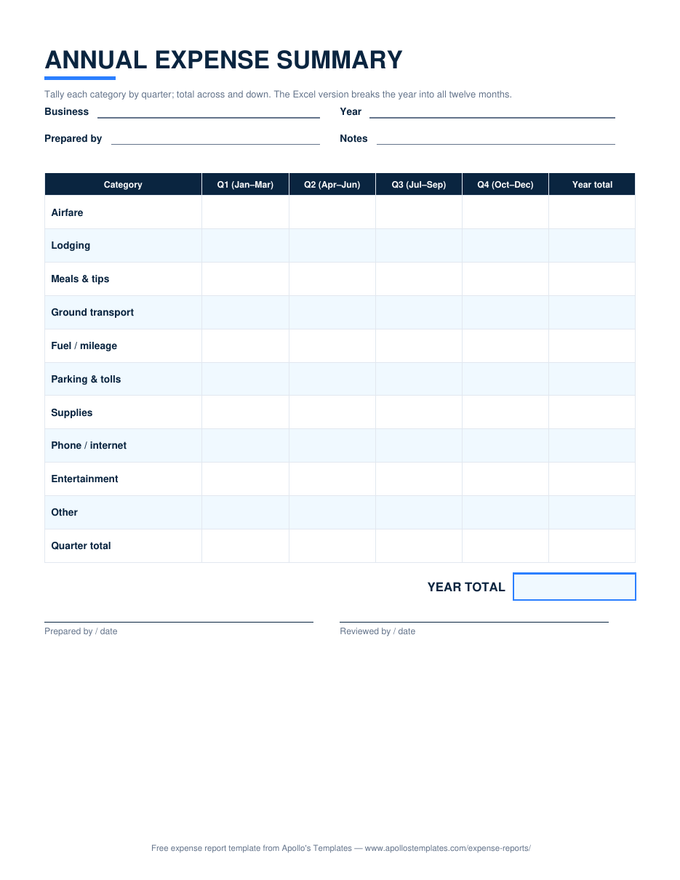
Twelve months by category with quarter and year totals — what you hand your preparer in April.
Worth knowing

The five minutes that saves the April weekend.

Nearly every small-business bookkeeping disaster has the same shape: nothing was recorded as it happened, so everything has to be reconstructed from statements later. Reconstruction loses the two things that make an expense deductible — the business purpose and the receipt — because a bank line says $84.12, AMZN Mktp and nothing about whether that was printer toner or a birthday present.

The habit that prevents it is unglamorous: log the expense the day the receipt appears, reconcile the card the week the statement lands, and photograph receipts before the thermal ink fades (which it does, often within a year). Thirty seconds a day beats a lost weekend every April, and it’s the difference between a deduction you can defend and one you hope nobody asks about.

Where the year lands
Annual Expense Summary
Twelve months by category — the page your tax preparer actually wants.
Open
Hours as well as money
Timesheet Templates
The payroll side of the same small shop — weekly, biweekly, crew and construction sheets.
Browse
Simplest possible form
Simple Expense Report
Four columns and a total, for when the full report is more form than you need.
Open

Frequently asked questions

Which of these does a small business actually need?
Two, to start: the monthly report and — if the business has a card — the credit-card reconciliation. Between them you get a categorized record of where money went and a monthly check that every charge is accounted for, which is most of what a bookkeeper or tax preparer will ask you for. Add the mileage log if anyone drives their own vehicle for the business, the petty cash log if there's a cash drawer, and the standard report once you have employees spending money and needing it back. The annual summary is the once-a-year page the other five feed.
Do I need an expense report if I'm the owner and there's no one to approve it?
Not for approval — for evidence. A sole proprietor doesn't reimburse themselves through an accountable plan; business expenses simply go on Schedule C. But the deduction still requires a record of what was spent, when, and for what business purpose, and "it's on the card statement" isn't that record, because a statement shows amounts without purposes. The monthly sheet plus receipts is the cheapest audit-proofing available. If your business is an S-corp or LLC taxed as one, the accountable-plan rules do apply to you as an employee of your own company — different situation, same paperwork.
How do I keep business and personal separate when one card does both?
The real answer is get a separate business card — it costs nothing at most banks and eliminates the problem permanently. Until then, the credit-card sheet's Business/Personal column is the workaround: mark every line, and the sheet totals the two sides separately so only the business figure reaches your books. Mixing them is the single most common bookkeeping mess in small businesses, and it gets exponentially harder to untangle the longer it runs.
What can a small business actually deduct?
The statutory test is expenses that are ordinary (common in your trade) and necessary (helpful and appropriate) — a deliberately broad standard that covers supplies, software, professional fees, business travel, 50% of business meals, mileage, insurance, and much more. What consistently fails: personal costs dressed as business ones, commuting to your regular workplace, and entertainment, which lost its deduction in 2018. The categories on these sheets map onto the Schedule C expense lines closely enough that your preparer's job becomes transcription. IRS Publication 535 covers the details; your accountant covers your specifics.
Updated through August 2026