





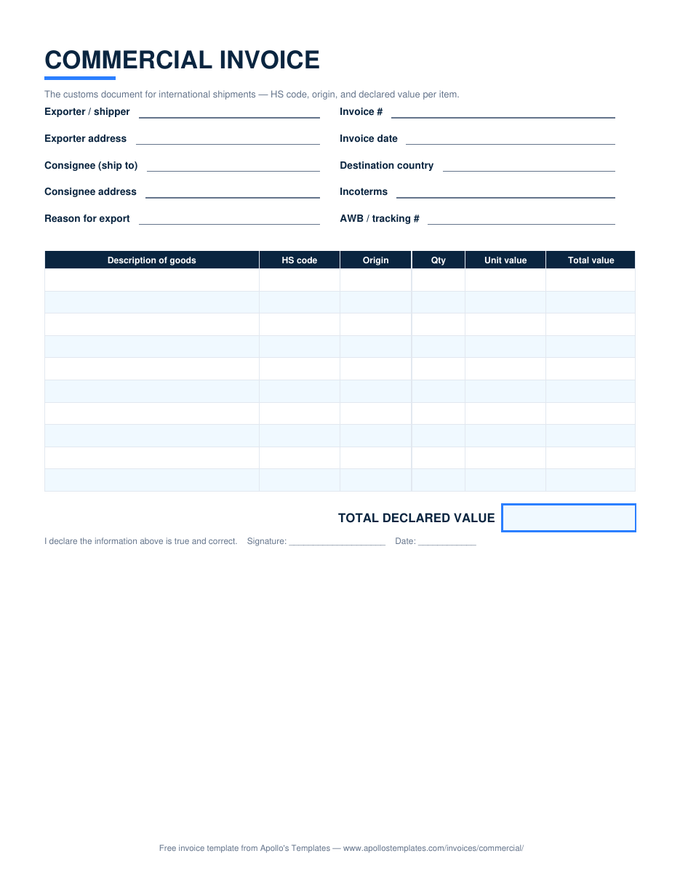
Commercial Invoice Template
The document customs actually reads: exporter and consignee, an item table with HS codes, country of origin, and declared values, the incoterms, the reason for export, and a signed declaration. Carriers ask for three copies with every international shipment because duties, taxes, and clearance speed are all assessed from this one page. Fill it completely and shipments clear; leave blanks and they sit.
The customs paperwork, laid out right.
Describe goods like an inspector, not a marketer.
“Men’s 100% cotton knit T-shirts” clears; “apparel” gets flagged. Customs descriptions want material, type, and use — the words that map to an HS code — not brand language. Add quantity and unit value that multiply cleanly into the total, and your paperwork reads like someone who ships often, which is itself a clearance speed advantage.
Keep a lane file per destination: the HS codes you’ve confirmed, the incoterm you quote, the consignee’s import particulars. The second shipment to a country should take five minutes of paperwork, not the afternoon the first one did. The Word version of this template is built to be that saved lane file.