
Travel Expense Report Template
The business travel expense report, in the shape trips actually take: one row per travel day, one column per expense type — airfare and transit, lodging, meals and tips, fuel or mileage, parking and tolls, other. In the Excel version the day rows date themselves from your trip dates, every day totals across, every category totals down, and the total reimbursement subtracts whatever was advanced before you left. The PDF prints clean for the folks who do trips on paper.
The travel sheet, however you work.
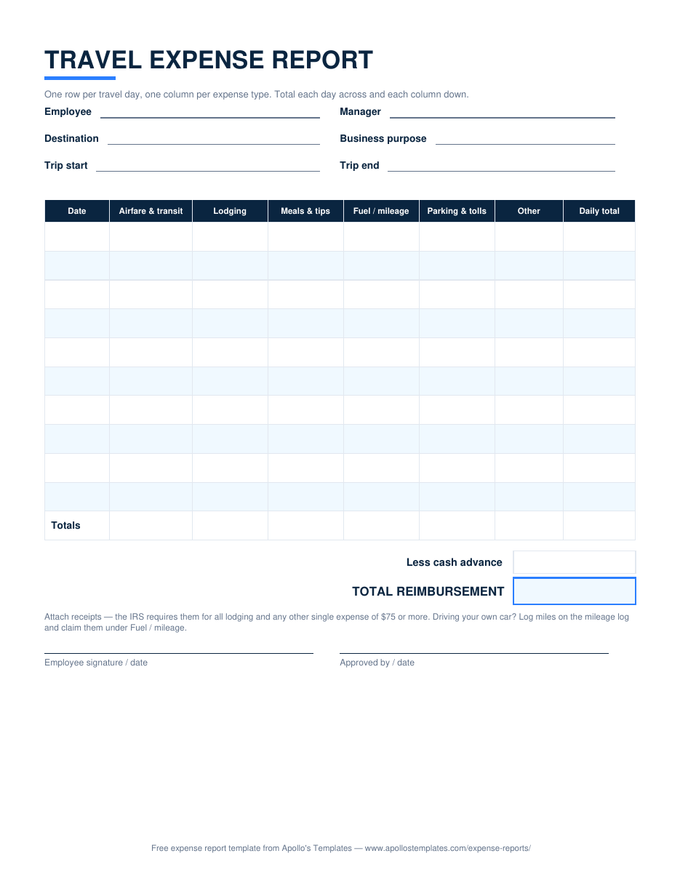
Do the report during the trip, not after it.
The five minutes at the hotel each evening — filling in today’s row while the receipts are still in your jacket pocket — beats an hour of archaeology the week after. It’s also what the IRS means by a “timely-kept record”: notes made at or near the time of the expense carry more weight than reconstructions, because memory of the business purpose fades faster than the receipt does.
Two receipts people lose on every trip: the hotel folio (ask at checkout — the emailed version routinely lands in spam) and airport parking. Lodging receipts are the one category the IRS requires at any amount, so the folio is the single most important piece of paper the trip produces.
Per diem, in one minute.
Some employers skip lodging and meal receipts entirely and pay a per diem — a flat daily allowance, usually pegged to the federal GSA rate for the destination city. It’s the employer’s choice, not the traveler’s: per diem trades receipt-chasing for a predictable number, and under IRS rules an allowance at or below the federal rate needs no meal receipts at all.
If your trips run on per diem, this report slims down rather than disappearing: lodging and meals become one allowance line per day, while airfare, ground transport, and parking still get itemized with receipts as usual. Look up any city’s current rate at gsa.gov per diem rates.