
Free Financial Analyst Resume Templates
Free, ATS-friendly financial analyst resume templates in Microsoft Word and Google Docs. Finance hires on credentials, modeling chops, and numbers that moved money — so these lead with what a hiring manager scans for: your CFA or FMVA next to your name, quantified dollar impact (budget owned, forecast accuracy, deals closed), and the tools they filter on (Excel/VBA, Bloomberg, Capital IQ, FactSet, SQL). Whether you're in FP&A, equity research, corporate finance, or valuation — or writing an entry-level financial analyst resume with no experience yet — pick a layout and color, then fill in your numbers.
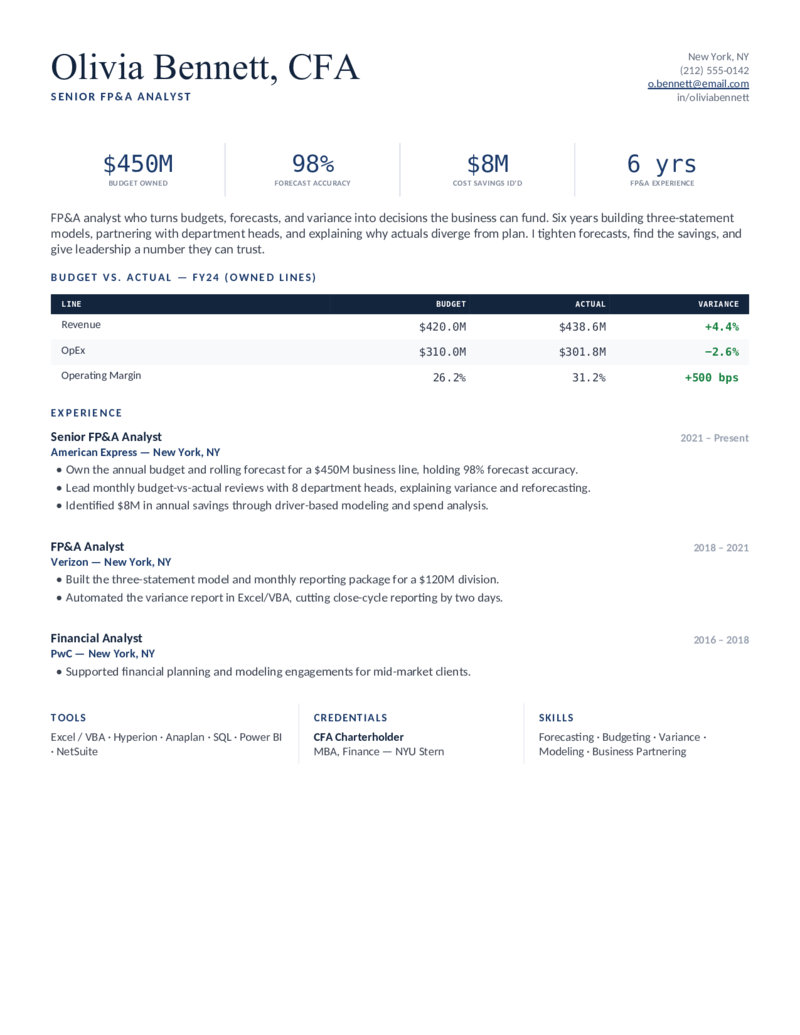
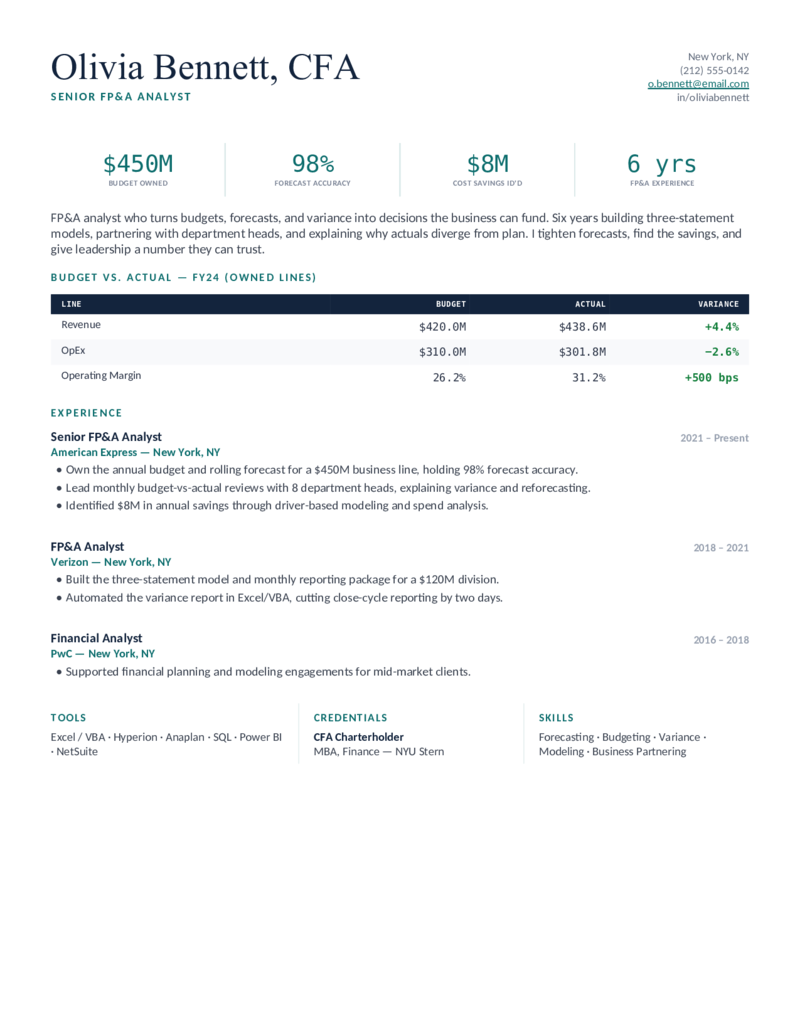
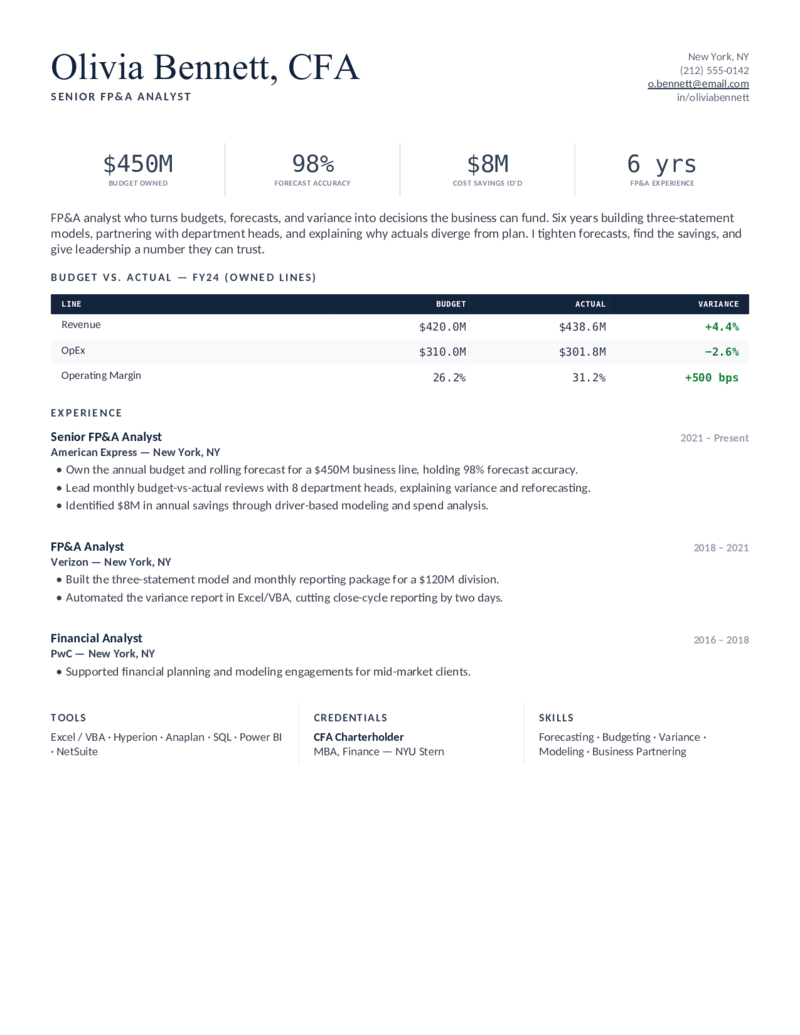
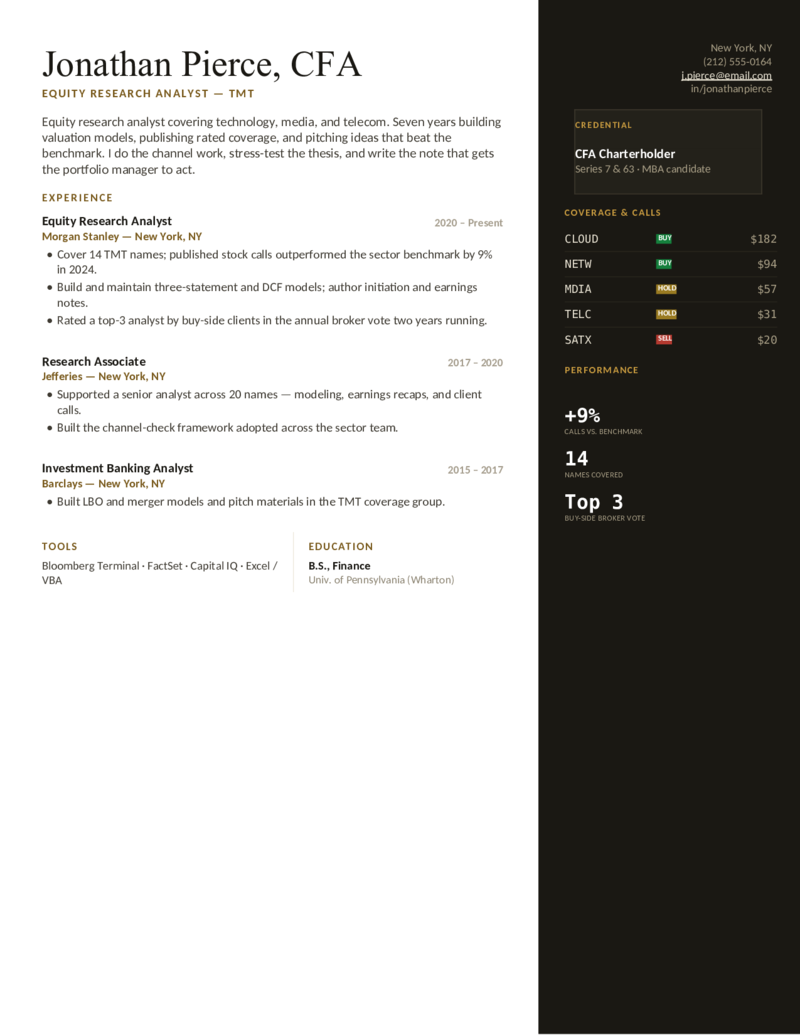
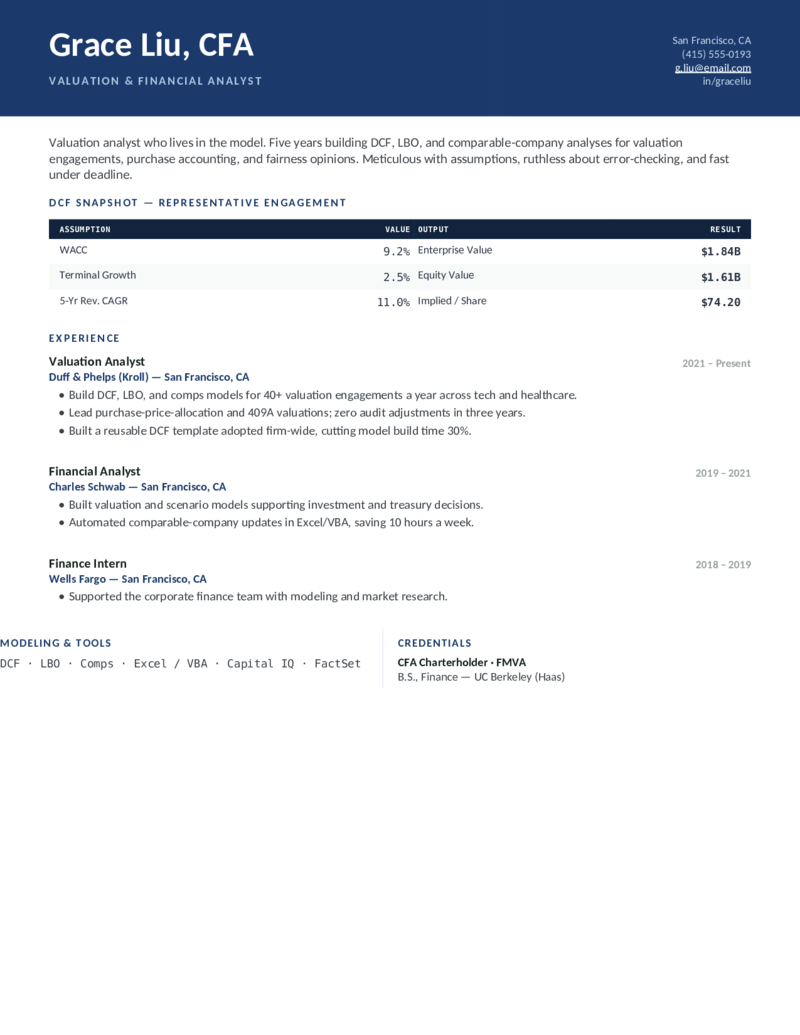
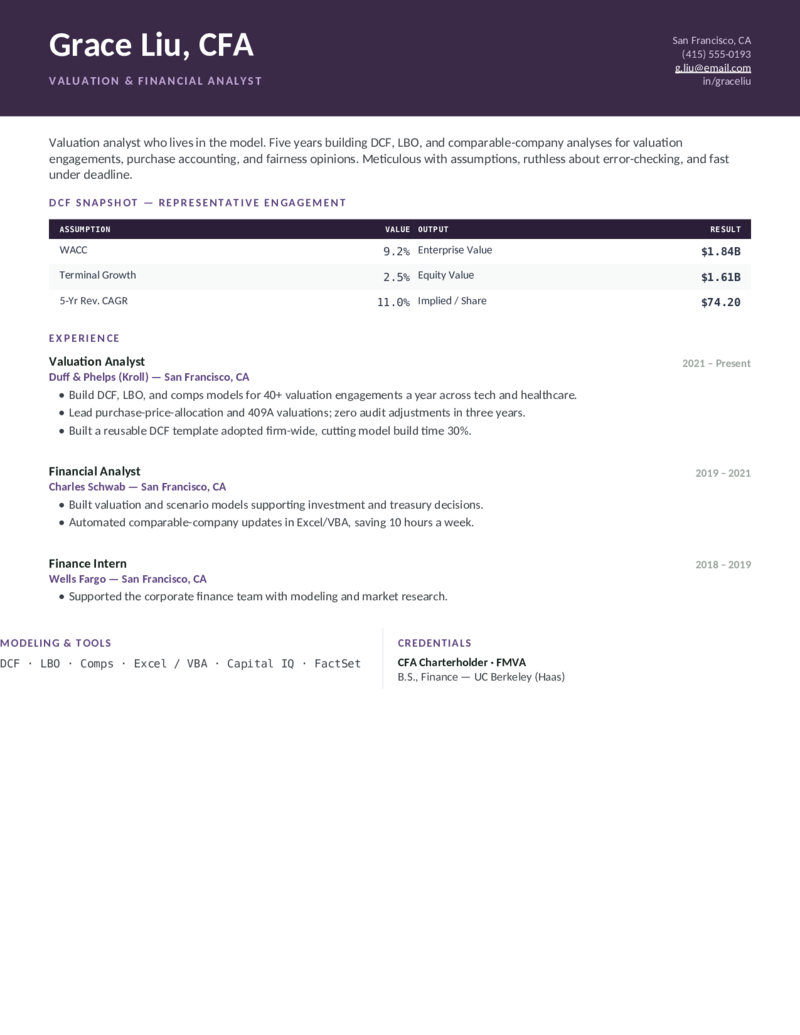
Four financial-analyst designs, each in three colors.
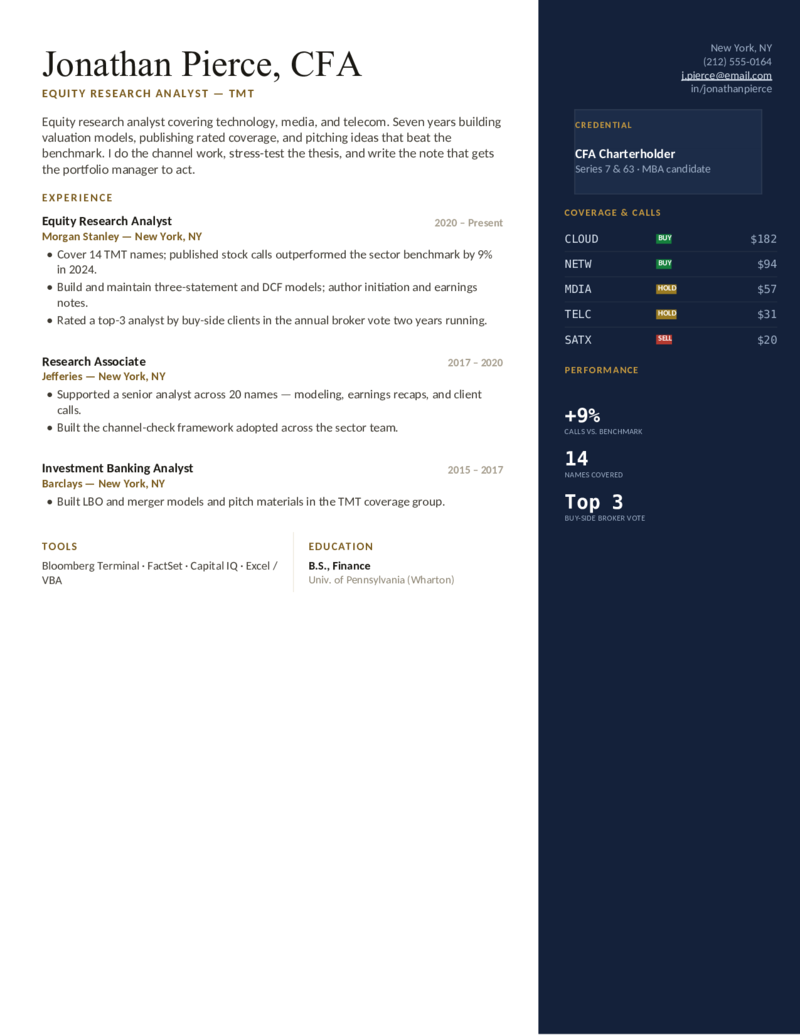
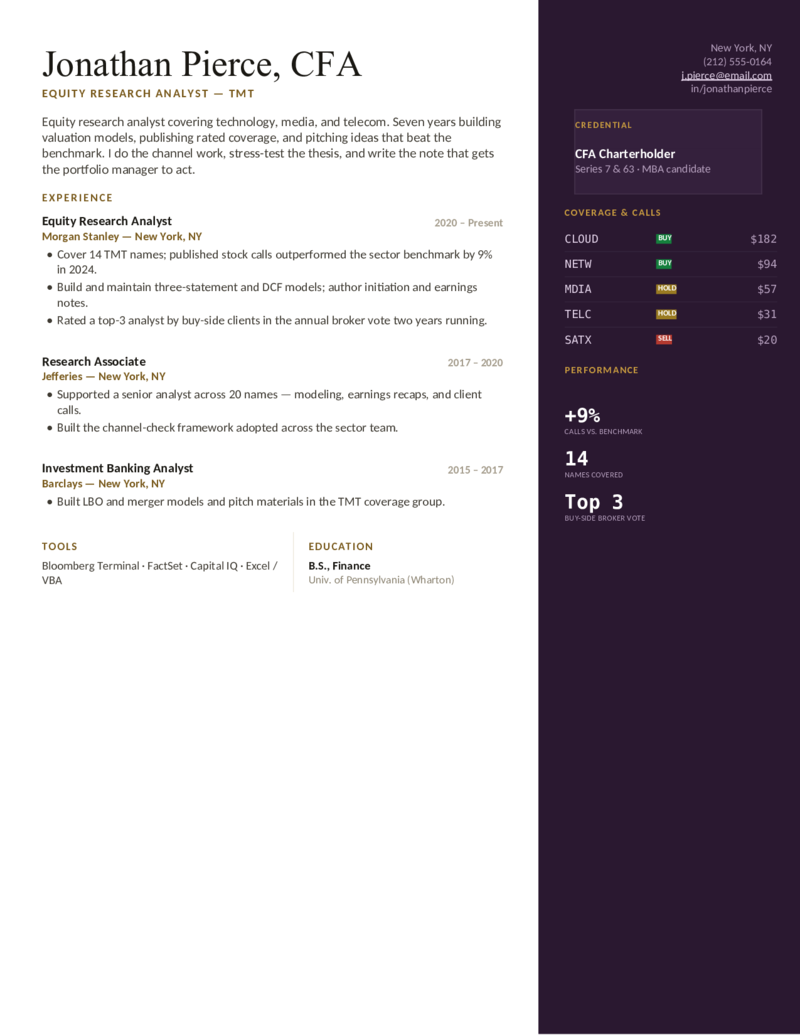
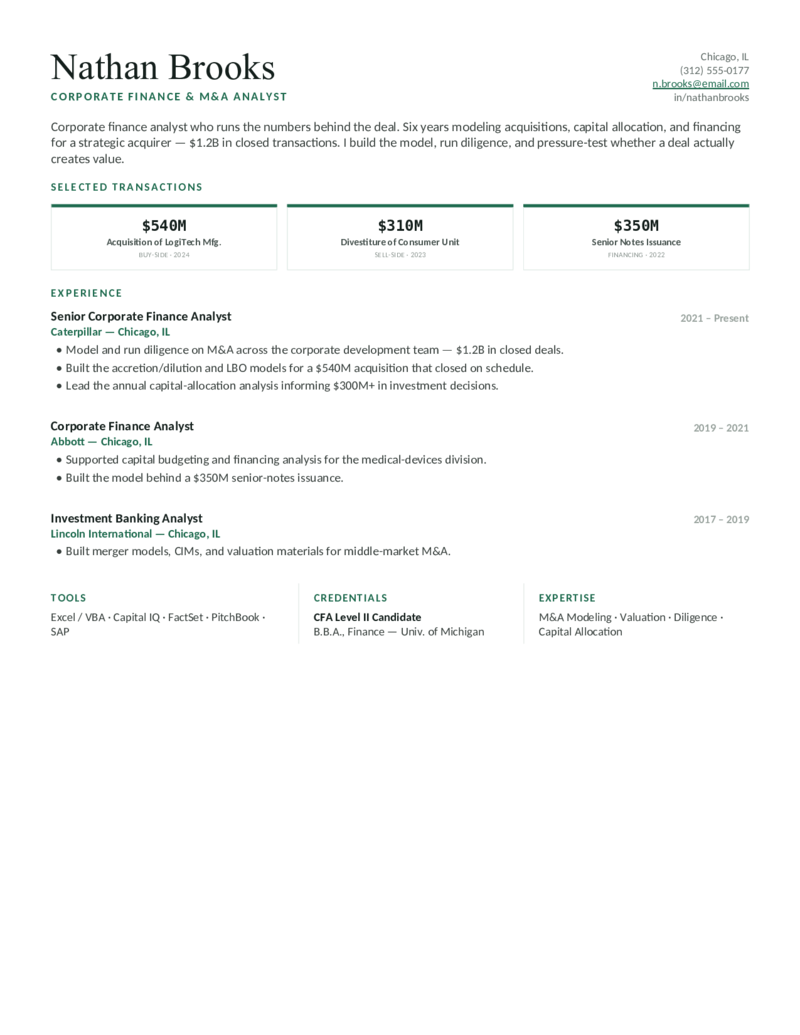
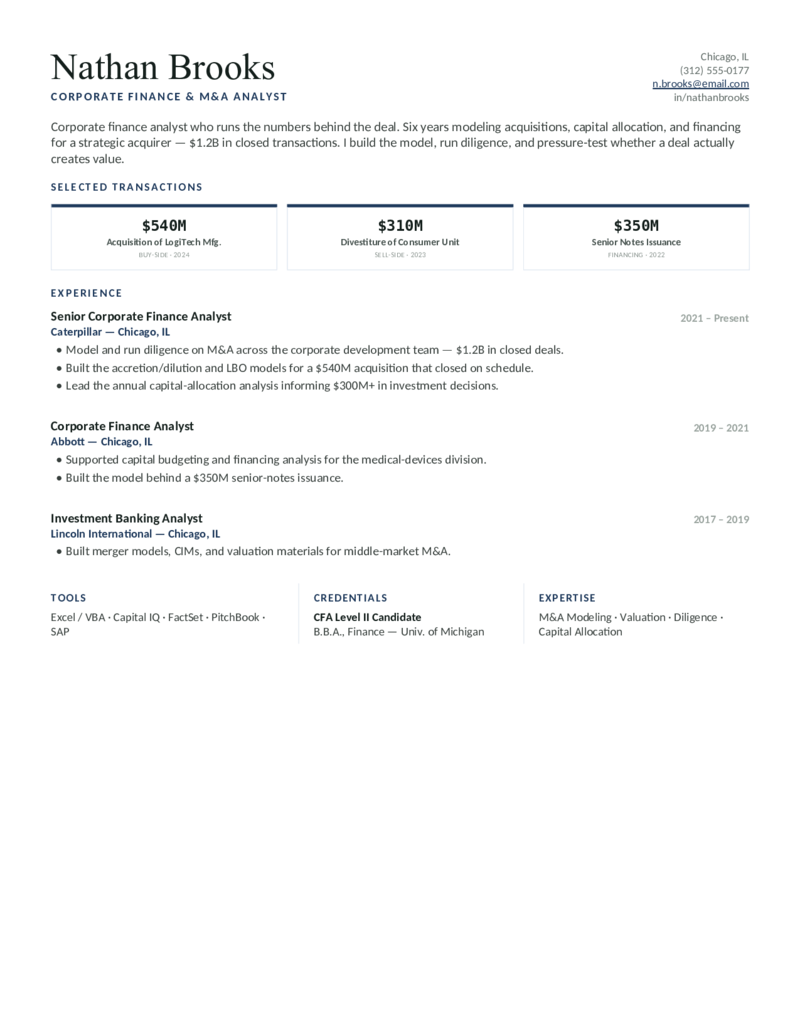
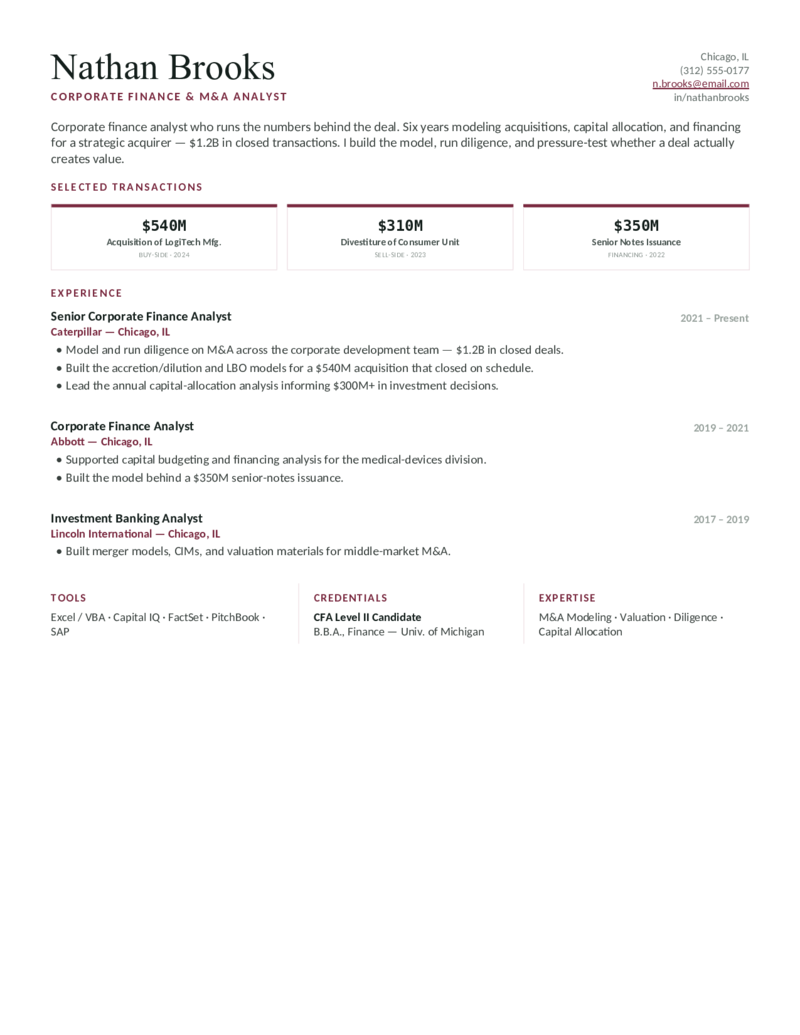
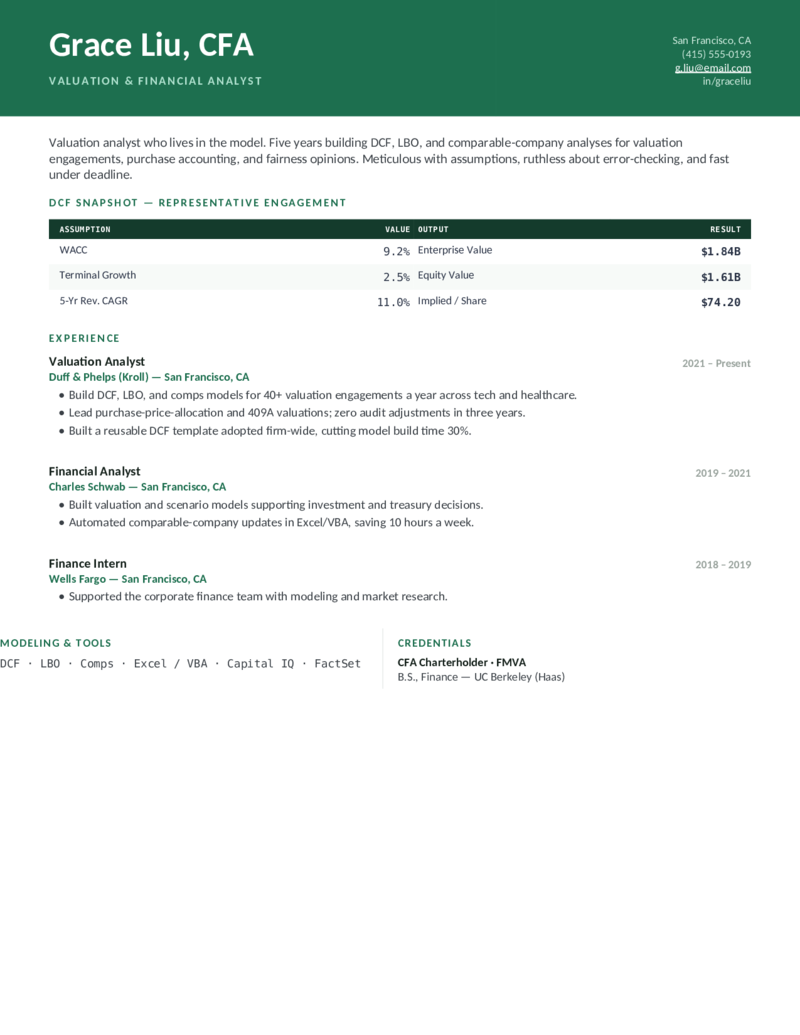
FP&A for budgeting, forecasting, and variance; Equity Research for buy-side and sell-side investment analysts; Corporate Finance for M&A and corporate development; and Valuation for financial modeling and generalist analyst roles. Every one opens in Word or Google Docs, stays on one page, and is built to be ATS-friendly — with big editable numbers in place of charts.
What goes on a financial analyst resume.
A financial analyst resume is judged on numbers and rigor. Put the things a finance hiring manager and the ATS screen for where they’ll be seen — which is exactly what these templates do:
- Credentials, up front. CFA (charterholder or candidate level), FMVA, CPA, or an MBA — next to your name and in a Credentials block. In progress? Write “CFA Level II Candidate.” Many ATS filter on these.
- Quantified dollar impact. Budget or portfolio owned, forecast accuracy %, cost savings identified, deals closed, variance vs. plan, hours or close-days saved. This is the single biggest differentiator on a finance resume.
- Modeling & tools, named exactly. Financial modeling, DCF, LBO, three-statement, comparable-company — plus Excel/VBA, SQL, Power BI, Bloomberg Terminal, Capital IQ, FactSet, Hyperion, Anaplan. In a skills line and woven into bullets.
- The right focus for the role. FP&A leads with budgeting, forecasting, and variance; research with coverage and calls; corporate finance with deals and capital allocation; valuation with DCF/LBO/comps. Mirror the posting’s exact terms.
Financial analyst vs. accountant: accounting is backward-looking — the close, GAAP, reconciliations, tax. A financial analyst resume is forward-looking: forecasting, modeling, valuation, and the decision a business should make next. Lead with that. If your work is mostly month-end close and compliance, our accountant templates fit better.
Fill it in and apply.
- Click Open in Google Docs to copy it into your Drive, or Download Word for the
.docx. - Put your credential (CFA, FMVA, CPA, or in-progress level) by your name, and your real numbers into the metrics — budget owned, forecast accuracy, deals closed.
- Replace the sample budget-vs-actual, coverage, deal, or DCF figures with your own, and name your tools exactly — Excel/VBA, Bloomberg, Capital IQ, FactSet.
- Keep it to one page (two is fine for senior roles), export a PDF to send and a Word copy for ATS portals.
Financial analyst resume FAQ
What should a financial analyst resume include to pass an ATS?
How do I quantify achievements on a financial analyst resume?
How is a financial analyst resume different from an accountant resume?
How do I write an entry-level financial analyst resume with no experience?
Where do I put the CFA — and what if I've only passed a level?
Which template fits FP&A vs. equity research vs. corporate finance vs. valuation?
What hard skills and tools should a financial analyst resume list?
Financial analyst resume templates · Updated June 2026