


College Class Session Plan Template
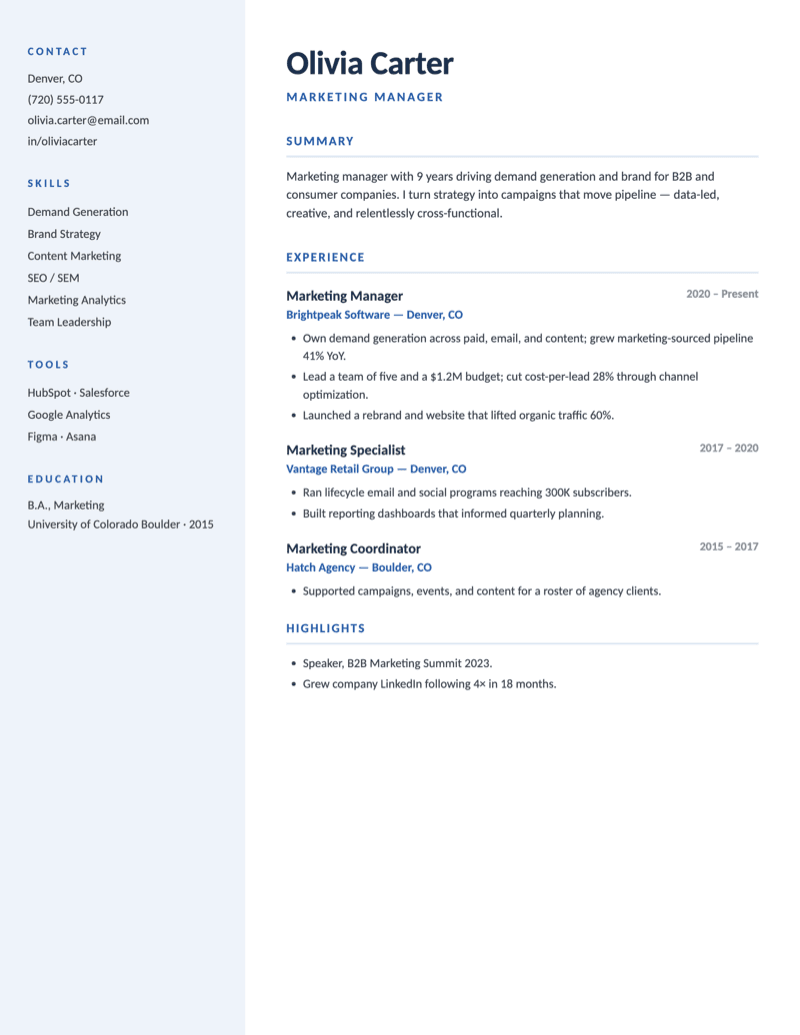
Professors do not write lesson plans; teaching centers call this a class session plan, and the difference is real. Session outcomes tied to the course assessment, then a timed sequence — pre-class, opening, a content segment, active learning, another segment, a formative check, closing, post-class — with the method and the materials for each. It is the plan a new instructor or a teaching assistant actually needs.
College class session plan
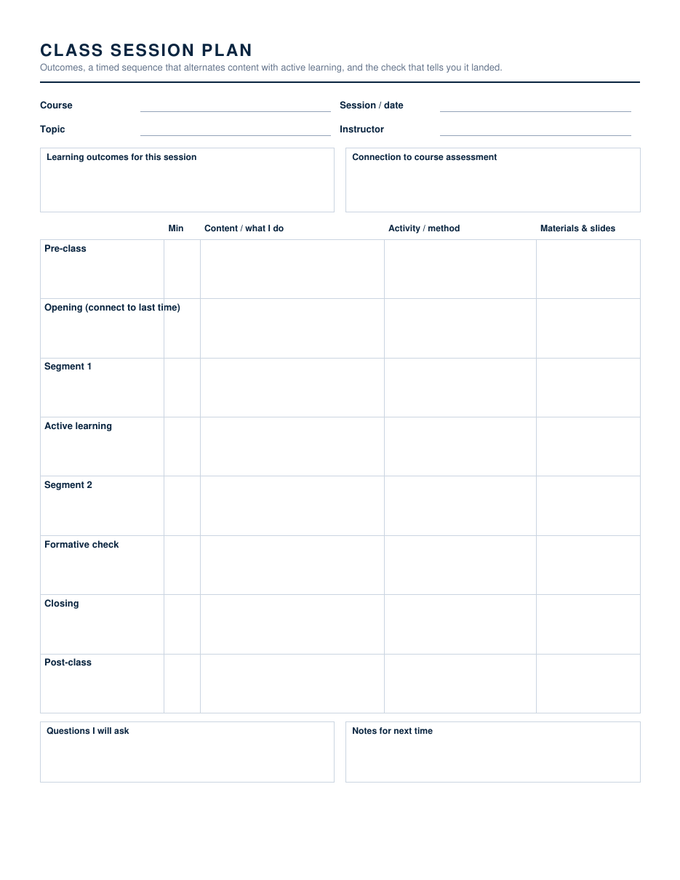
Specifications: US Letter, 8.5 × 11 inches. Word files are editable .docx that open in Word 2007 through Microsoft 365, including Word for Mac; the Google Docs link makes a copy in your own Drive; the PDF has real form fields and prints as plain hairline boxes when blank. Free to use in as many classes as you like, no account, no watermark.
About the college template
Higher education's version of the lesson plan comes from its centers for teaching and learning, and it has two features a school plan lacks. The sequence is timed in roughly fifteen-minute segments that alternate content with something students do, because attention and the research on lecturing both say so; and it has rows before and after the session, since the reading students do beforehand and the problem set after are part of the design. This sheet has both, with a method column — think-pair-share, polling, a worked problem, a minute paper — so the active learning is named rather than hoped for.
The outcomes box is paired with a connection-to-assessment box for the same reason the session plan exists at all: a session that does not visibly serve an exam, a paper or a project is the one students skip. Adjunct and graduate instructors, corporate trainers and anyone teaching adults will find the same sheet works; a facilitator guide with slide numbers is a different artifact and not attempted here.
College lesson plans, answered
Do professors really need this?
What goes in the formative check row?
Can I use this for online or hybrid sessions?
Drawn and measured in November 2026.