
Cap, goggles, and a starting-block portrait — swimmers photograph well with the lane lines visible. Best-time field captures the PR; stroke field captures the event. This page builds the standard 2.5″ × 3.5″ size — the trading-card dimensions used by Topps, Bowman, and Pokémon. Prints four identical cards on one US Letter sheet so you can keep one and hand three away.
The Classic design is the most printer-friendly of the three — sharp banner colors, no large dark fills.
The five Swim Team card designs
Each one takes the same photo and details — you can switch between them in the maker above without retyping anything. Every design prints at 2.5 × 3.5 inches — the standard trading-card size, the same as Topps, Bowman and Pokémon cards — four to a US Letter sheet.
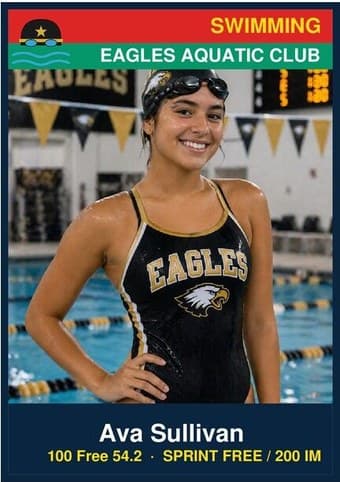
Classic
The one most people picture when they picture a trading card: banner up top, photo in the middle, name on a dark bar. At 2.5 × 3.5 it slides into a penny sleeve or binder pocket right next to the store-bought cards.
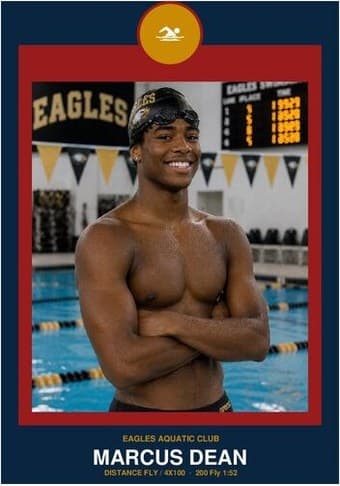
Circle Badge
A round badge sits at the top edge like a team crest, over an inner frame around the photo. The most formal of the five — it reads as much like an award as a trading card.
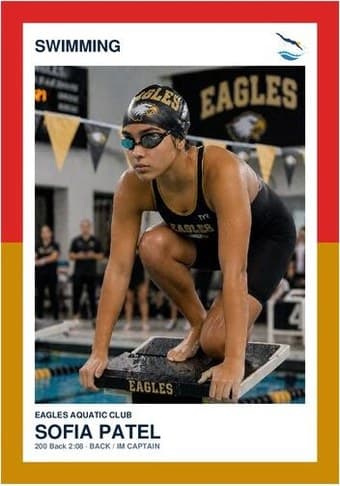
Split Halves
The border changes color halfway down, so the frame carries two team colors at once. The pick for clubs with a genuine two-color identity rather than one dominant color.
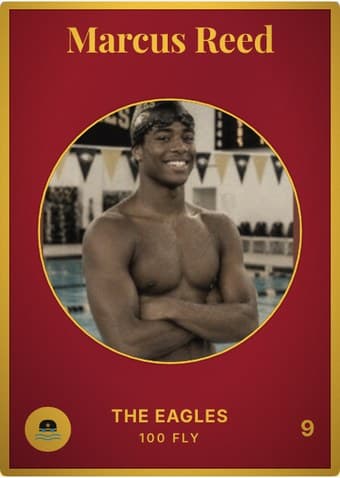
Vintage Card
A vintage trading card without imitating any real brand: the photo ages to a warm sepia (switchable off), sits in a gold-ringed circle, and the name arcs across the top in a serif face.
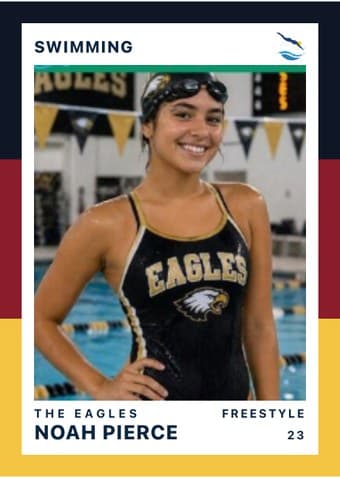
Triple Split
Three color bands run down one edge against a clean white field. The boldest border of the set — the card that still reads from across the table during a trade.
The download is a print-ready PDF. There is no account to create, no watermark, and no design software to install — no Photoshop, no Word template, no Canva login.
Tips for the best result
- Use a high-quality photo. On the deck with cap and goggles, or on the starting block, are the two cleanest poses. Water-droplet shots can be over-bright; expose for the face.
- Cut along the gutter. The four cards are arranged 2×2 on a US Letter sheet with a thin gutter. A paper cutter is faster than scissors; a craft knife and metal ruler give the cleanest edges.
- Card stock, not printer paper.60–100 lb cardstock holds up in a binder sleeve or a player’s pocket. Printer paper bends inside the first day.
- Print four cards, keep one. The 4-up sheet is designed for the team-card-swap workflow: print, cut, keep one for yourself, hand three away.
- Drag and zoom to crop. The photo frame shows exactly what ends up on the card. Center the face in the middle third — that’s the area readers’ eyes land on first.