





Bumper Pool Table Dimensions
A bumper pool table is small — a rectangle about 54 by 30 inches with 48 by 24 inches of cloth, or an octagon 48 to 54 inches across — with two pockets, twelve posts and ten 2⅛-inch balls. There is no governing body and no regulation size, so this page measures the tables people actually own, draws the post layout, and works out the room each shape needs with standard 48-inch cues and the short 42-inch ones.
Seven sheets: both shapes, the sizes, the room, the rules and a score sheet.
The two drawings and the size chart answer the buying and building questions; the room plan settles whether it fits; the rules card and score sheet run the game.
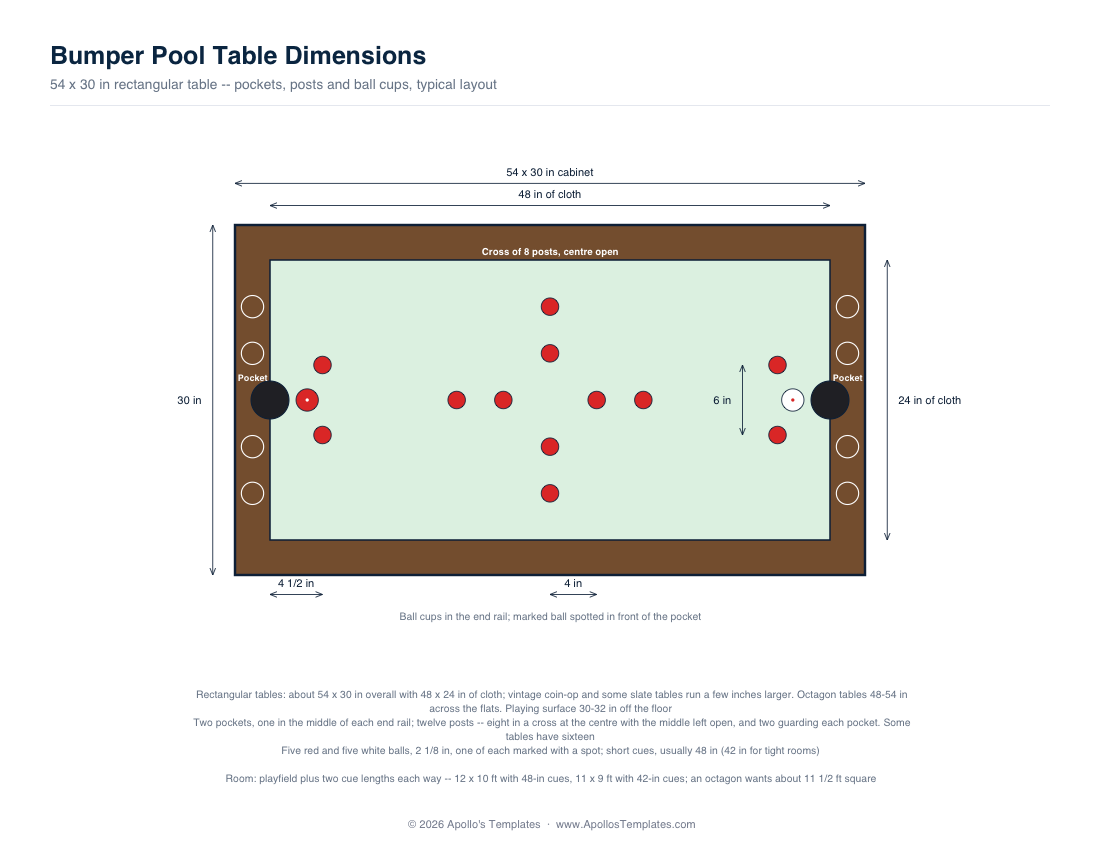
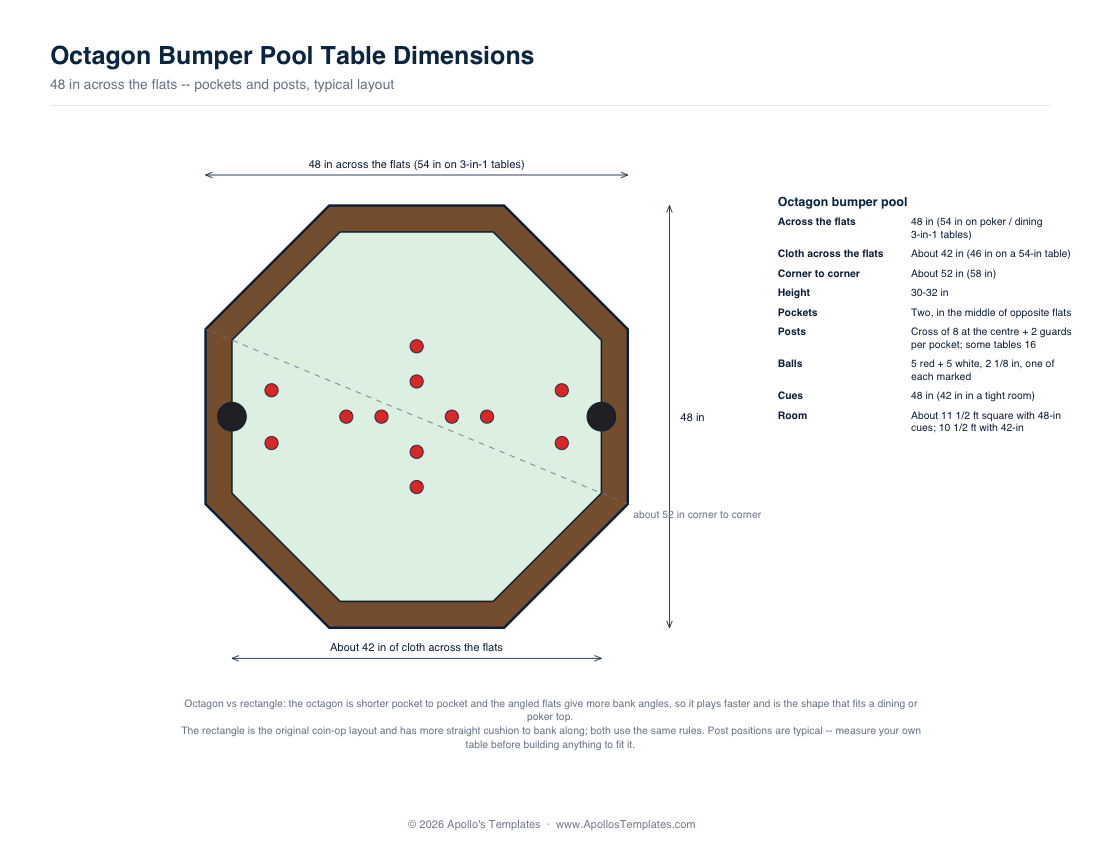
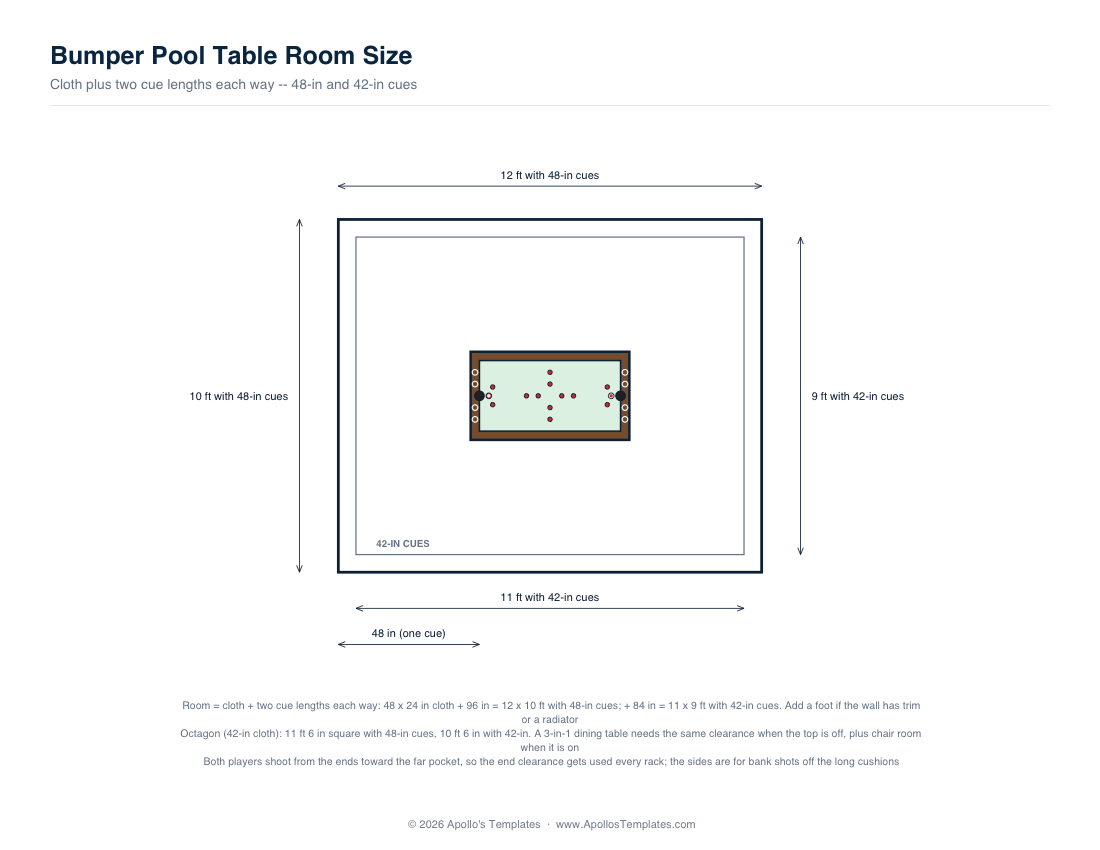
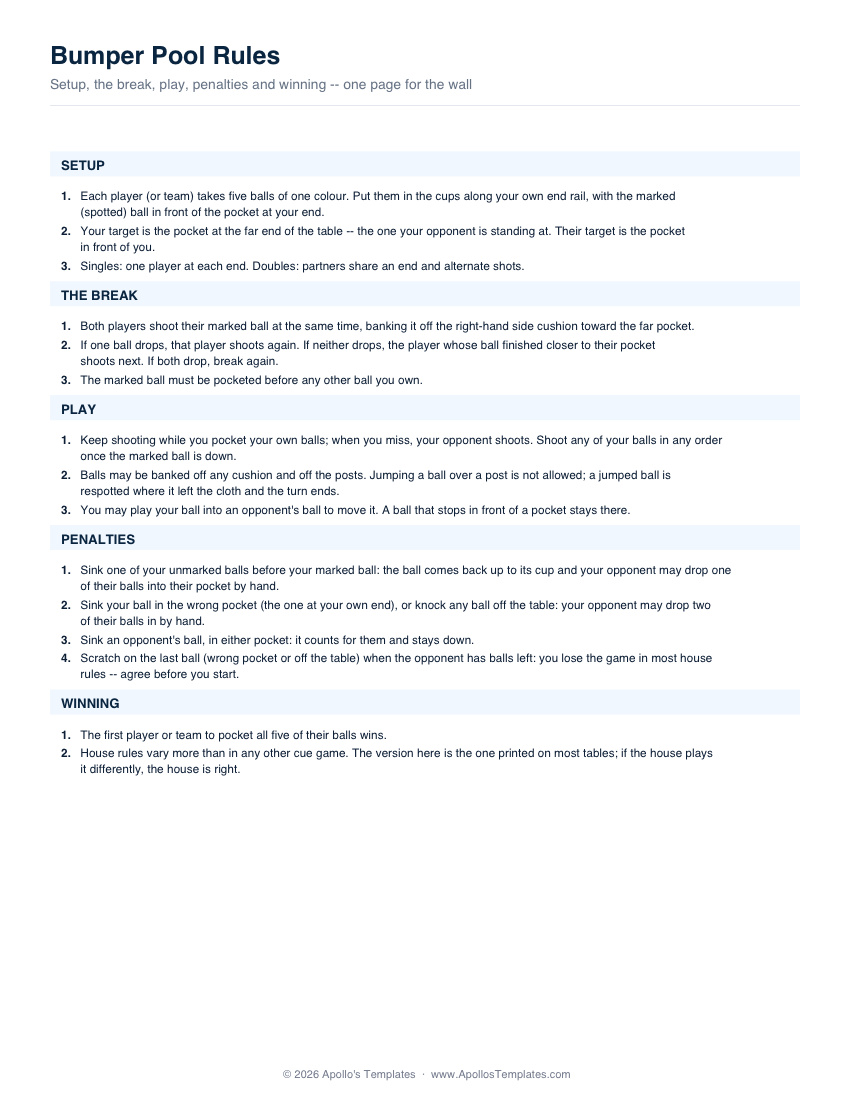
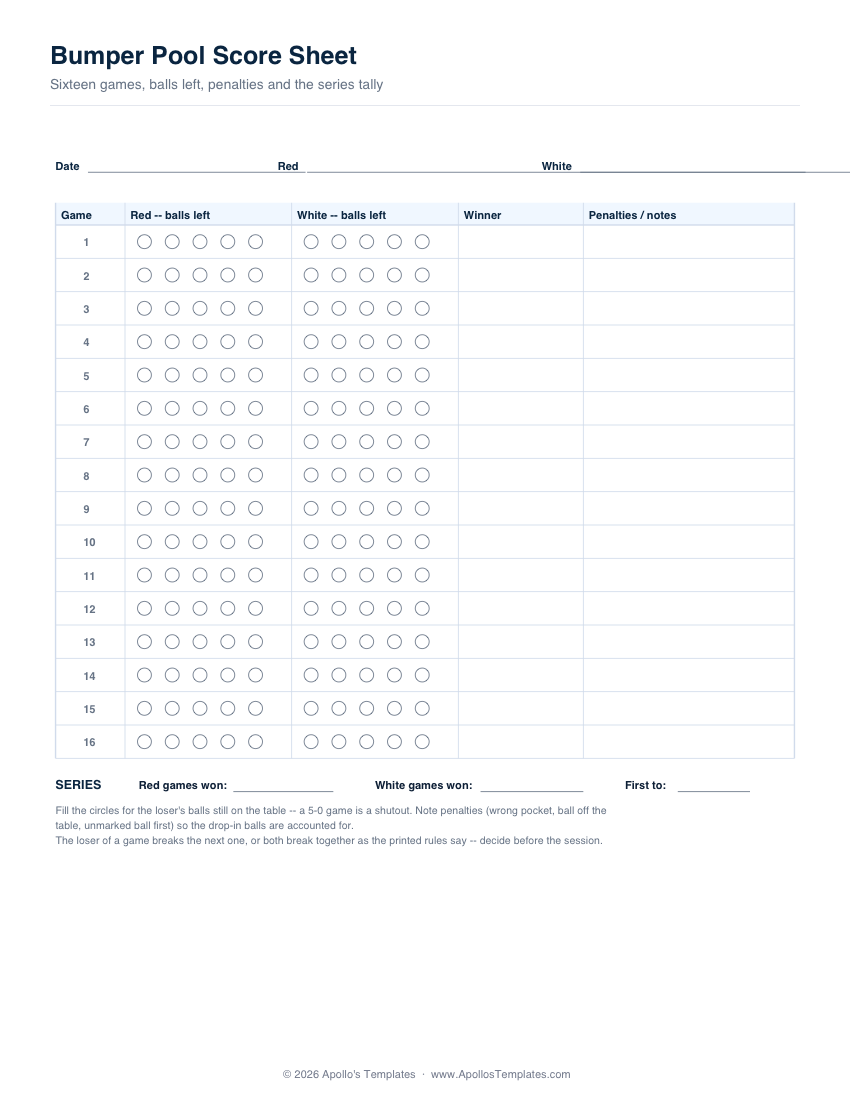
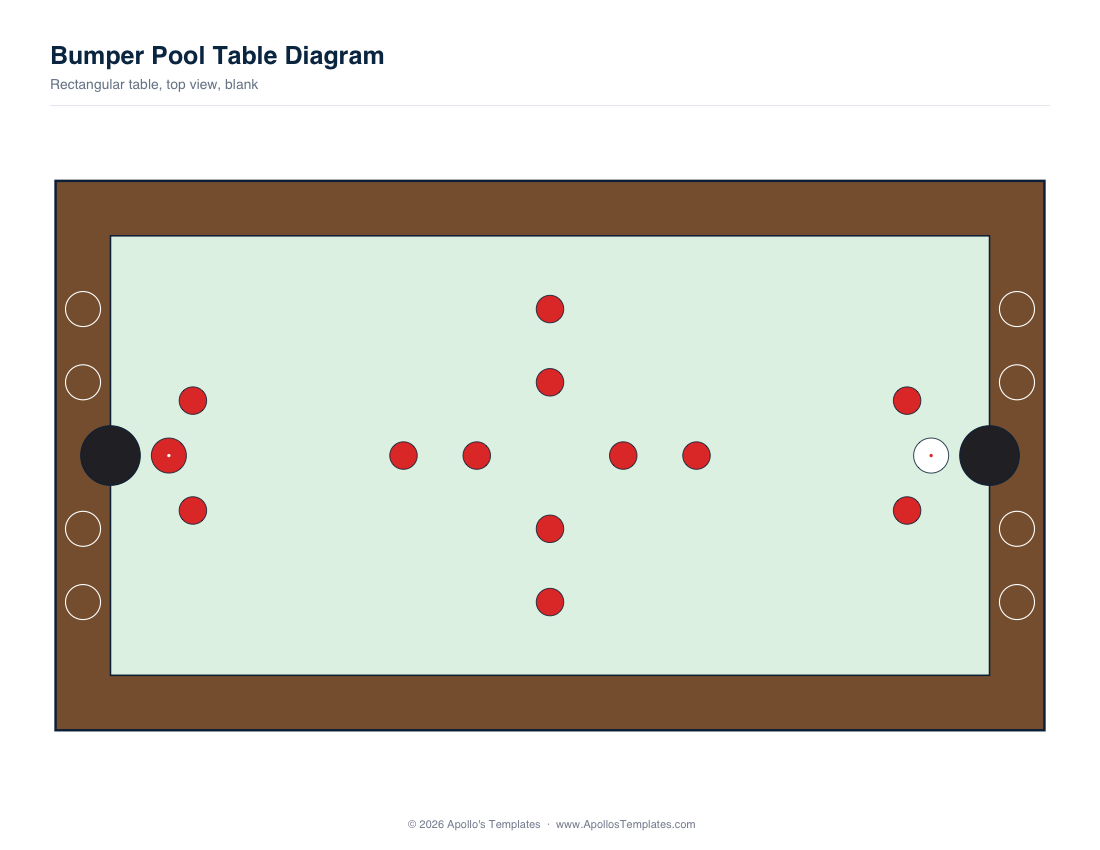
Bumper pool table numbers
Typical of current Valley-Dynamo, Hathaway and Berner tables and the vintage coin-op tables they copy. No table is required to match them — measure yours.
| Measurement | Value |
|---|---|
| Rectangle, overall | About 54 × 30 in (the common new table); vintage coin-op and some slate tables about 58 × 34 in |
| Rectangle, cloth | About 48 × 24 in inside the rails; 52 × 28 in on the larger tables |
| Octagon | 48 in across the flats stand-alone (about 52 in corner to corner); 54 in on 3-in-1 poker and dining tables; cloth 42–46 in across |
| Height | 30–32 in from the floor to the cloth, the same as a pool table |
| Pockets | Two, one in the middle of each end rail (or of opposite flats on an octagon), about 3¼ in across |
| Posts | Twelve on most tables: eight in a cross at the centre, spaced about 4 in with the middle open, and two guarding each pocket about 4½ in out and 6 in apart. Some tables have sixteen |
| Balls | Ten: five red and five white, 2⅛ in (54 mm), one of each colour marked with a spot |
| Cues | 48 in is standard; 42-in cues for tight rooms; a full 57-in pool cue is too long to use near the rails |
| Room | Cloth plus two cue lengths each way: 12 × 10 ft (48-in cues) or 11 × 9 ft (42-in) for a rectangle; about 11½ ft or 10½ ft square for an octagon |
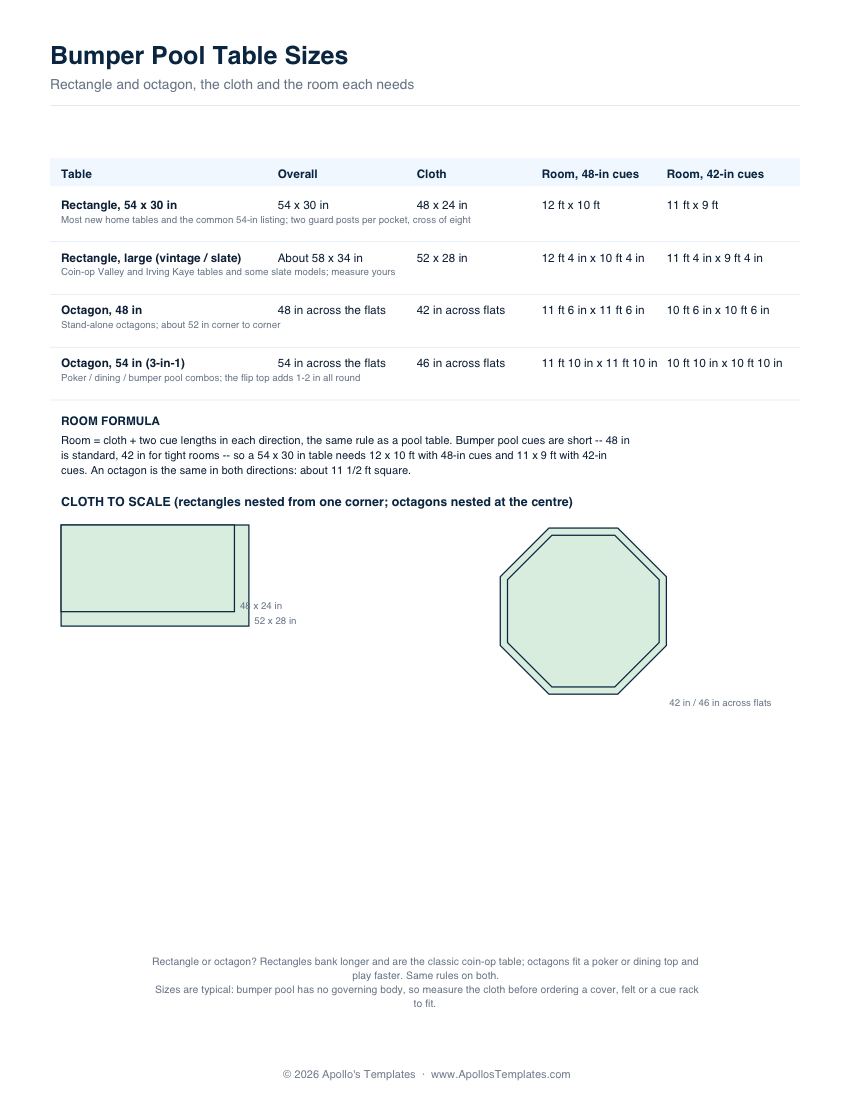
Bumper pool table sizes and the room each needs
Room is the cloth plus two cue lengths in each direction, worked for the standard 48-in cue and the 42-in short cue.
| Table | Overall | Cloth | Room, 48-in cues | Room, 42-in cues | Notes |
|---|---|---|---|---|---|
| Rectangle, 54 x 30 in | 54 x 30 in | 48 × 24 in | 12 ft × 10 ft | 11 ft × 9 ft | Most new home tables and the common 54-in listing; two guard posts per pocket, cross of eight |
| Rectangle, large (vintage / slate) | About 58 x 34 in | 52 × 28 in | 12 ft 4 in × 10 ft 4 in | 11 ft 4 in × 9 ft 4 in | Coin-op Valley and Irving Kaye tables and some slate models; measure yours |
| Octagon, 48 in | 48 in across the flats | 42 in across the flats | 11 ft 6 in × 11 ft 6 in | 10 ft 6 in × 10 ft 6 in | Stand-alone octagons; about 52 in corner to corner |
| Octagon, 54 in (3-in-1) | 54 in across the flats | 46 in across the flats | 11 ft 10 in × 11 ft 10 in | 10 ft 10 in × 10 ft 10 in | Poker / dining / bumper pool combos; the flip top adds 1-2 in all round |
Why the posts are where they are
Everything about the layout exists to stop the straight shot. The two guard posts in front of each pocket sit about 4½ inches out from the end rail and 6 inches apart, so a ball rolled straight down the table from the far end hits a post; the only way in is off a cushion or through the gap at an angle. The eight posts in the middle make a cross with the centre open, which gives you a lane straight through the table in either direction — if you can hit it — and four corners to bank around when you cannot. That is the whole game: every shot is a bank or a thread, and the shorter the table the more the banks matter, which is why the octagon plays faster than the rectangle.
The numbers are typical rather than fixed. Valley, Dynamo, Hathaway and Berner all use a 48 × 24 cloth and a 4-inch cross on their rectangles, and the vintage coin-op tables people restore run a few inches bigger; octagons vary more because the cloth is whatever is left after the poker rail. If you are drilling a table of your own, lay the posts out from the sheet and roll a ball through the cross and past the guards before you glue anything down.
What size is a bumper pool table?
How much room do you need for a bumper pool table?
What is the difference between an octagon and a rectangular bumper pool table?
How many bumpers are on a bumper pool table, and where do they go?
What size are bumper pool balls, and how many are there?
How long is a bumper pool cue?
Is there a regulation bumper pool table?
What size is a 3-in-1 bumper pool table?
Can I build a bumper pool table?
Sizes are typical of current and vintage tables — bumper pool has no governing body or regulation size; the room formula is the cue-table standard. Updated through September 2026.