




Apollo's Templates
HomeBudget TemplatesTravel
Spend the trip, not the savings

Travel & Vacation Budget Template

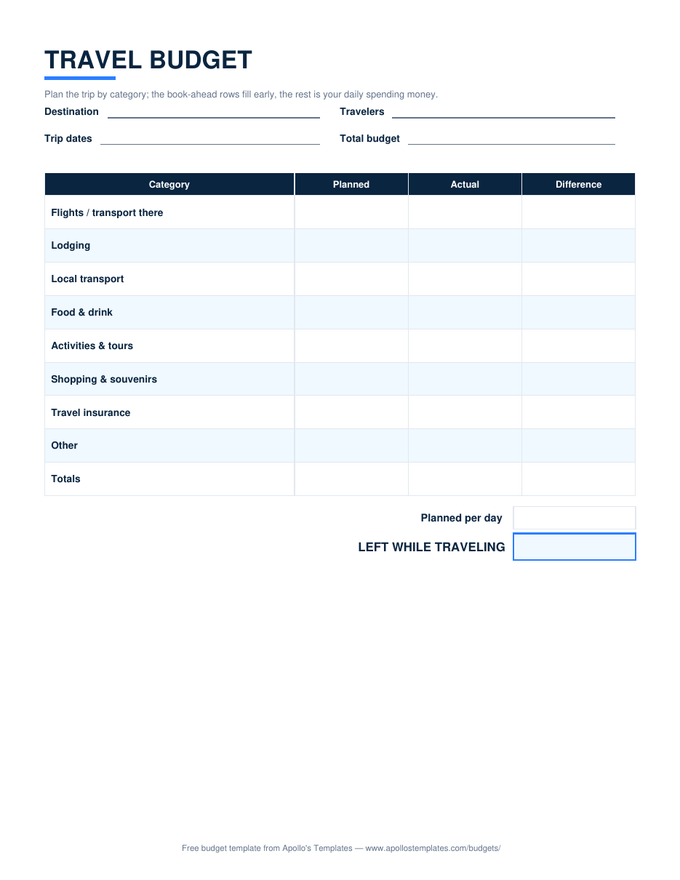
Trips split their spending into two eras: the book-ahead money \u2014 flights, lodging, insurance \u2014 that's gone before you pack, and the daily money that decides how the trip actually feels. This sheet respects the split: plan every category, log actuals as bookings happen, and let the date math work \u2014 enter your trip dates and it computes the nights, the planned per-day rate, and the number that matters at breakfast abroad: what's LEFT WHILE TRAVELING.

Packed and planned

One sheet, every format.

Excel — date math included

Nights, per-day, and per-traveler figures compute from your dates; LEFT WHILE TRAVELING updates as actuals land.
Printable PDF preview
PDF

Printable PDF

The trip categories printed — folds into the document wallet with the passports.
Download PDF

Word / Google Docs

The trip budget as a document — plan it alongside the itinerary and packing list.
Worth knowing

Budget the trip in two eras.

By departure day, half the trip is usually already spent — flights, lodging, insurance, the rental car. That’s not a budgeting failure; it’s the structure of travel, and the sheet is built for it: the book-ahead rows fill their Actual column weeks early, and what remains of the total budget becomes the real daily spending money. Knowing that number before wheels-up is the difference between a relaxed trip and a nervous one.

On the road, the per-day figure is the steering wheel. A five-night trip with $900 of daily money is $180 a day — and a $260 splurge day simply means two $130 days follow, a trade made calmly instead of discovered at checkout. Travelers who track nothing else do fine tracking one line: today’s total, against the per-day number, each evening. Thirty seconds, and the trip stays a pleasure instead of becoming an audit.

Work trips instead
Travel Expense Report
The reimbursement version — day rows, receipts, and per-diem notes.
Open
Saving up for it
Paycheck Budget
The sinking-funds sheet turns next summer's trip into a per-check line.
Open
The trip's paper
Photo Calendars
Turn the trip photos into next year's calendar when you're back.
Open

Frequently asked questions

How do I handle foreign currency in the budget?
Pick one currency — almost always your home one — and log everything converted, roughly. Card transactions convert themselves on the statement; for cash, the mental rate from today's withdrawal is accurate enough (budget-grade, not accounting-grade). The mistake to avoid is mixing currencies in one column; a sheet with dollars and euros interleaved answers no questions. Note the rough rate you used in a category's notes and move on — precision within a percent changes no decisions on vacation.
What do travel budgets always underestimate?
Ground transport and food, in that order. Airport transfers, the taxis that seemed walkable on the map, the train day-trip — local transport routinely lands at double its estimate. Food creeps because vacation meals average out expensive: breakfast is cheap until the one seafood dinner isn't. The fix is planning both from the trip you'll actually take, not the disciplined one you imagine — and letting the travel-insurance row remind you it exists before departure, when it's still purchasable.
Should we budget per person or per trip?
Plan per trip — lodging, rental cars, and most activities price by the group, so the trip total is the honest planning unit. The sheet then computes per-traveler from your headcount for the settling-up questions: splitting costs among friends, judging whether the family trip beats two smaller ones, comparing this year to last. Couples and families usually never need the per-person view until someone else joins; groups of friends live in it.
How much buffer does a trip need?
Ten to fifteen percent of the total, and more for the trip types that earn it: first visit to an expensive city, traveling with kids, anywhere your plans depend on weather. Travel buffers differ from home-budget buffers in one way — they get spent joyfully more often than defensively. The unplanned glacier tour is what the buffer is for; the sheet's job is making sure saying yes to it is a choice, not a debt.
Updated through August 2026