





Expense Tracker Template
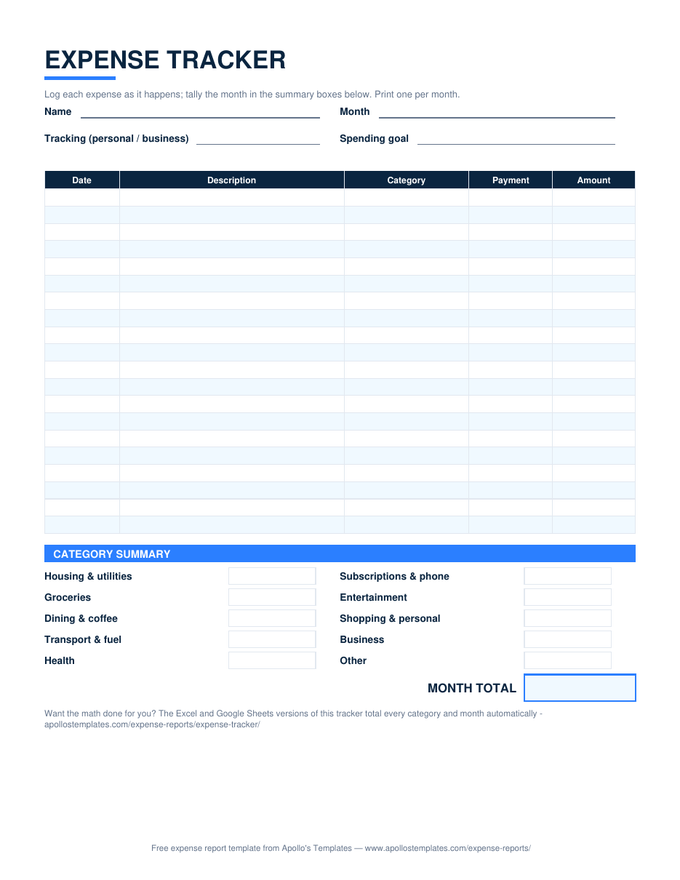
A running log for spending as it happens: date, what it was, a category, how you paid, how much. The sheet does the part people quit over — a category summary and a month-by-month summary that keep themselves, so the answer to “where does it all go?” is just sitting there at the bottom. No signup, no app, no account linking your bank — a spreadsheet you own, or a PDF and a pen.
The tracker, on your phone or on the fridge.
A tracker is a habit with a spreadsheet attached.
Tracking apps fail for a predictable reason: they automate the logging and skip the noticing. When a bank feed categorizes everything for you, you never touch the numbers, and spending you never touch doesn’t change. Writing the $6 coffee into a row — ten seconds — is the intervention. The spreadsheet’s job is everything after that: the category totals, the month totals, the quiet accumulation of evidence.
The payment-method column earns its space at review time. Sorting a month by Credit card against the statement catches the subscription you forgot; a fat Cash total is spending that left no other trail anywhere. Ten default categories cover a normal life — Housing & utilities through Business — and retyping them takes a minute if yours differ. Track first, judge later: a month of honest rows beats a year of estimates.