




Art Lesson Plan Template
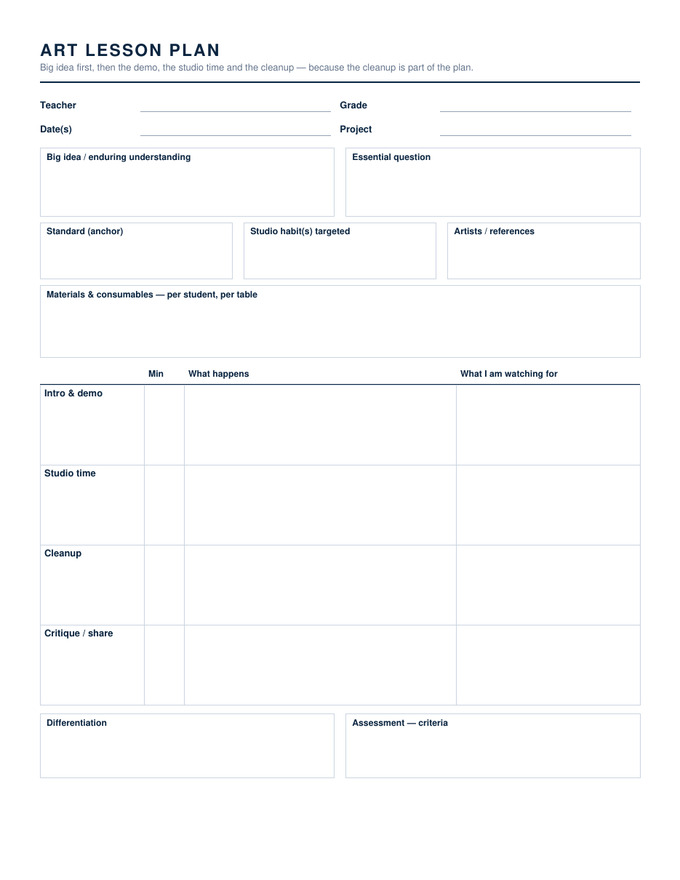
An art plan that starts with the idea rather than the project: a big idea and essential question, the anchor standard, the studio habit you are building and the artists students will see; then the materials per student and per table, and the period as intro and demo, studio time, cleanup and critique, each with its minutes. Differentiation and the criteria you will assess against at the foot.
Art lesson plan template
Specifications: US Letter, 8.5 × 11 inches. Word files are editable .docx that open in Word 2007 through Microsoft 365, including Word for Mac; the Google Docs link makes a copy in your own Drive; the PDF has real form fields and prints as plain hairline boxes when blank. Free to use in as many classes as you like, no account, no watermark.
About the art template
The project-first art plan — today we make a clay pinch pot — is the template most art teachers inherit and the one that reads as crafts to an evaluator. The big idea and essential question at the top of this sheet are what turn a project into a lesson: containers and what they hold, how artists show emotion with color. The studio-habit box names the disposition the lesson develops, since art is the subject where persistence, observation and reflection are the curriculum as much as the technique.
The sequence table has four rows because an art period has four parts, and two of them are usually unplanned. Cleanup takes eight minutes with thirty children and wet materials, and a plan that forgets it ends with the bell and a mess; critique or share takes five and is where students learn to talk about work. Both have a row and a minutes column. The materials box is split per student and per table because that is how art supplies are counted out.
Art lesson plans, answered
What is a studio habit?
Which standards go in the anchor box?
Can I plan a multi-day project on one sheet?
Drawn and measured in November 2026.