





Math Lesson Plan Template
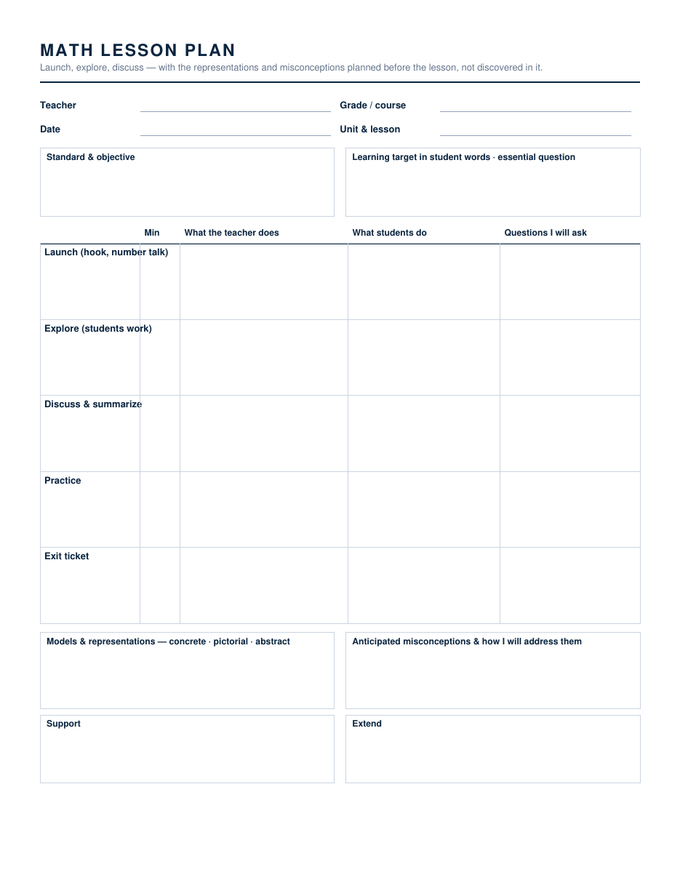
A math lesson planned as a workshop rather than a lecture: a launch, time for students to work, a discussion that draws the mathematics out, practice and an exit ticket, each with the questions you will ask. The representations you will use and the misconceptions you expect have their own boxes, because the lesson goes better when they are decided before it starts.
2 math lesson plan templates
Specifications: US Letter, 8.5 × 11 inches. Word files are editable .docx that open in Word 2007 through Microsoft 365, including Word for Mac; the Google Docs link makes a copy in your own Drive; the PDF has real form fields and prints as plain hairline boxes when blank. Free to use in as many classes as you like, no account, no watermark.
About the math templates
Two things distinguish a math plan from a generic one, and both are missing from most templates. The first is the question column: a math lesson lives or dies on the questions the teacher asks during the explore and the discussion, and writing three in advance is the difference between a discussion and a show-and-tell. The second is the pair of boxes under the sequence — which representations you will move through, concrete to pictorial to abstract, and which wrong answers you expect and how you will use them. Good math teaching treats the misconception as the lesson, and the plan should say which one.
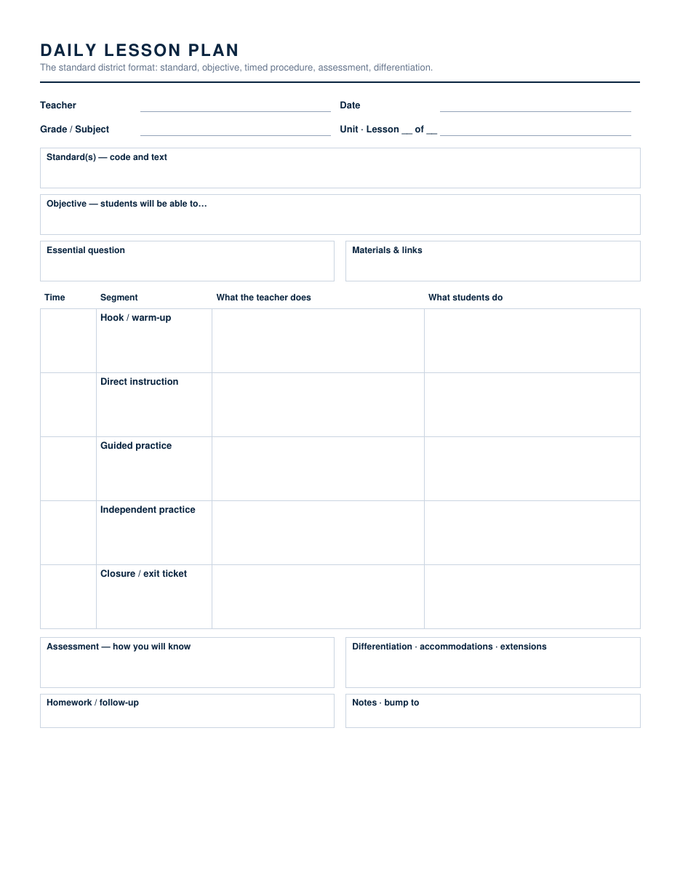
The rows follow the launch–explore–summarize shape that most elementary and middle school math curricula now use, with a practice row and an exit ticket. A traditional direct-instruction lesson fits the same rows renamed; the standard daily plan on this page is there for schools whose form is that one.
Math lesson plans, answered
What is the difference between this and the daily lesson plan?
Why plan misconceptions?
Does this work for a 90-minute block or a 45-minute period?
Drawn and measured in November 2026.