



Apollo's Templates
HomeBudget TemplatesCash Envelopes
When the cash is gone, it's gone

Cash Envelope Templates

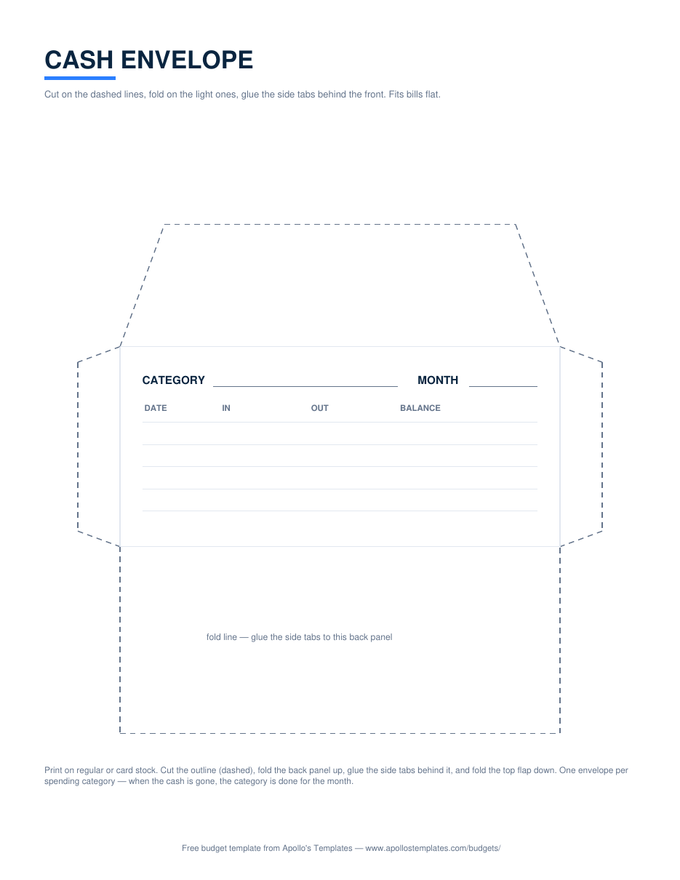
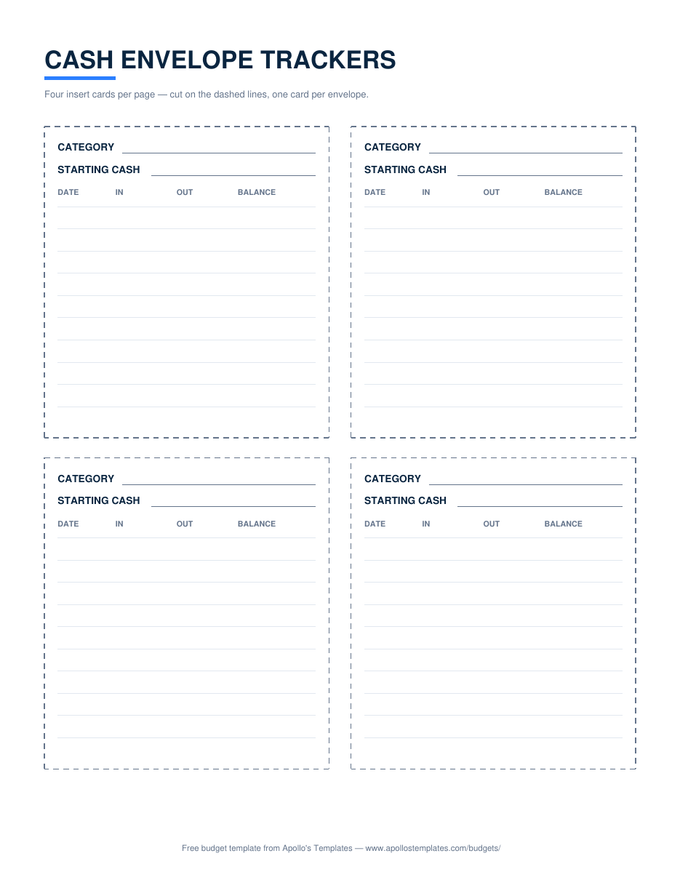
The envelope system is budgeting's oldest technology and still its most effective for the categories that leak: withdraw each category's cash at the start of the period, one envelope per category, and spend only from the envelope. No app required, no willpower arithmetic \u2014 an empty groceries envelope is a decision already made. These printables are the hardware: a fold-and-glue envelope pattern with the tracker printed on its face, and insert cards for envelopes you already own.

Print, fold, stuff

The envelope system, printable.

Worth knowing

Why paying in cash changes the spending.

Card spending is frictionless by design; cash spends with feedback. Handing over two twenties registers in a way a tap never does, and a thinning envelope is a budget report you receive involuntarily every time you open it. The research on payment pain is real, but the envelope system’s practical power is simpler: it moves the moment of decision from the register (where you always lose) to the withdrawal (where the month is still young and rational).

Start with three envelopes, not twelve — groceries, dining out, and fun money are the classic trio, because they’re the categories where the leak lives. Rent doesn’t need an envelope; autopay handles the disciplined categories fine. The hybrid most households land on: cards for the fixed and trackable, cash envelopes for the two or three lines where the money otherwise evaporates. When an envelope runs dry early three months straight, that’s not failure — that’s your budget negotiating with reality, and the number should probably move.

Fund the envelopes
Paycheck Budget
Plan each check's envelope amounts before withdrawal day — sinking funds included.
Open
The strictest pairing
Zero-Based Budget
Envelopes are zero-based budgeting made physical — plan the jobs, then stuff them.
Open
The headline envelope
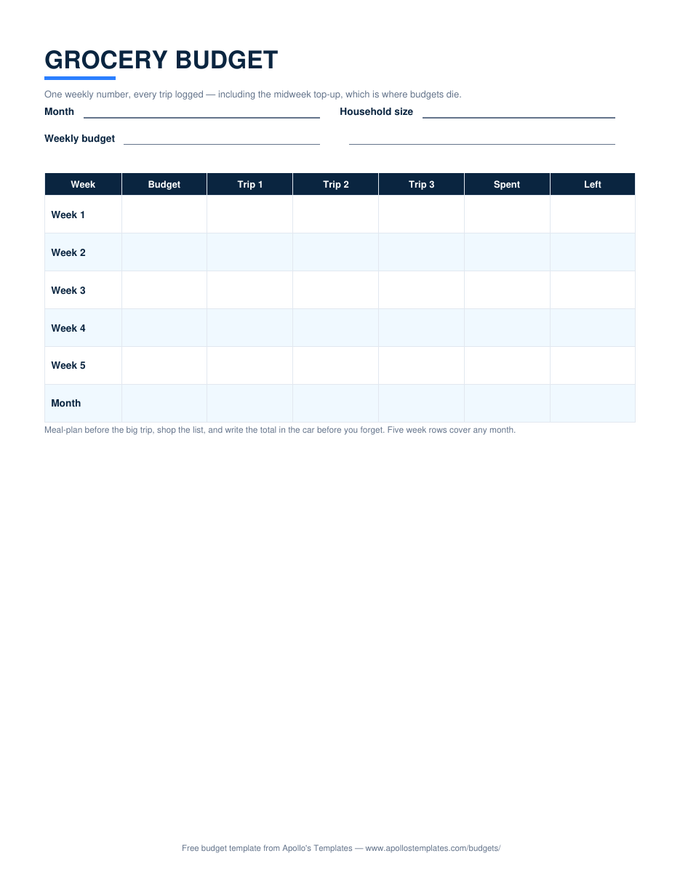
Grocery Budget
The weekly grid for the category most people stuff first.
Open

Frequently asked questions

How do I assemble the envelope?
Print (card stock if you have it), cut around the dashed outline, fold the back panel up along the light line, glue or tape the side tabs behind it, and fold the top flap down. Two minutes each, and the finished envelope holds bills flat. The face carries the category, the month, and a mini tracker — the envelope is its own ledger. Most people make a batch for the month in one sitting; kids reliably enjoy being the assembly line.
Which categories work best as cash envelopes?
The leaky ones: groceries, dining out, fun money, personal spending, and — for households that battle it — the miscellaneous-shopping line. Fixed bills stay on autopay; putting rent in an envelope solves nothing. The test is whether the category fails by a hundred small swipes: if yes, cash friction fixes exactly that failure mode. Gas used to be a classic envelope until pay-at-the-pump made it awkward — many people leave fuel on the card and track it on the weekly sheet instead.
What happens when an envelope is empty before the period ends?
The system's honest answer: that category is done until refill day — which is precisely the constraint that makes it work, so borrowing between envelopes should feel like the exception it is. If it happens once, dinner comes from the pantry and the system did its job. If the same envelope dies early three periods running, the allocation is wrong, not you: raise that category's number at the next planning session and take it from a surplus envelope. The tracker cards make the pattern visible.
What about leftover cash at the end of the month?
The happiest problem in budgeting, with three good answers: roll it forward (the envelope starts fat next month), sweep it to savings (many people keep a 'sweep' envelope that becomes the vacation fund), or let uneven categories average out (groceries' leftover covers next month's five-week stretch). The one weak answer is treating it as found money for impulse spending — that quietly teaches next month's envelopes to empty themselves. Log the sweep on the tracker and the year's leftovers become a visible number.
Updated through August 2026