




Apollo's Templates
HomeBudget TemplatesNonprofit
Mission math, funder-ready

Nonprofit Budget Template

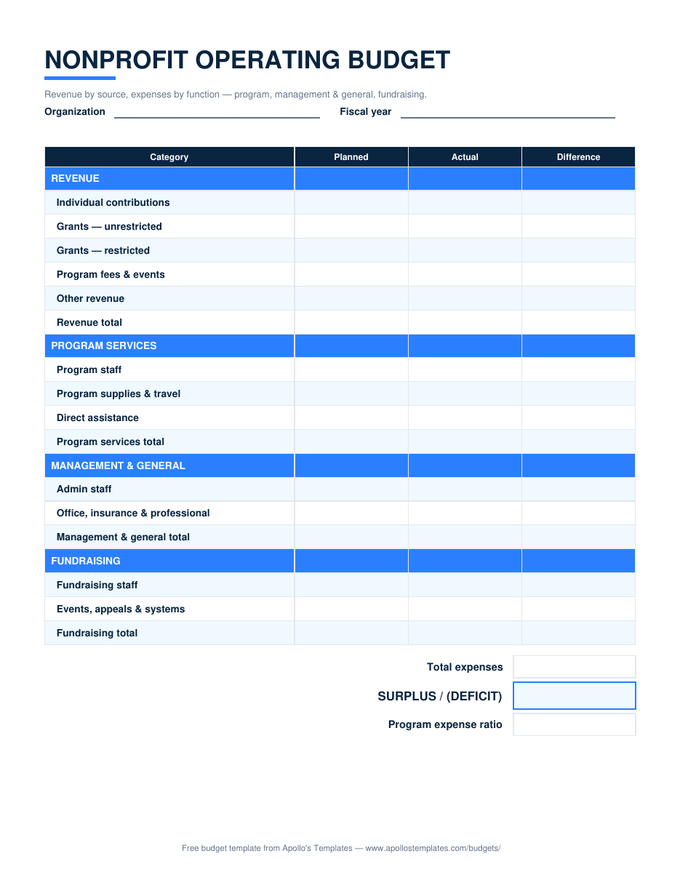
A nonprofit budget answers two audiences at once: the board managing the money and the funders reading the shape of it. This sheet is built for both \u2014 revenue by source with restricted grants on their own flagged line, expenses grouped by function the way nonprofit accounting standards require (program services, management and general, fundraising), and the program expense ratio computed live, because that's the number every grant reviewer and watchdog checks first.

The operating budget

One sheet, every format.

Excel — functional expenses computed

Revenue by source, expenses by function, surplus in planned and actual — and the program ratio funders read first.
Nonprofit operating budget grouped by program, management, and fundraising functions
PDF

Printable PDF

The functional layout on paper for the board packet and the budget committee's pencils.
Download PDF

Word / Google Docs

The budget as an editable document — drop it into grant attachments and board minutes.
Worth knowing

Restricted money is a promise, not revenue-in-general.

The restricted-grants line sits apart deliberately. A $45,000 grant restricted to the youth program is not $45,000 the organization can budget for rent — it’s a promise with an invoice trail, and mixing it into general operating revenue is how small nonprofits produce their most painful audit findings. Budget restricted funds only against their restriction, watch the unrestricted lines carry the overhead, and the year-end conversation with your auditor becomes pleasantly boring.

On the program ratio: 65%+ is the common comfort line, and this sheet computes yours live — but hold the number with judgment. The sector’s hard lesson of the last decade is that starving management and general produces broken organizations that serve no one; funders increasingly know it. A 70% ratio with functioning systems beats an 85% ratio held together by an exhausted executive director doing the bookkeeping at midnight. The ratio is for honest signaling, not for winning a race to the bottom.

The ask itself
Grant Proposal Budget
The funder-facing version — request vs match, indirect rate applied.
Open
The congregation's version
Church Budget
Ministry categories with designated gifts kept to their designation.
Open
The receipts behind it
Nonprofit Expense Report
Volunteer mileage at the statutory rate and program expense tracking.
Open

Frequently asked questions

What are functional expenses, and why group by them?
Functional classification sorts spending by purpose rather than type: program services (delivering the mission), management and general (running the organization), and fundraising (raising the money). It's how nonprofit accounting standards require expenses reported — your Form 990 and audited statements use exactly these three buckets — so budgeting in them from the start means your budget, books, and filings all speak the same language. The staff member who splits time across functions gets allocated across the rows, typically by timesheet or a documented estimate.
How does the program expense ratio work — and what should it be?
Program expenses divided by total expenses; the sheet computes it in both planned and actual. Above 65% satisfies most watchdogs and funders, 75%+ reads as strong, but context governs: a young organization building infrastructure or one running complex compliance-heavy programs legitimately runs lower. What actually damages credibility isn't a 60% ratio — it's a ratio achieved by misclassifying admin as program, which auditors and experienced funders detect quickly. Budget it honestly and let the narrative explain the number.
How should we budget grants we haven't won yet?
Separate the confirmed from the hoped-for. Best practice is budgeting only committed and highly probable revenue in the operating budget, holding a documented pipeline (asks out, probability, decision dates) beside it — some boards adopt a discounted version, counting pending grants at 50% or their historical hit rate. What the budget must never do is spend a pending grant: expenses committed against revenue that doesn't arrive is the classic small-nonprofit cash crisis, and it's fully preventable at budget time.
What about reserves — should the budget show a surplus?
Yes, on purpose, most years. The old instinct that nonprofits should budget to zero leaves organizations one bad quarter from crisis; the sector standard now is building toward three to six months of operating expenses in unrestricted reserves, which requires planned surpluses to get there. A budgeted surplus line item (or a 'transfer to reserves' expense row, if your board prefers seeing it allocated) makes the intention explicit — and gives you the answer when a funder asks why you're not spending every dollar.
Updated through August 2026