





Co-Teaching Lesson Plan Template
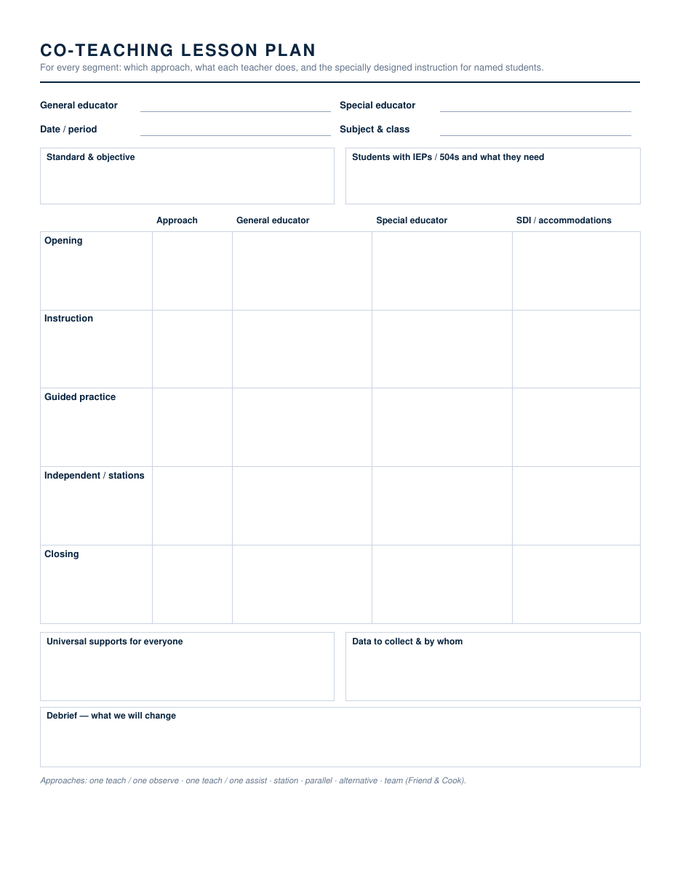
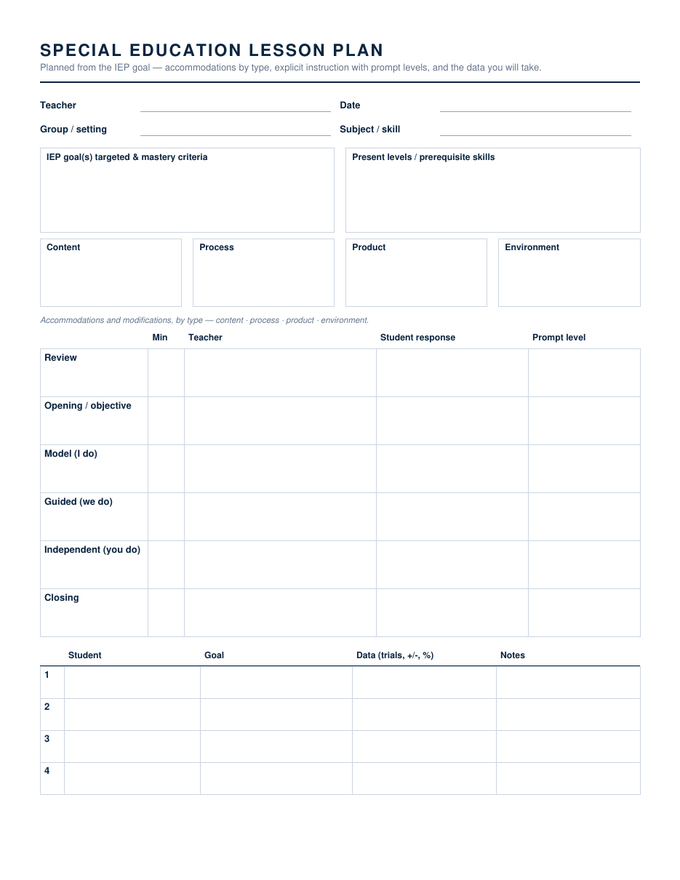
A co-teaching plan is a general-education plan with three columns added, and the columns change everything: for each segment, which of the six approaches you are using, what the general educator does, what the special educator does, and the specially designed instruction for named students. Universal supports, the data to collect and a debrief box finish it. The special education plan is here for the pull-out side.
2 co-teaching templates
Specifications: US Letter, 8.5 × 11 inches. Word files are editable .docx that open in Word 2007 through Microsoft 365, including Word for Mac; the Google Docs link makes a copy in your own Drive; the PDF has real form fields and prints as plain hairline boxes when blank. Free to use in as many classes as you like, no account, no watermark.
About the co-teaching templates
Co-teaching goes wrong in a predictable way: one teacher teaches and the other circulates, every segment, every day. The approach column is the antidote. Naming the approach per segment — one teach one observe, one teach one assist, station, parallel, alternative, team — forces the pair to decide, and the two role columns make the decision concrete. A plan where the special educator column says assist in every row is a plan to rewrite before the lesson, not after.
The SDI column is the other half. Specially designed instruction is what the students with IEPs are owed in the general classroom, and it has to be named for named students, not implied by the special educator's presence. The universal supports box holds what everyone gets; the data box says who is collecting what, because one-teach-one-observe only works if the observer knows what to watch. The debrief box is five minutes after the bell that most co-teaching pairs never get and should.
Co-Teaching lesson plans, answered
What are the six co-teaching approaches?
Is this weekly or daily?
Who fills it in?
Drawn and measured in November 2026.