Roses Funeral Program — Bifold
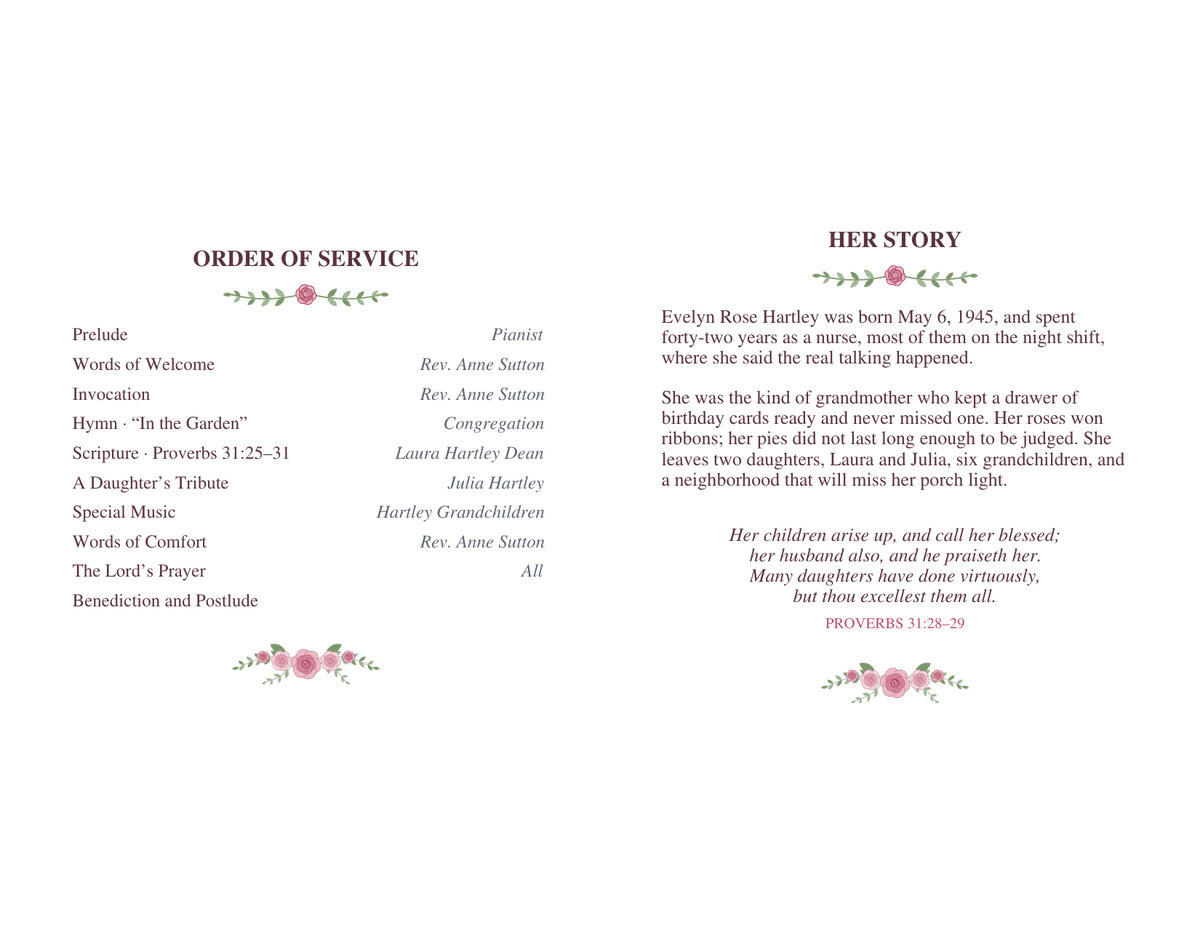
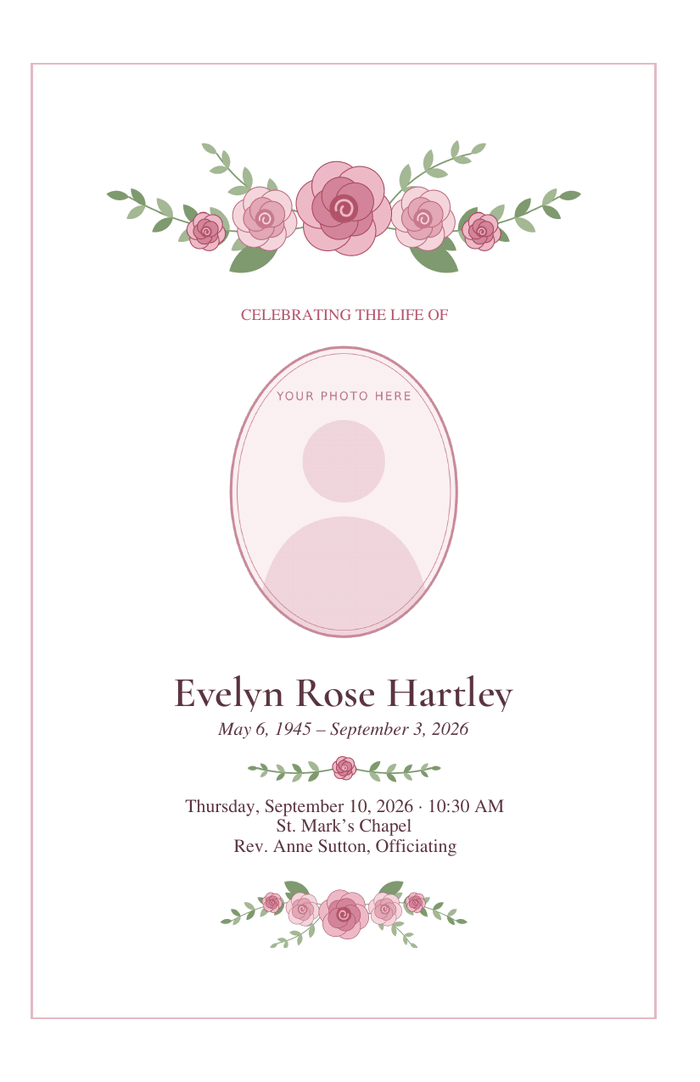
Pink roses and soft green leaves, drawn for a mother, grandmother or gardener.
1 sheet, printed both sides, folded once · US Letter

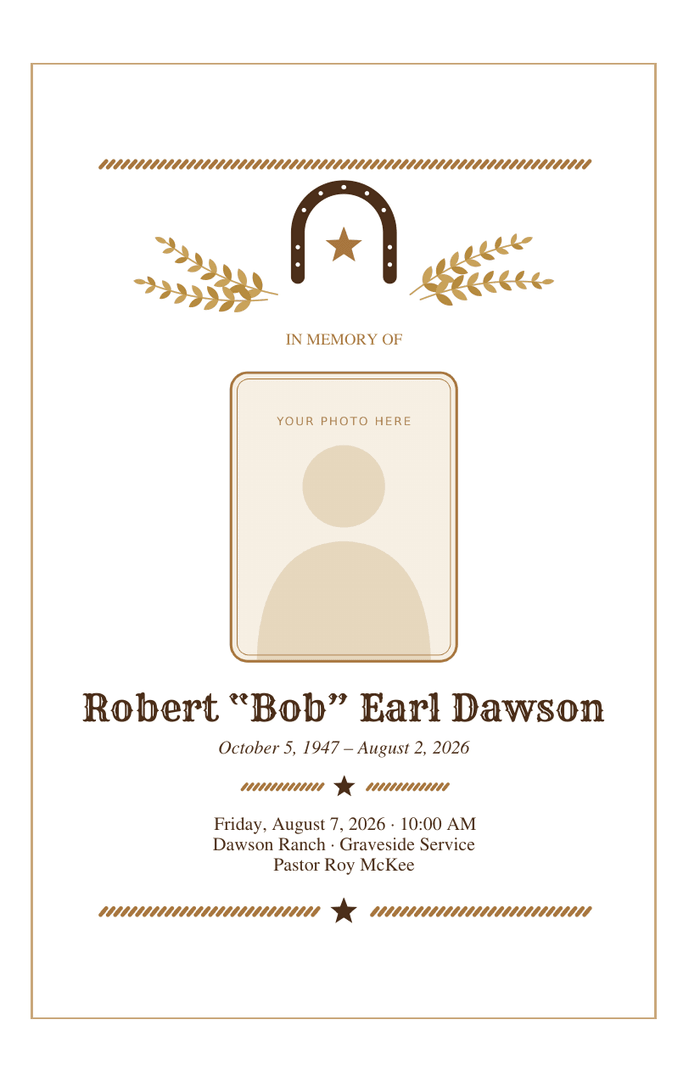
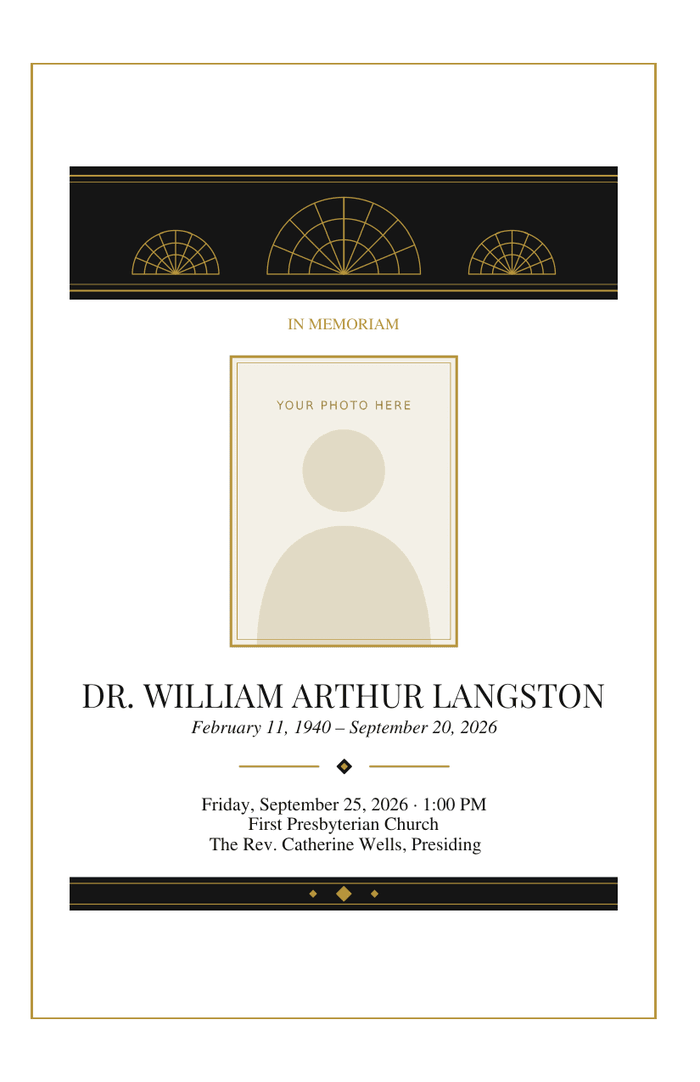
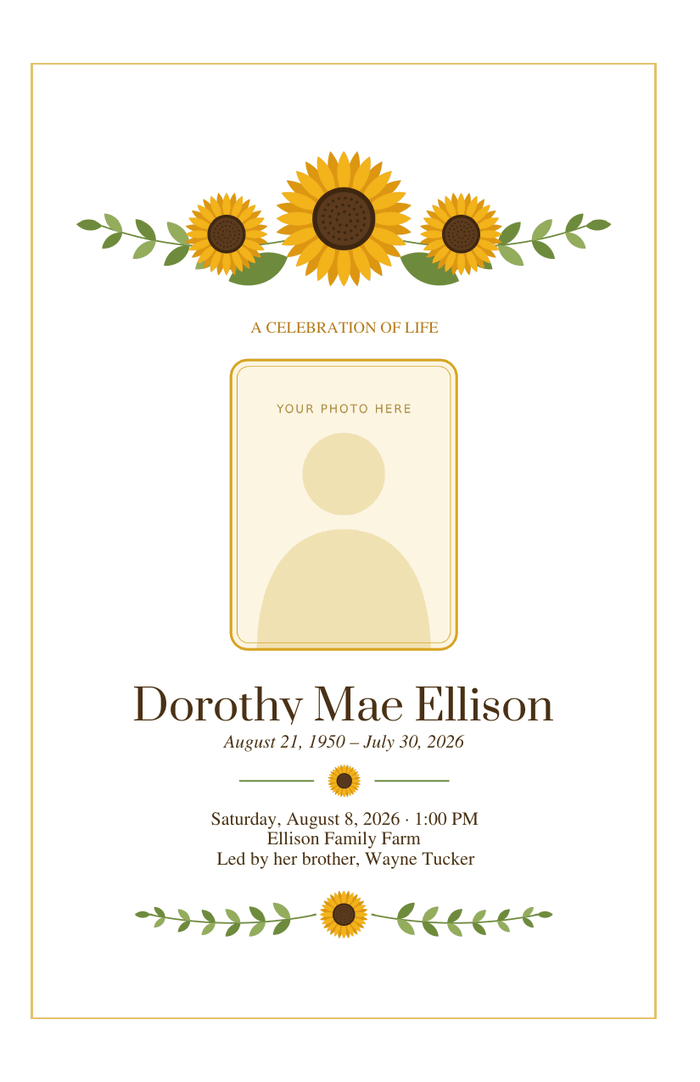
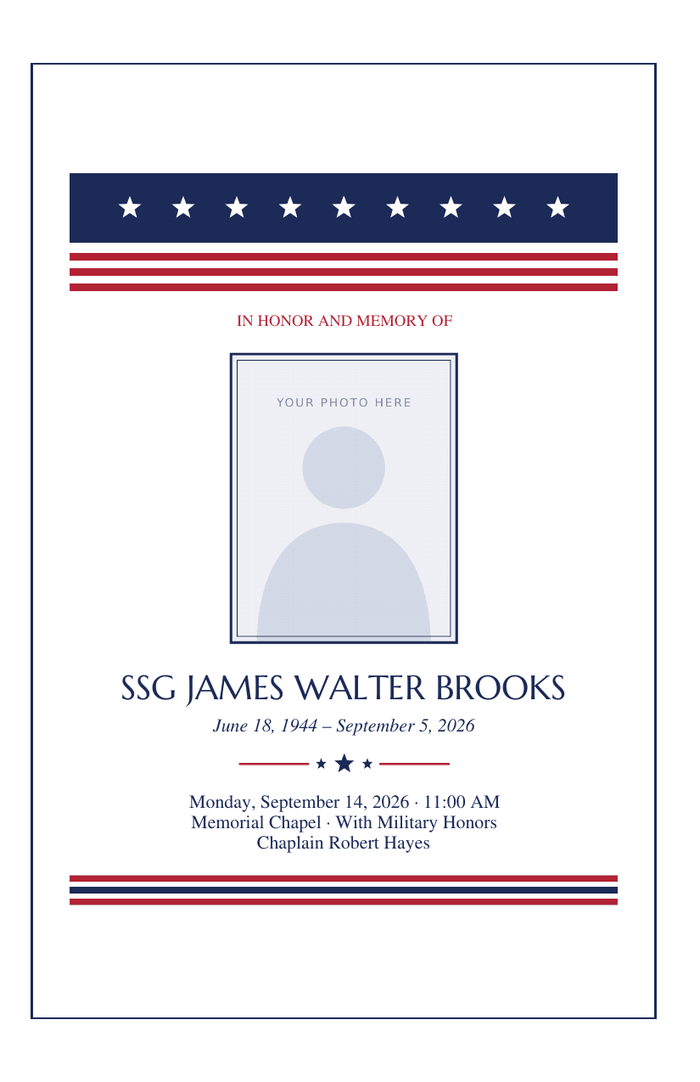
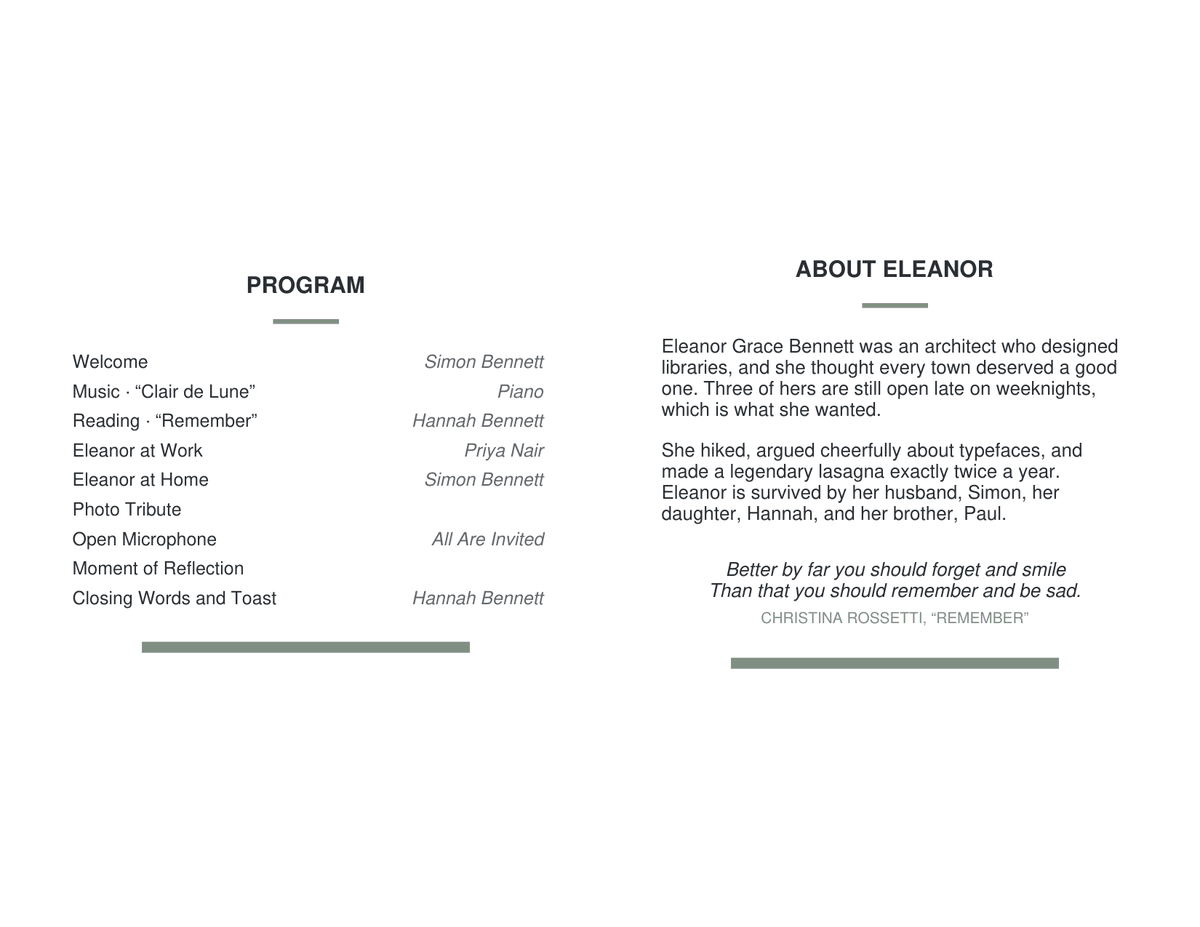
It is easier to write a program after seeing one that is finished. These six examples are complete, with a name, an order of service, an obituary and a thank-you, for six quite different people and services. All of them are invented, and all of them are templates: if one is close to what you need, download it and change the words.
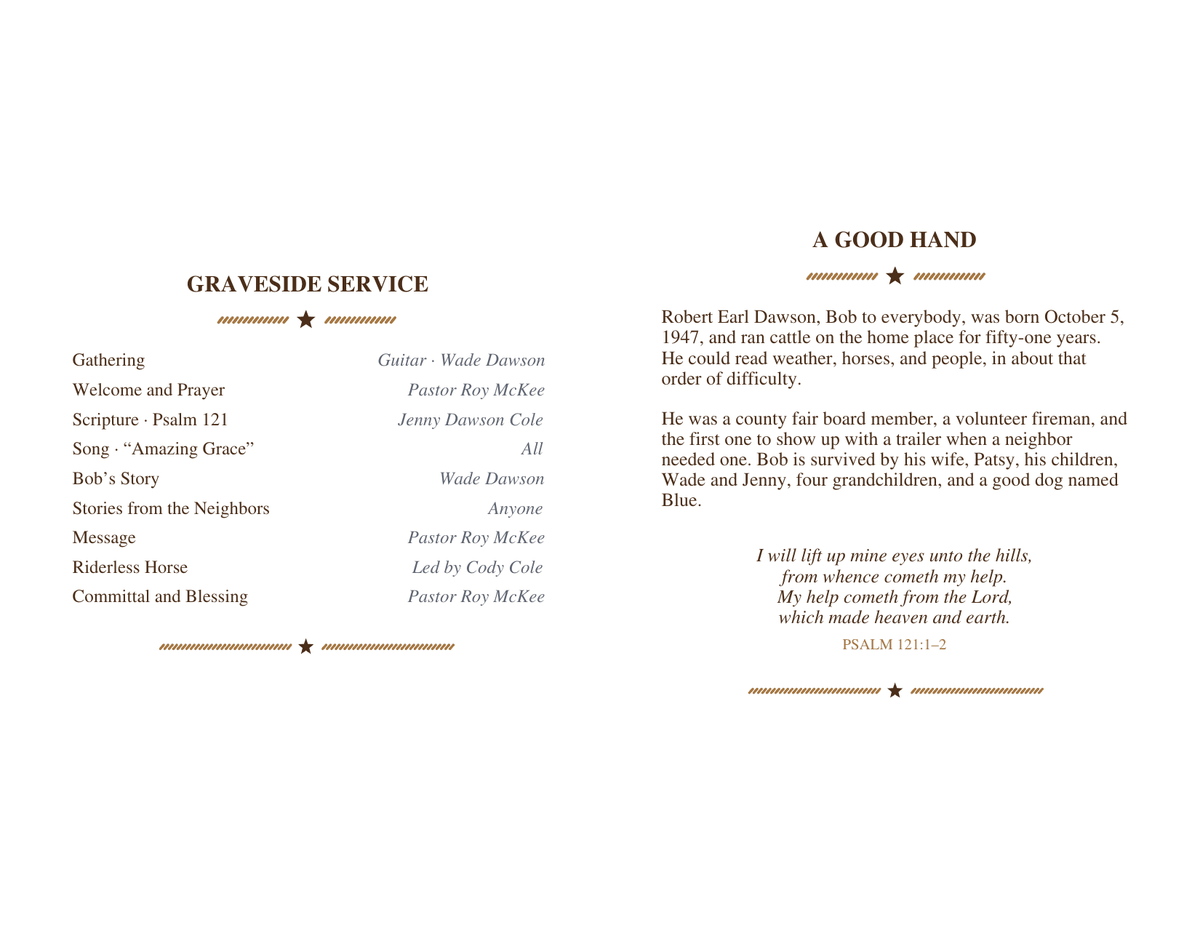
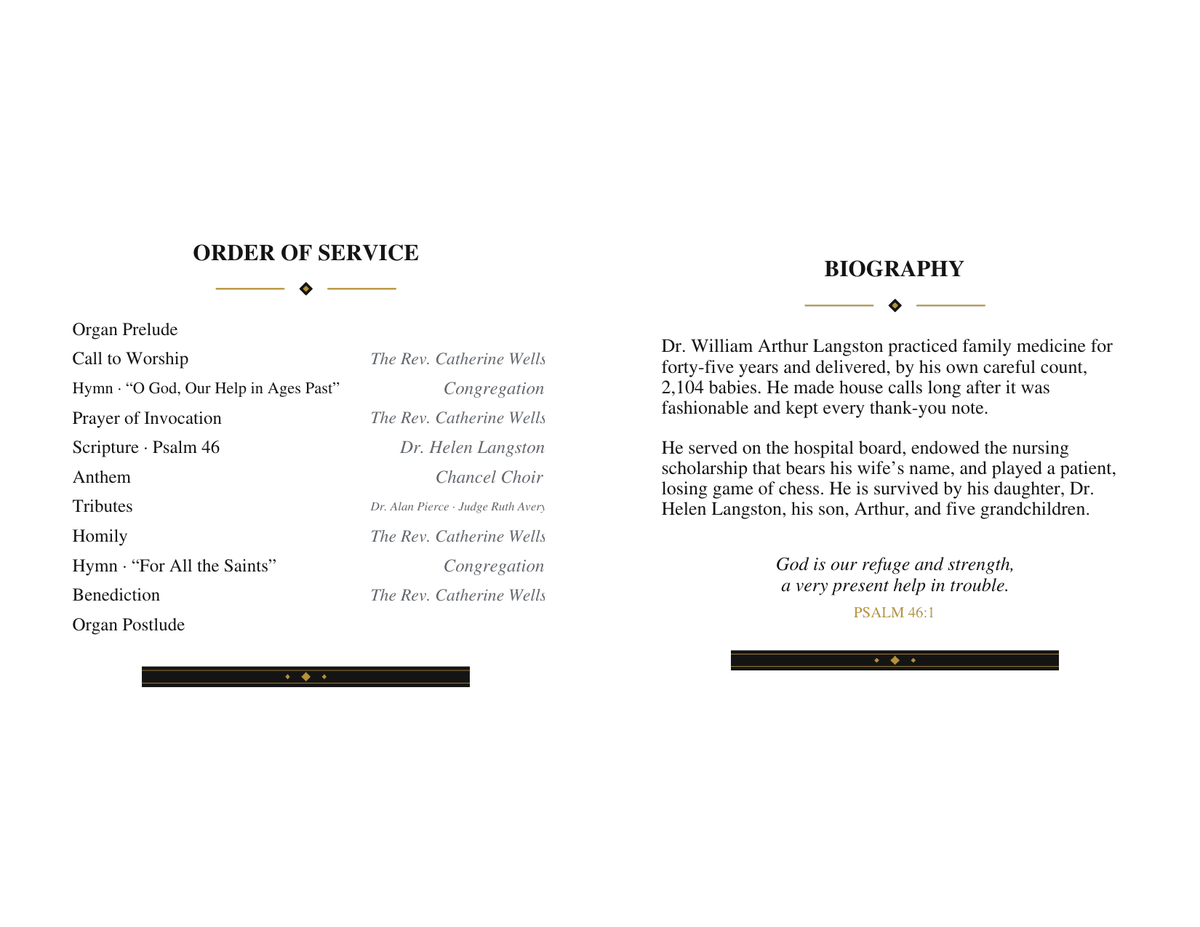
Each inside spread shows a different kind of service and a different voice in the obituary.
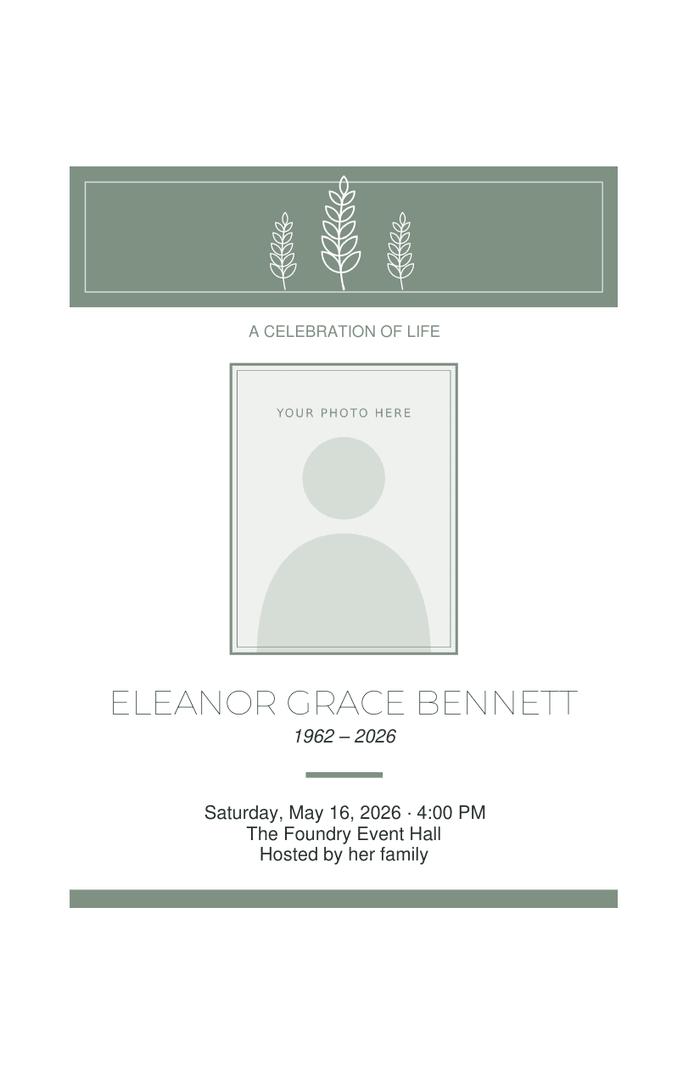
The line above the name sets the tone for everything else. These are the ones families choose most:
Below the name go the dates, then the day, time and place of the service and the name of the officiant. Dates can be written in full, as years only, or as Sunrise and Sunset.
A program obituary is shorter than a newspaper one: 100 to 150 words. The examples above all follow the same three moves. First, the facts: full name, when and where born, parents if you wish. Second, the life: work, service, faith, what the person loved and was known for, in one or two concrete details. Third, the family: who survives them, in order of closeness.
The details do the work. Kept every thank-you note, or planted sunflowers along the fence every spring, tells a guest more than devoted and beloved ever will.
The back is practical. In the examples it holds a two- or three-sentence thank-you from the family, the pallbearers or honorary pallbearers, where the burial will be, and an invitation to the meal or reception afterward. A request for memorial gifts in place of flowers goes here too, and a final line of scripture or poetry closes the panel.