What is EVV, and does a paper timesheet still matter?
Electronic Visit Verification — the check-in/check-out systems (usually a phone app or the client's phone line) that the 21st Century Cures Act requires for Medicaid-funded personal care and home health visits. If your visits are Medicaid-funded, EVV is the system of record and this sheet doesn't replace it. Paper still earns its keep three ways: as the backup when the app fails or coverage drops, as the reconciliation record when EVV data gets disputed, and as the whole record for the large private-pay world EVV doesn't cover.
Why does the client sign the timesheet too?
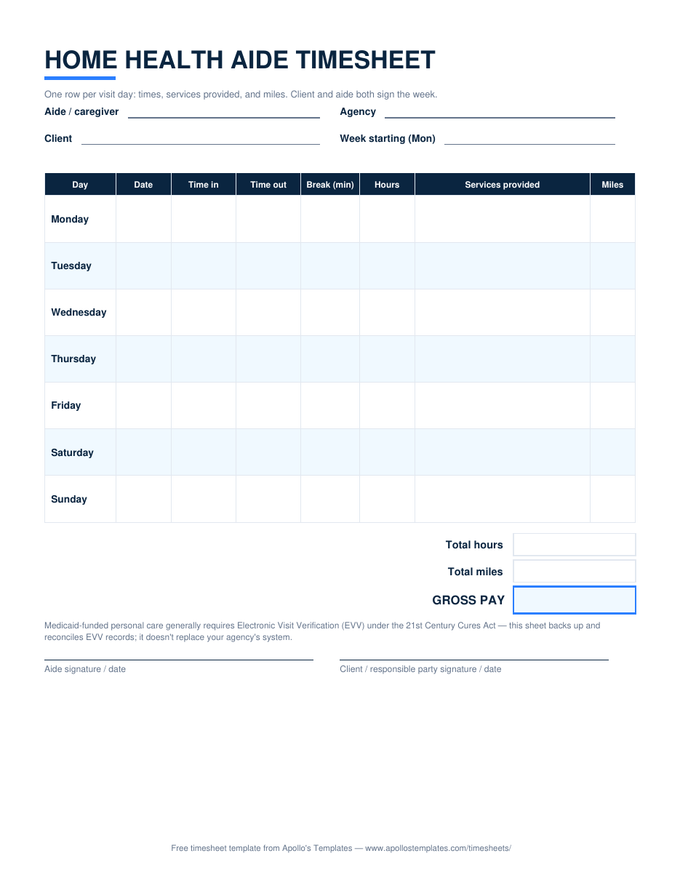
Because in home care the client's signature is the visit verification. There's no supervisor down the hall who watched the shift happen — the person who can attest that the aide arrived at 9 and left at 1 is the client or their responsible party. Agencies and fiscal intermediaries routinely refuse unsigned sheets for exactly this reason, and in consumer-directed programs the client's signature is what authorizes payment. Collect it before leaving each week; chasing a signature after the fact is the classic home-care payroll delay.
What goes in the services column?
What you actually did, in plain words: bathing, dressing, meal prep, medication reminder, transfer assistance, errands, light housekeeping. Two reasons it matters. For agency and Medicaid work, services delivered must match the client's care plan — the column is where that's demonstrated. For private arrangements it's the record that answers, months later, what the family was paying for. Specific beats general: “meal prep, medication reminder” survives scrutiny better than “care, 4 hours.”
How should travel between clients be handled?
Record the miles per visit day in the Miles column — the sheet totals them for the week. What happens to that total depends on who you work for: agencies commonly reimburse drive time between clients (in many states they're required to pay for it as work time) at a per-mile rate or as paid minutes, while private-pay arrangements should settle the question in advance. Either way the contemporaneous mile count is the thing you can't reconstruct later, so the column sits on the sheet where it gets filled in daily.
Does this work for private caregivers, not just agency aides?
Yes — swap the Agency field for a blank or the family's name and everything else fits: the client signature matters even more when there's no agency in the middle, and the services column becomes the shared record between caregiver and family. One thing worth knowing for household employment: a family that pays a private caregiver above the IRS household-employee threshold has nanny-tax obligations, and a signed weekly timesheet is the backbone of doing that correctly. Describe-not-advise: irs.gov's Publication 926 is the reference.