
Legal Letterhead Templates
Nine free legal letterhead templates for Microsoft Word and Google Docs — law office, lawyer and attorney stationery carrying the conventions the category actually uses: partner rosters, bar admissions, Writer’s Direct Dial, matter and file numbers, and privilege legends.
9 law firm letterhead samples
Every template ships in both Microsoft Word (.dotx) and Google Docs. The .dotx download opens in Word as a fresh document; the Google Docs link opens a copy directly in your browser.
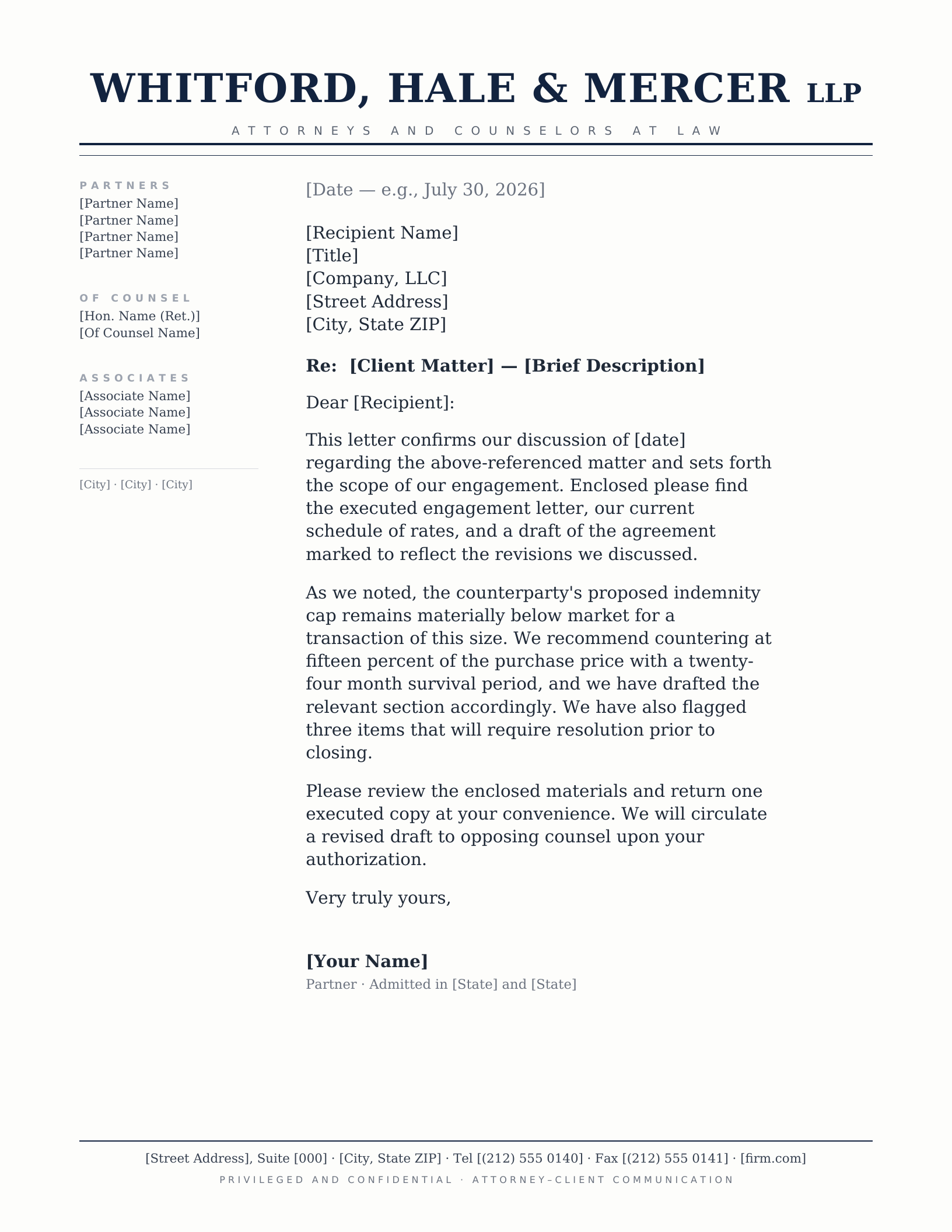
White-Shoe LLP, Partner Roster
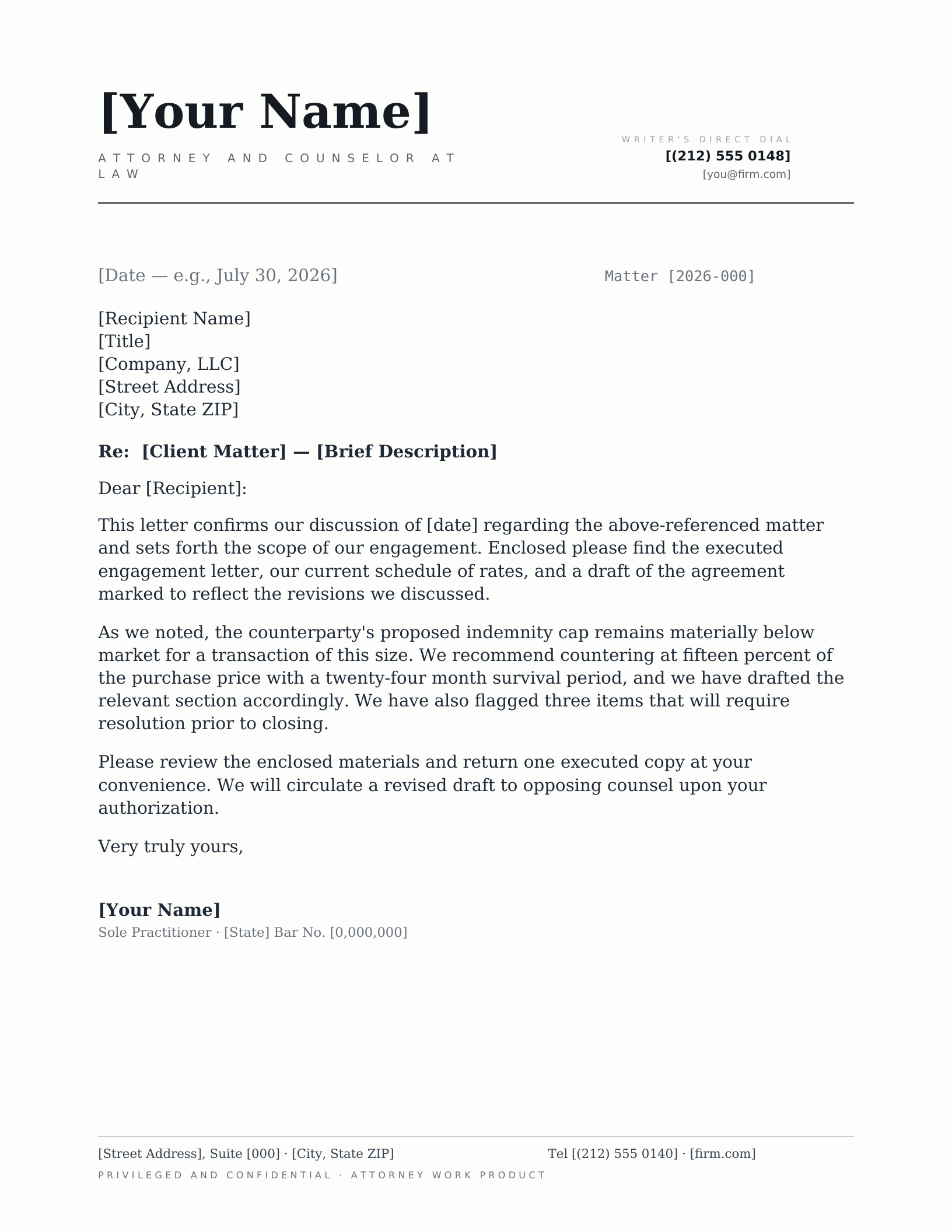
Solo Practitioner, Direct Dial
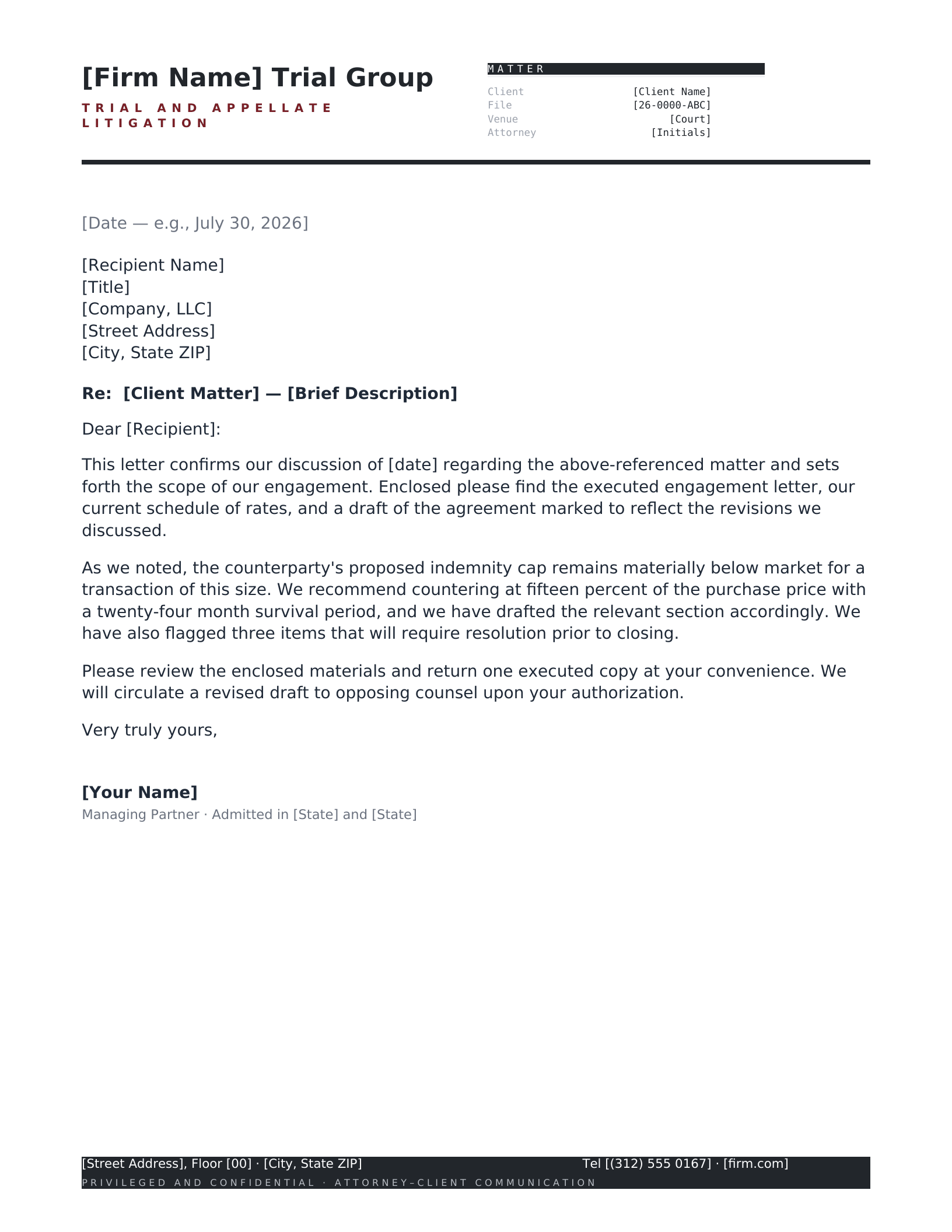
Litigation Boutique, Matter Block
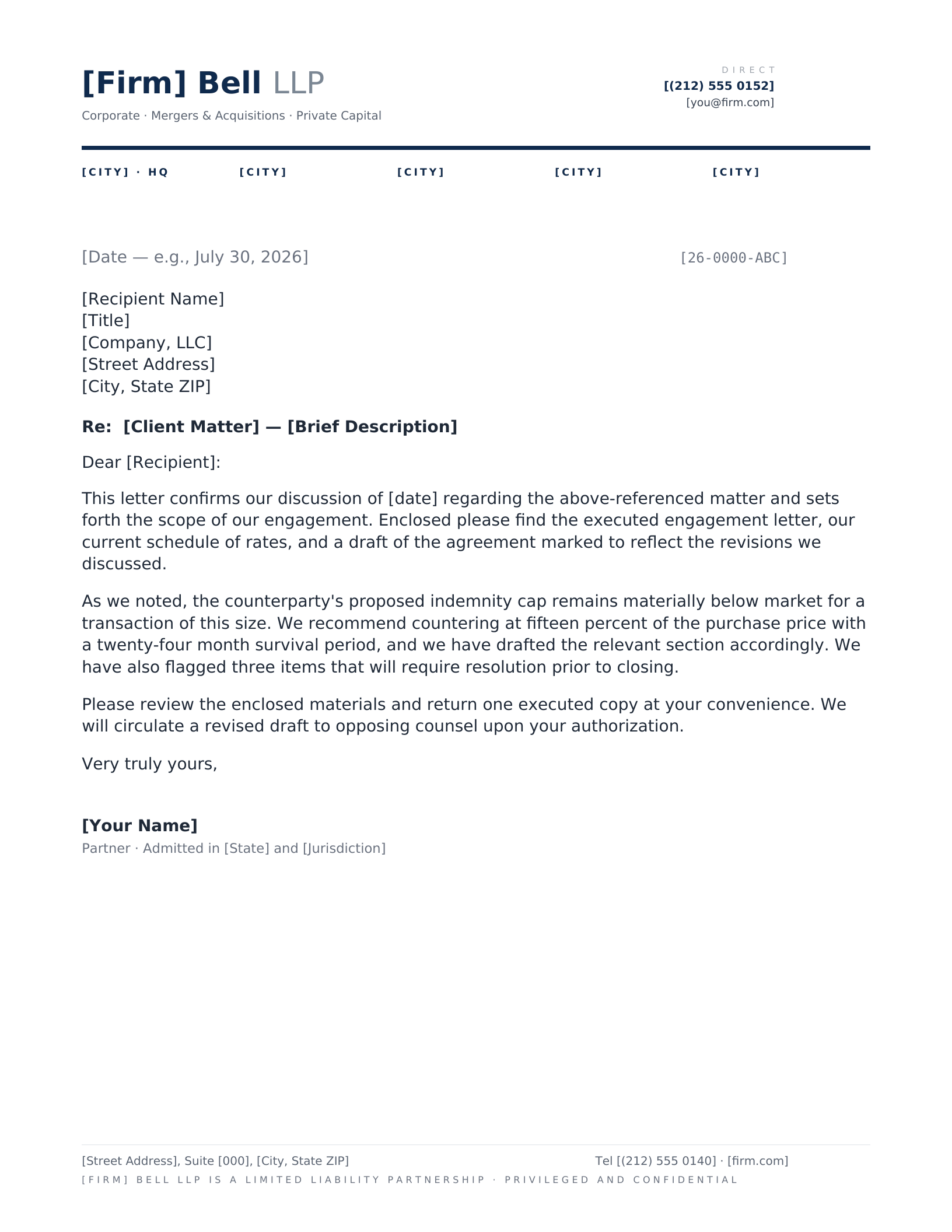
Corporate & Transactional
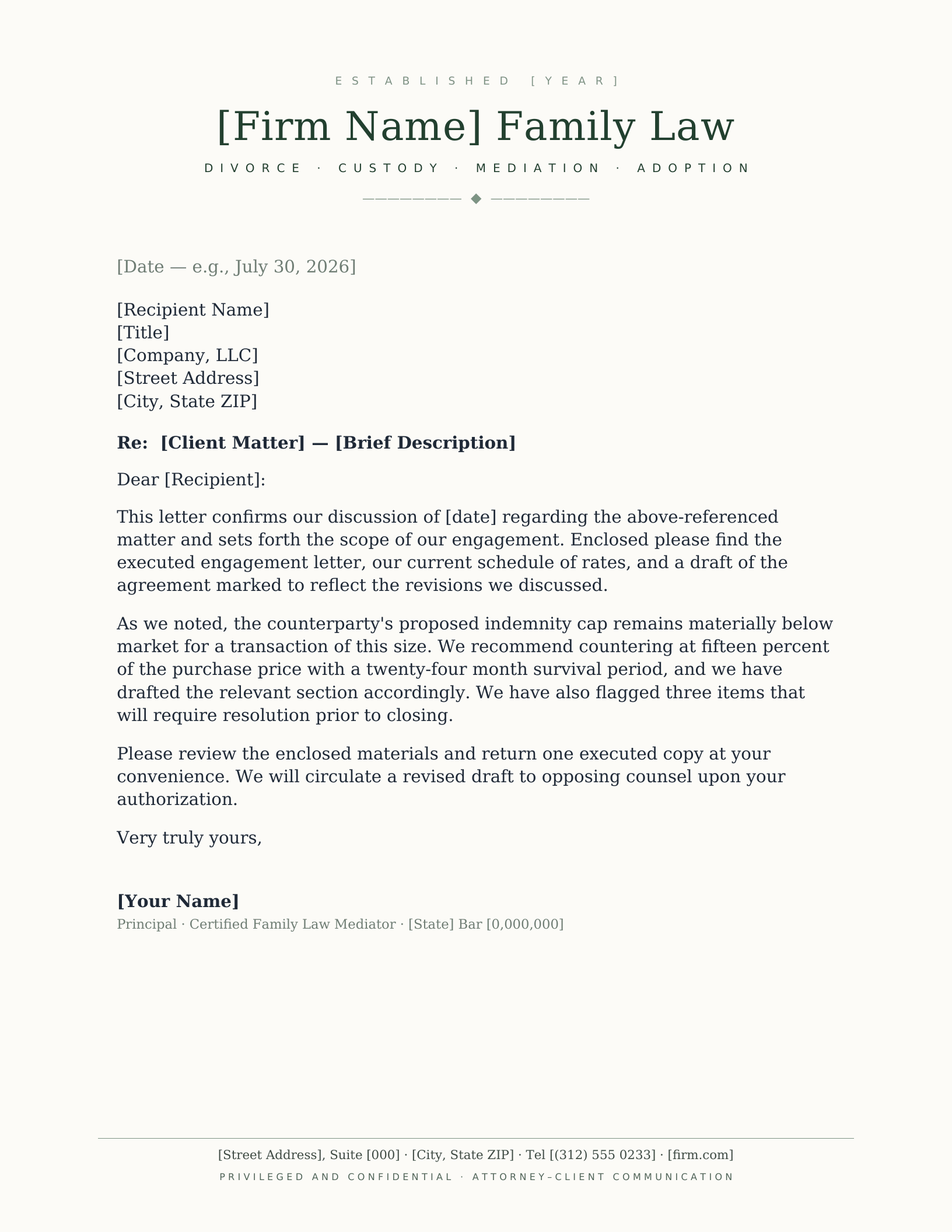
Family Law
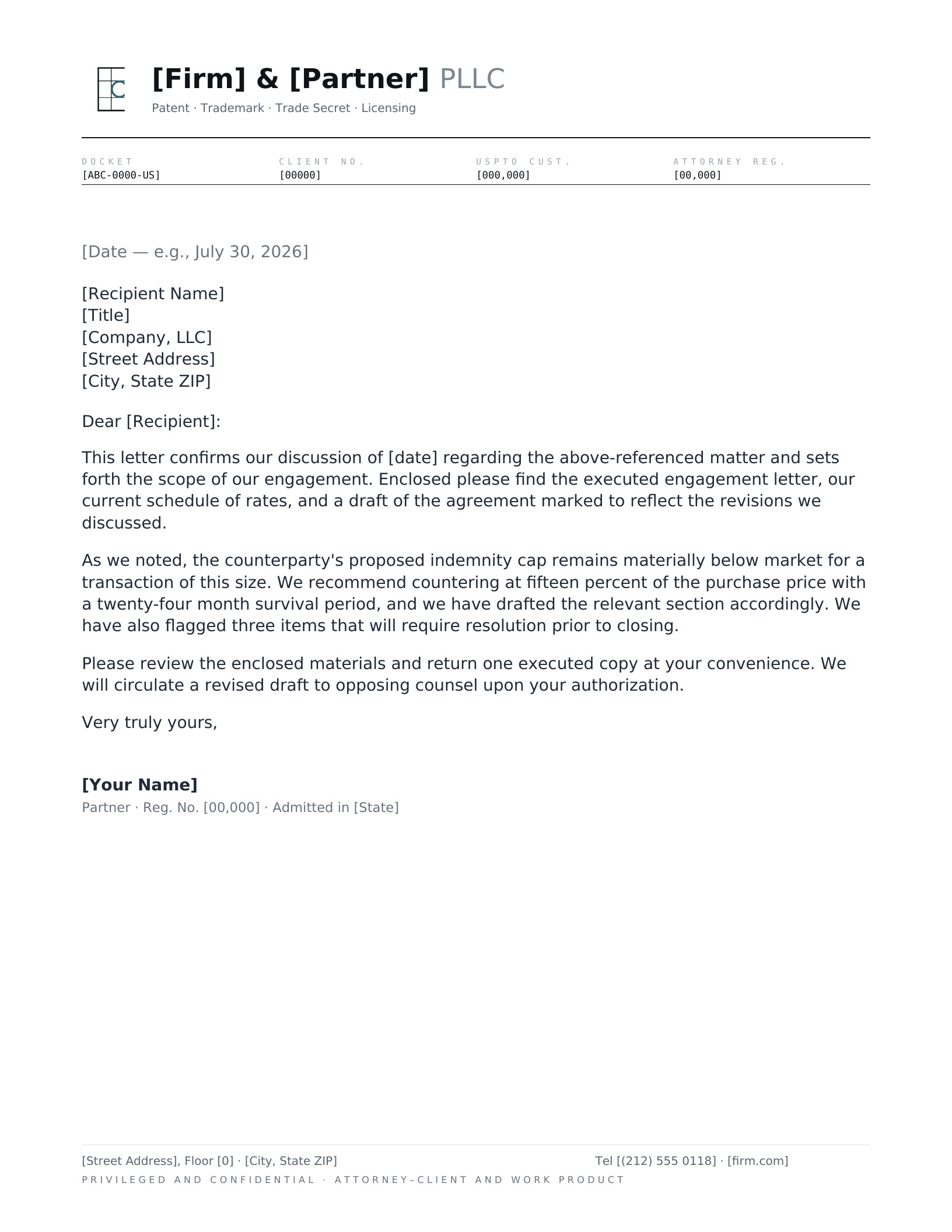
Intellectual Property & Patent
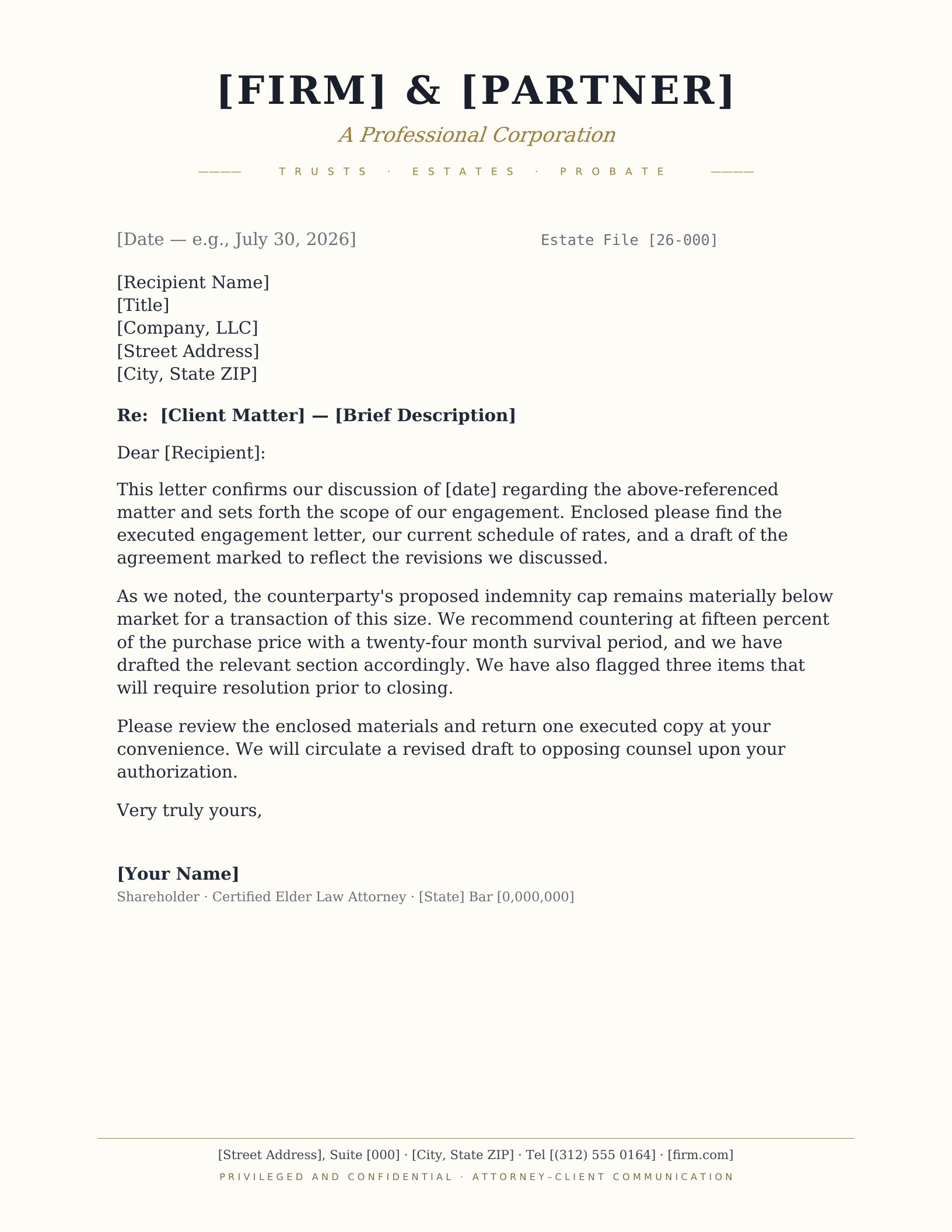
Trusts, Estates & Probate
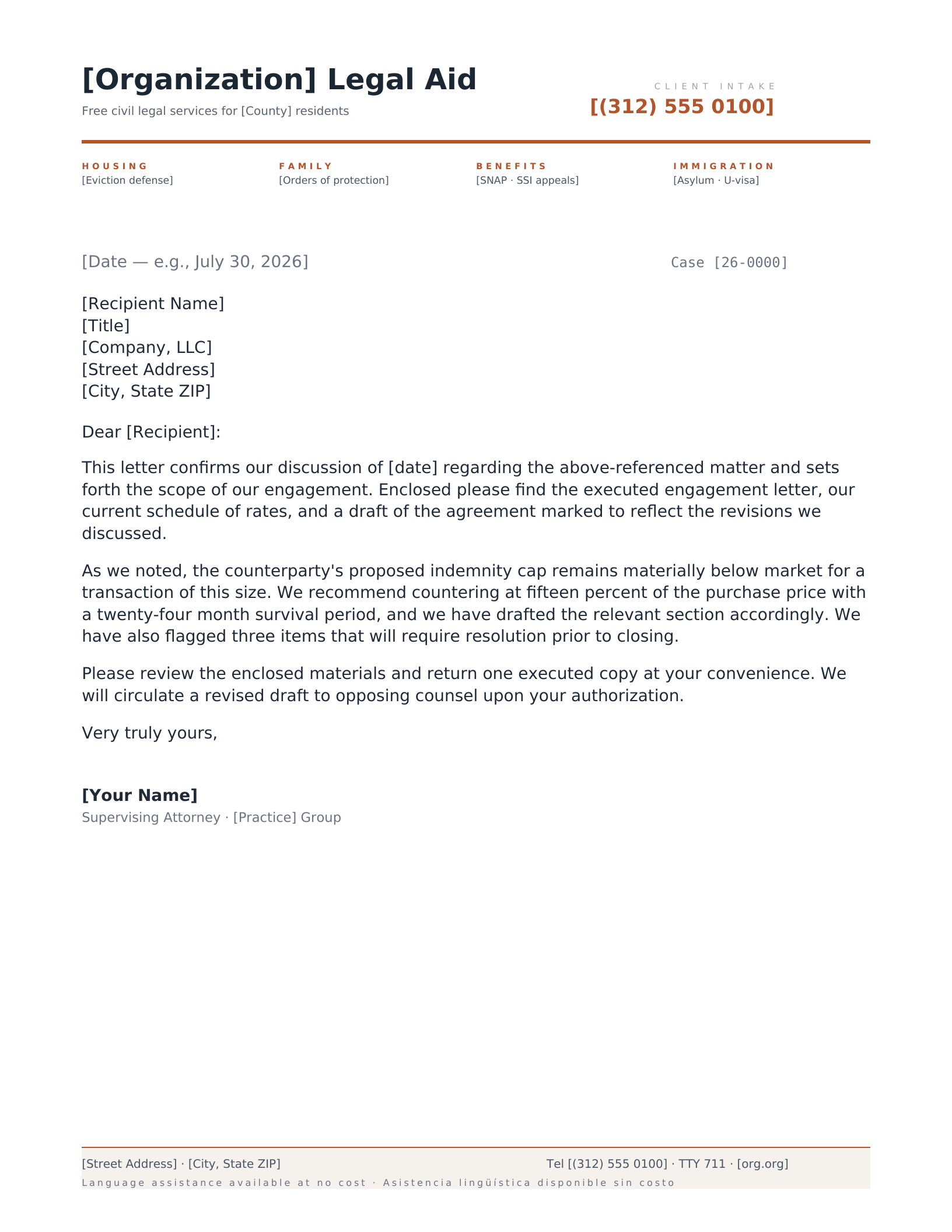
Public Interest & Legal Aid
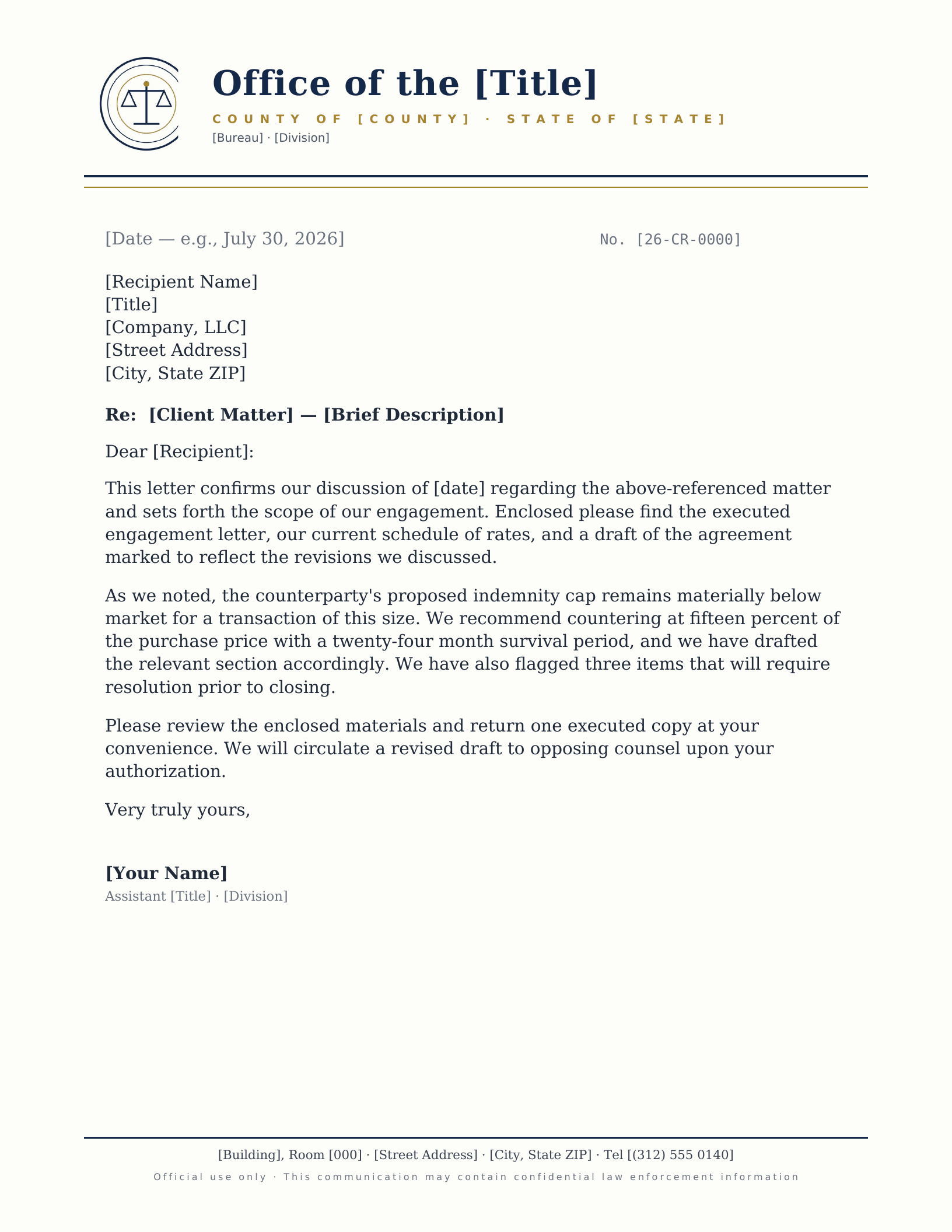
Government & Prosecutor
Which letterhead suits your firm?
Legal letterhead is the most convention-bound stationery there is. A letter from a law office is read by people who know what belongs on it, and the absence of a matter number or a bar admission line is noticed. That is what separates these from a generic business template: the furniture is already there, in the places the profession expects to find it.
What belongs on a law office letterhead
- Firm name with its entity designation — LLP, P.C., PLLC or LLC. This is not decorative; in most states it is part of the registered name and has to appear.
- Bar admissions, under the signature rather than in the masthead. If a lawyer is admitted in more than one jurisdiction, or is writing from an office in a state where they are not admitted, that has to be visible.
- A matter or file number, set opposite the date. It is the single most useful thing on the page for whoever files the letter at the other end.
- A privilege legend— “Privileged and confidential · Attorney–client communication”. Every design here carries one in the footer, and the litigation and IP layouts extend it to attorney work product.
- Writer’s Direct Dial, if the firm is large enough that the main number reaches a switchboard.
Which one fits your practice
The nine are not nine colourways of one design — they are nine registers, and the distance between them is deliberate. A solo practitioner and a white-shoe LLP should not send the same-looking letter. Neither should a family law practice writing to a client in the middle of a custody matter and a litigation boutique writing to opposing counsel: the first wants warmth, the second wants weight.
The specialised layouts carry their own furniture. Intellectual property gets a docket strip with a USPTO customer number and attorney registration number, because patent correspondence is filed against those. Trusts and estates is the most conservative in the set, which is the correct signal when the reader is a family rather than a counterparty. Legal aid surfaces the intake number at display size and carries a language-access line. And the governmentlayout uses a drawn scales-of-justice seal rather than a real one — replace it with your office’s own official seal, which will come from the office, not from a template site.
Common questions
Are these compliant with my state bar’s advertising rules?
We cannot tell you that, and you should not take a template site’s word for it. Attorney advertising rules differ by jurisdiction — California, New York, Texas and Florida all regulate firm names, trade names and disclaimers differently, and some require specific language on solicitation material. What these give you is the space, correctly placed: a footer line sized for a disclaimer, and a signature block sized for admissions. Check the wording against your own rules of professional conduct before you send anything.
Do these open in Word 2007 and in Word for Mac?
Word 2007 and everything since — 2010, 2013, 2016, 2019, 2021, Microsoft 365 and Word for Mac. The download is a .dotx template, so opening it creates a new untitled letter and leaves the original alone. If your document management system wants a .doc or .docx, open the template and use Save As. Every design also opens as a Google Doc — the button on each card drops a copy straight into your Drive, which is usually the faster route if your firm runs on Workspace.
Can I use one for trust documents and commercial correspondence?
Yes — and the estates layout is the one built for it. Trust instruments, funding letters and commercial engagement letters all sit comfortably on the same conservative sheet, which is usually what a firm doing both wants. Keep the privilege legend on client correspondence and drop it on documents that will be recorded or filed publicly.
All nine are free to download and edit for your own firm. Please do not redistribute the template files themselves elsewhere on the web.
Updated through September 2026.
Set up your firm details
- Pick a design and choose your editor — Microsoft Word downloads the template (a
.dotxfile; opening it creates a fresh document and leaves the original intact for next time), or Google Docs prompts you to make a copy in Drive. - Replace the placeholder tokens —
[Your Name],[Family Name],[Street Address],[Recipient], etc. Embedded graphics (monograms, crests, ornaments) can be replaced with your own — right-click → Change Picture (Word), or click → Replace image (Google Docs). - Type your letter where the sample paragraph is. Save and print on standard 8.5 × 11 paper, or send as a PDF.
Specifications: US Letter, 8.5 × 11 inches, portrait. Word downloads are .dotx templates and open in Word 2007 through Microsoft 365, including Word for Mac. Google Docs versions open as a copy in your own Drive. Every file is one page, fully editable, and free to use — no account and no watermark.