





Maine Bill of Sale
Maine sends every buyer to the town office first — where the excise tax runs on the car's original sticker price, not yours. The mandatory bill of sale, the mill-rate arithmetic, and the BMV's part, in order.
Town office first, BMV second, bill of sale throughout.
Maine specifics, answered.
Is a bill of sale required in Maine?
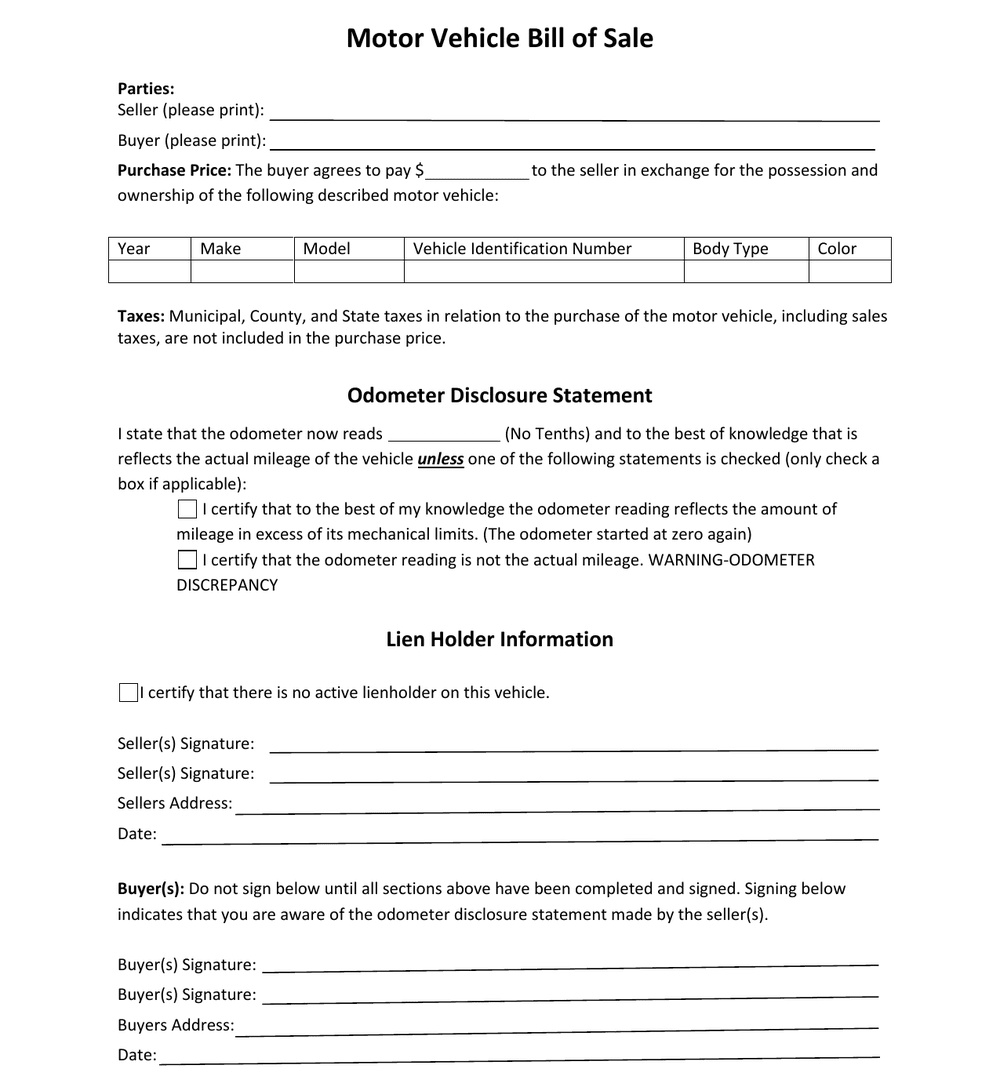
Yes — Maine requires a bill of sale for private vehicle sales, and it should carry both parties, the vehicle description with VIN, the price, and the date. The state publishes an official form; ours is the verified copy below.
Why does the buyer go to the town office before the BMV?
Because Maine's excise tax is municipal: paid at your town or city office, computed on the vehicle's ORIGINAL MSRP — not what you paid — at 24 mills in year one, declining to 4 mills by year six and beyond. Only after the town stamps the excise paid does the BMV (or a participating town agent) handle registration and title. The excise money stays with the municipality, funding local roads.
So a cheap old car can still owe real excise tax?
Less than you'd fear — the mill rate falls with age, so a six-year-old vehicle pays 4 mills on its original sticker (a $30,000-MSRP car owes $120/year). But yes, the price you negotiated never enters the excise math. Sales tax is separate: 5.5% on the purchase price, collected at first registration.
What about titles and driving the car home?
Maine's title requirement has a rolling age exemption — vehicles more than 25 model years old (currently model year 2000 and older) transfer without a title, on the bill of sale and prior registration. To drive a fresh purchase home, the BMV issues transit plates; don't borrow the seller's plates, which stay with the seller.
Not legal advice. Verified against Maine BMV and municipal excise sources in July 2026 — official links in our 50-state requirements table.
Whatever's in the driveway or the barn.
The Maine rules above apply to whatever you are selling. Pick the item type to get a form with the right identifying fields on it.