





Oregon Bill of Sale
No sales tax, but a title fee that reads your gas mileage — Oregon does private sales its own way. Form 735-501, the DMV2U seller notice, and the 21-day trip permit, all explained here.
735-501 plus a 10-day online notice.
Oregon specifics, answered.
Does Oregon really have no sales tax on vehicles?
Really — zero, on private sales and dealer sales alike. What Oregon does instead is tier the title fee by the vehicle's EPA rating: roughly $101 for under-20 MPG, stepping up through $106 and $116 as efficiency rises, and $192 for electric vehicles. The greener the car, the pricier the paperwork — Oregon's road-funding answer to fuel-tax-free EVs.
Is Form 735-501 required?
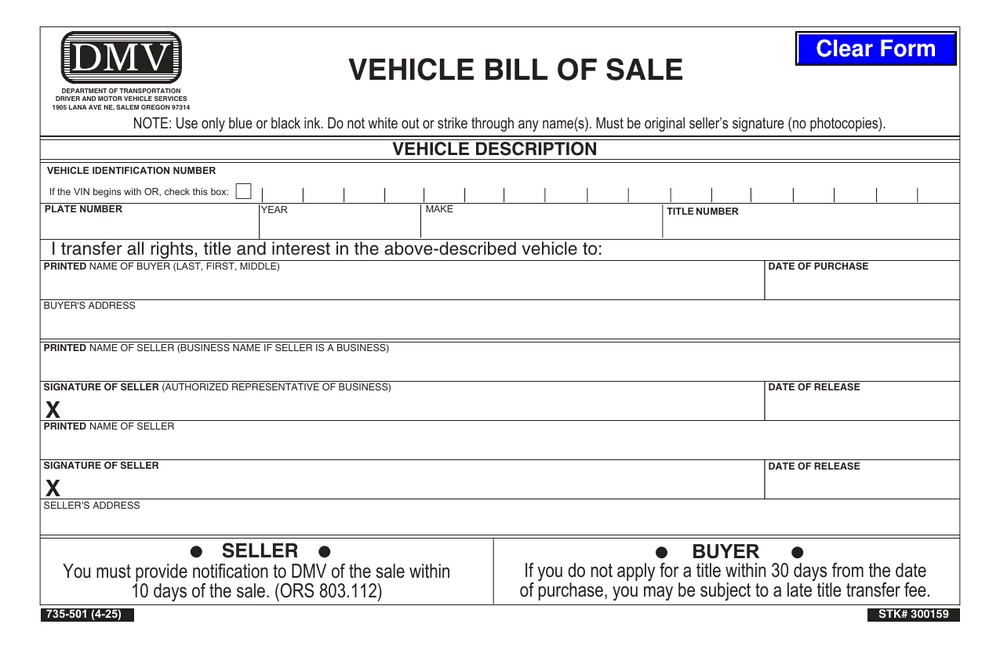
It's the DMV's official bill of sale, and while the signed title assignment does the legal transfer, the bill of sale documents the price and date both parties may need — the buyer for records, the seller for the Notice of Sale. No notarization required.
What's the seller's 10-day duty in Oregon?
Filing the Notice of Vehicle Sale within 10 days — fastest through DMV2U, Oregon's online portal. It logs the sale date and buyer so parking tickets, tolls, and abandoned-vehicle liability shift off the seller immediately.
How does the buyer get home, and are there smog checks?
The buyer has 30 days to title ($25 late fee, $50 after that). To drive legally before plates arrive, Oregon sells a $35 trip permit good for 21 days. Emissions testing (DEQ) applies only in the Portland and Medford areas — the rest of the state registers without it.
Not legal advice. Verified against Oregon DMV and DEQ sources in July 2026 — official links in our 50-state requirements table.
Not selling a car? Start here instead.
The Oregon rules above apply to whatever you are selling. Pick the item type to get a form with the right identifying fields on it.