





Rhode Island Bill of Sale
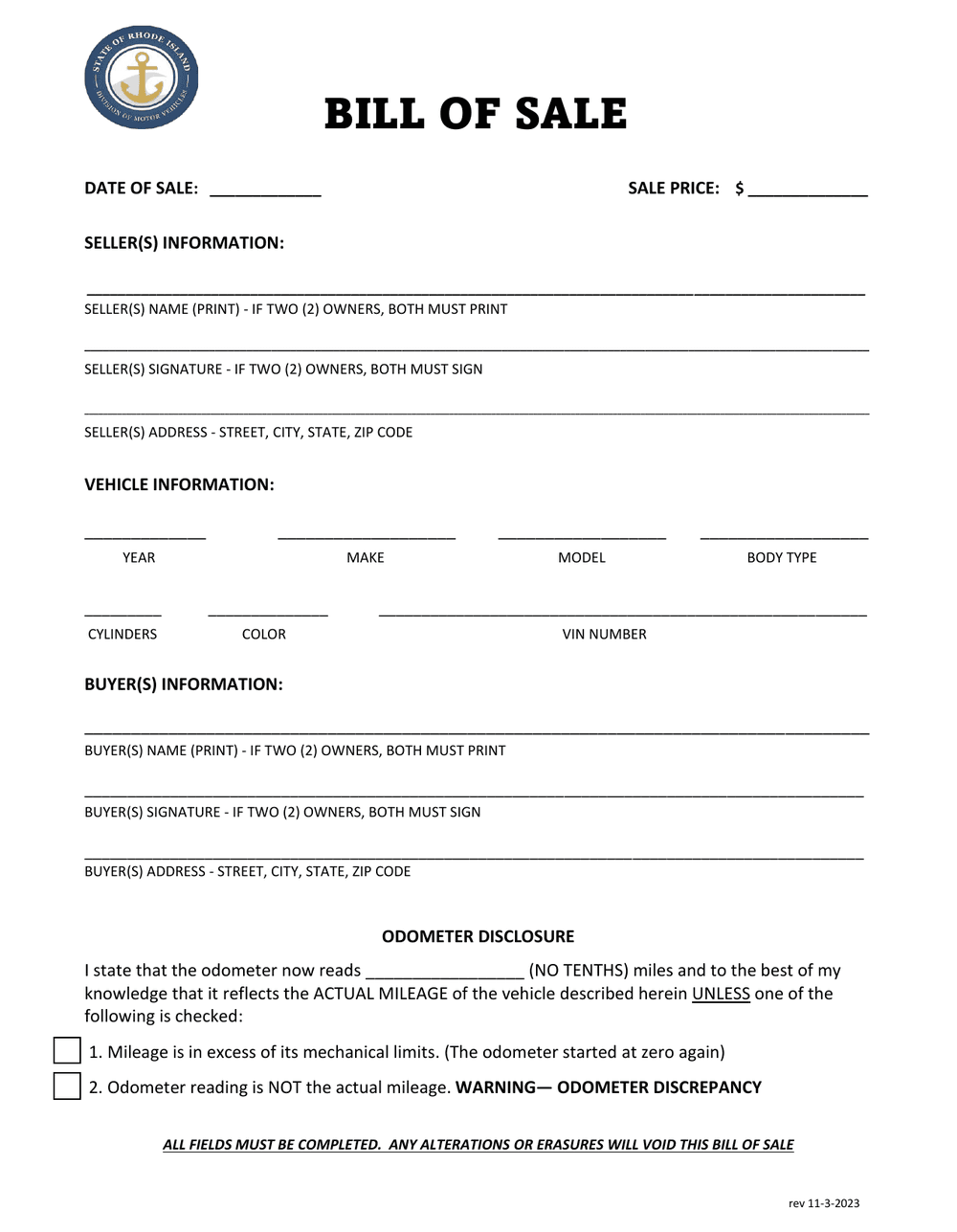
Rhode Island's official bill of sale is mandatory — and unforgiving. One alteration voids it. The 7% higher-of-book tax, the T-334 calendar, and the municipal police VIN check, all laid out here.
Fill it in clean — the form forgives nothing.
Rhode Island specifics, answered.
How strict is Rhode Island about the bill of sale document?
Strictest in the country: the official DMV bill of sale is required for private sales, and ANY alteration — a crossed-out digit, a corrected date, correction fluid — voids the form. Made a mistake? Print a fresh copy and start over. Notarization, by contrast, is only needed in the narrow case of an absent co-owner.
How does Rhode Island tax a private car sale?
At 7% on the GREATER of the purchase price or NADA clean retail value for vehicles up to seven model years old; older vehicles tax on the actual price. And note the calendar: the use tax return (Form T-334) is due by the 20th of the month following the sale — a separate, earlier deadline than the registration itself.
What's the VIN check for out-of-state vehicles?
Any vehicle coming into Rhode Island from another state needs a VIN inspection before registration — done at a municipal police department, not the DMV. Budget the extra stop; it's quick but mandatory.
What does the Rhode Island seller do with the plates?
Remove them and return them to the DMV (or transfer to a new vehicle). Rhode Island plates never convey with the car, and returning them formally closes out the seller's registration and insurance obligations.
Not legal advice. Verified against Rhode Island DMV and Division of Taxation sources in July 2026 — official links in our 50-state requirements table.
Every item type, Rhode Island rules applied.
The Rhode Island rules above apply to whatever you are selling. Pick the item type to get a form with the right identifying fields on it.