




West Virginia Bill of Sale
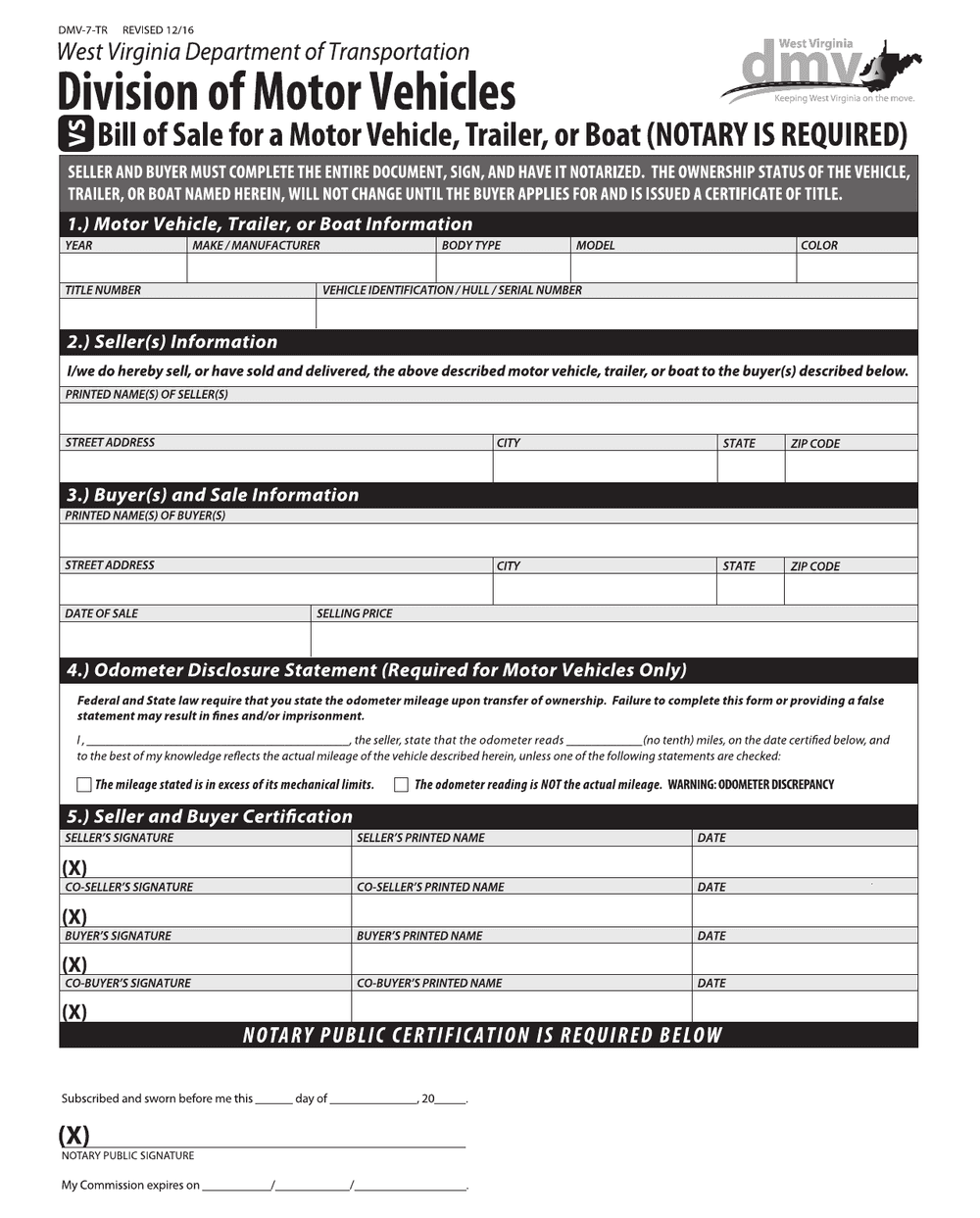
West Virginia notarizes its bill of sale and checks your price against the book: under half of NADA value, the notarized DMV-7-TR is what keeps the 6% privilege tax honest. The form, the rule, and the license-copy requirement, explained.
Notarized, with ID copies stapled on.
One price, two documents, zero rejections.
Not legal advice. Verified against WV DMV sources in July 2026 — official links in our 50-state requirements table.
West Virginia specifics, answered.
Does West Virginia require a notarized bill of sale?
When a bill of sale is called for, yes — the official DMV-7-TR prints notarization as mandatory, and the DMV wants photocopies of both the buyer's and seller's driver's licenses with it. It's most critical when your purchase price is below half of NADA Clean Loan Book value, because that's when the notarized bill of sale is what stops the DMV from taxing book value instead of your price.
What is the 50%-of-NADA rule?
West Virginia's defense against the $1 bill of sale: if a private-sale price falls below 50% of the NADA Clean Loan Book value, the 6% privilege tax is assessed on book value — unless a notarized bill of sale documents the real price. And for vehicles two model years old or newer, the DMV taxes book value regardless of what you paid.
What trips up West Virginia title applications most?
Mismatched numbers. If the price written on the title assignment and the price on the bill of sale disagree, the DMV rejects the application outright. Decide the exact figure together, write it identically on both documents, and the counter visit goes smoothly. Vehicles sold under $500 pay a flat $30 privilege tax instead of the 6%.
Can the buyer drive home before the paperwork is done?
Briefly, yes — West Virginia lets the buyer operate under the seller's registration for up to 10 days after the sale (with the seller's written consent in hand), and state law gives the seller 60 days to deliver the signed title, with the buyer applying once it arrives. Plates never transfer: the seller removes them, and the buyer's own registration follows the title work.
Not selling a car? Start here instead.
The West Virginia rules above apply to whatever you are selling. Pick the item type to get a form with the right identifying fields on it.